
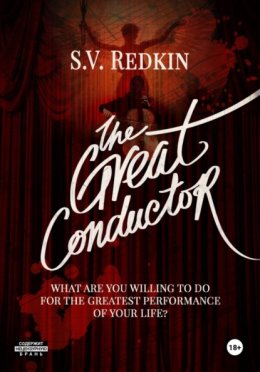
The Great Conductor
Movement I: Adagio
Chapter 1
“Music killed my parents.”
Perhaps it was not the best answer, but there it was.
“Excuse me,” Dr. Korpacheff said, peering over her horn-rimmed glasses. “Christine, did you just say that music—”
“Killed my parents. Yes. That’s what I said . . . well, it was sort of one of the reasons why it happened,” Christine said, fiddling with the jade beads on her wrist before closing her eyes. “You asked me about my parents, and I answered your question.”
Why did I bring that up in here? Christine thought with regret.
Christine Heart, a thirty-five-year-old homicide detective, did not want to be in the shrink’s office in the middle of July while her colleagues were busy solving criminal cases with hardly any time for lunch in a stuffy office sometimes overwhelmed by BO. Granted, the air-conditioning in the doctor’s office was way better, and it felt really nice to be in the room.
The Homicide Investigation Division, which she had requested to be transferred to only two years ago, was no place for slacking and taking personal leaves. It was like the army—if you signed up for it, you had to be there day in and day out no matter what. Today, though, Christine felt like a high school student who had been sent to the principal’s office for a trivial offense, wasting her time explaining her behavior while the rest of the class depended on her in some extremely important sports event. It was an absolute waste of her time and taxpayers’ money.
“Is that why you’re here?” Dr. Korpacheff asked, adjusting her spectacles.
Christine looked at the big, fancy clock on the wall—five past two in the afternoon. She had been in the doctor’s office for only five minutes, but it felt like an eternity. She had nothing against Dr. Korpacheff. In fact, Christine kind of liked her demeanor when they had met before the session: friendly, professional, and soft-spoken.
The doctor was approximately her age, perhaps a couple of years older than Christine, who had not had time to celebrate her birthday a couple of months ago. Dr. Korpacheff had smooth, tanned skin and sported a very nice, expensive-looking beige pantsuit. Christine’s skin had not seen much sun even though it was the middle of summer—too much time in the office during the day and long, tedious hours sitting in the car during evening stakeouts. Christine’s jeans and shirt, even though clean and tidy, had been in her possession longer than she wanted to admit—no time or desire for shopping.
Christine noticed that Dr. Korpacheff kept her immaculately manicured nails short, and her forearms, which were not covered by the rolled-up sleeves of her silk blouse, looked strong. Daily workouts? No ring. Is she married? Kids?
“No, I’m here to work on my anger management skills in the workplace.” Christine shifted in the chair.
Christine had had a few issues with a couple of male colleagues—Detectives Kozminsky and O’Hara—who did not believe that she was capable of doing a good job and had tried to make sure she was assigned cases they did not want. Those poor excuses for colleagues had a good relationship with the detective sergeant who was in charge of assigning cases when he received calls from uniformed units.
Despite these attempts to undermine her, Christine had a good record of solved cases and had been pulled from the usual rotation onto some priority cases at her supervisor’s—Lieutenant Whitehead’s—discretion. That hadn’t sat well with the other detectives, and they had continued to spread antagonistic rumors about her alleged incompetence around the office, which had led to a shouting match with a lot of profanity (on their side) and a bit of body pushing (from Christine). Being in good shape, it had not been hard for Christine to put the two overweight, middle-aged men to shame. She probably should not have done that, but those jerks had deserved it.
“Do you think the reason why you are here is related to your parents?”
Christine pondered this for a second. “Well, perhaps everything that happens in anyone’s life is related to their parents one way or another. Do you think so?”
Dr. Korpacheff looked at her notes and nodded. “Well, why don’t you tell me about them? What did they do?”
Christine glanced at the doctor. She already regretted mentioning music—a subject she had been avoiding since she was fourteen years old. But as her lieutenant had told her, she needed to “go all the way and hold nothing back from the doctor to get better . . . or else” (whatever that meant), and it seemed that she had no choice but to share the pain she had been carrying inside for twenty-one years.
Christine closed her eyes and instantly imagined her mom and dad, who would always be young and healthy in her mind. She remembered her mom’s soft voice and warm hands in the evening and her dad’s upbeat demeanor in the morning. He was an early bird and used to make breakfast for everyone, humming happy tunes under his breath.
Christine opened her eyes and saw an encouraging smile on the doctor’s face.
“They were both engineers and were partners in a small company that made and did maintenance on elevators. They actually founded the firm right after they graduated from Baltimore Polytechnic Institute. My dad—Oliver Heart—studied engineering, and my mom—Connie Heart, née Brooks—studied math.” Christine smiled. “My grandparents told me that they were a couple of geeks who had been made for each other.”
Dr. Korpacheff reciprocated with a smile and nodded.
“I used to . . . um, play the piano. And . . . I was very good at it.” Christine shook her head and took a deep breath. Touching her self-made stone bead bracelet on her left hand gave her a sense of peace—she liked to feel the stones with her fingers. “I started when I was four and got to grade eight when I was six and was ready to get to advanced levels, which was . . . um . . .”
“Impressive?” Dr. Korpacheff ventured a guess.
“I mean . . . usually, kids get to the next grade every year, so . . . I guess I was going through those grades faster than others. And . . . when I was seven, I performed my first solo concert.”
“Did your parents want you to play the piano?”
Christine’s mind went to the cozy and sunny living room of the house where she used to live with her parents. They had an old Charles M. Stieff piano that miraculously came with the house when they moved in. She could see herself sitting on the bench—her feet dangling, too short to reach the floor—chewing her lower lip while doing scales time after time.
“No,” Christine said. “I wanted to do it. As soon as I realized what that big brown wooden thing was and how it made sounds—my dad could play a bit—I just wanted to make those beautiful sounds myself. It’s like . . . the piano talked to me through those sounds, and I didn’t want that conversation to end. So . . . um, I kept banging the piano keys until my parents couldn’t take it anymore and got me a teacher who showed me how to play it properly.”
Christine took a sip of water from the glass that Dr. Korpacheff had poured for her at the beginning of their session. The glass had been placed on a coaster with a picture of the Eiffel Tower on it. The doctor’s glass was sitting on a similar coaster but in a different color—the pair was probably a set, and they didn’t look cheap. Did the good doctor bring this little souvenir back from a romantic trip to France? She does look sophisticated enough to be into the Old World. Perhaps even, God forbid, classical music.
“Music was the only thing that mattered to me. I played when I was awake and dreamed about playing when I was asleep. It was like an obsession. I wanted more of it and never felt satisfied,” Christine said.
“Did your parents support you?”
“Oh, yeah, but . . . at some point, I think they were a bit scared of the intensity with which I was tackling challenging music pieces. I would never stop before I was sure I could play some particularly difficult part correctly. Even my teachers would sometimes tell me to take it easy, but I wouldn’t listen to them. It was like . . . I had a target in front of me that I had to hit no matter what or how long it took.”
Christine took another sip. Her throat was parched, and she felt like her face was on fire. She put down the glass and turned it on the coaster so that the Eiffel Tower would point directly at the doctor, to see if Dr. Korpacheff would notice. Her father used to do that to her—Can you see anything different now, Christine?—to keep her observation skills sharp, and she had a habit of doing it to other people to see how good their attention was.
“Then, one of my teachers suggested I participate in contests to hone my skills against other kids, to see how good I objectively was.”
“And?”
“Well, I did, and I was.”
“Was what?”
“I was much better than the rest of them,” Christine said and took another sip of water. Her throat was still dry. Was the air-conditioning still on? “Anyway, I was getting to the point when I was ready for serious international competitions and . . . um, I needed money to travel, and my parents did everything they could to make it happen for me.”
Christine saw Dr. Korpacheff taking some notes with her silver pen in her leather-bound notebook and wondered which part of her story was worth noting in order to help Christine with her situation at work.
As a homicide detective, Christine carried a standard-issue, pocket-sized black leather notebook where she would jot down important highlights of the cases she was working on and significant details from interviews with people involved in her investigations. In her detective training, she learned that officers should always strive to take accurate and thorough notes. They should be made “as contemporaneously as possible.” The notes reflected what the investigator thought, what they did, and what they observed.
What is Dr. Korpacheff thinking and observing? Does she still have her parents around? Does she get along with them?
“Anyway,” Christine said. “My parents were quite successful, and they had no financial problems paying for my music trips and my teachers. They even got me a used Steinway baby grand piano that cost as much as a small car when I was ten. They had to take out the window frame in our living room to bring that instrument into the house. My parents arranged it as a surprise when I was away at my grandparents’, and I was so happy when I saw it.”
“Do you still have it?”
“I do.”
“Do you play it?”
“No.”
“Which brings us to . . .”
“Yes.” Christine smiled ruefully. “I was scheduled to play at an important music contest that was going to open many exciting opportunities for me as a performer, and I wanted my parents to be there to watch me. They couldn’t go with me because of a work emergency and promised to be in their seats by the time I was on the stage.”
Dr. Korpacheff nodded without saying anything.
“It’s difficult to see who is in the audience when you’re on the stage because of the bright lights. I played my piece well, and I remember thunderous applause. I stood up, exhilarated by my own performance. The piece was challenging—Trois mouvements de Pétrouchka by Stravinsky—but I thought that I did a good job. It was eerily ironic that my teacher and I had chosen it. I went to the edge of the stage to wave to my parents, only to see that their seats were empty.”
Christine took a deep breath.
“Anyway, when I saw they weren’t there, I got mad at them for missing such an important event in my life, and that’s when I noticed a police officer walking in and pointing at me while talking to my teacher.”
Christine remembered her knees getting weak and all the sounds around her turning into white noise. She still felt some of that every time she remembered that watershed moment.
“When I got off the stage, I learned about the car accident that took the lives of my mom and dad. They’d just parked not too far from the concert hall and were getting a bouquet of flowers out of the car when a big black pickup truck slammed into their Lexus, killing my father instantly. My mother lived long enough to tell the ambulance doctors my name and the place where I was performing before losing consciousness and dying later in the emergency room before I could get there.”
“How old were you?”
“Fourteen.”
“What happened after that?”
“I stopped playing music and have never played the piano ever since.”
Dr. Korpacheff pondered for a minute. “Why did you say the choice of the music piece was eerily ironic?”
Christine gave another rueful smile. “It’s said that when writing that piece, Stravinsky had a picture of a puppet exasperating the patience of the orchestra with diabolical cascades of arpeggios. I remember fixating on the word ‘diabolic’ when it happened and feeling that I had brought a curse on my parents with my music.”
“What happened to the person who had caused the accident?”
“Don’t know.”
“Why?”
“They never found the car or the person who drove it. There were no CCTV cameras on the street, and the witnesses didn’t see the license plate.”
Dr. Korpacheff pondered for a moment. “Do you think your parents’ untimely demise was the reason why you joined the force?”
Christine readjusted her bracelet and looked at the coaster under her glass—the Eiffel Tower was still aiming at the doctor. It seemed that Dr. Korpacheff had not noticed it.
“I don’t think. I know it was,” Christine said and glanced at the clock. There were another twenty minutes to go.
Chapter 2
The old coffee machine made its usual gurgling sound, announcing that a fresh brew was ready. Sebastian Copeland, a thirty-six-year-old man with a pair of dreamy blue eyes, a long, disheveled mane of brown hair with a touch of grey, and a protruding belly, slowly walked into the kitchen of the rowhouse he shared with his mother, Lydia Hasselbach, to get himself his first caffeine fix of the day. It was six thirty in the morning—the time when he started his daily cello practice that sometimes went all the way to noon.
Unlike so many classical musicians, Sebastian was not a night owl and preferred to catch the worm. Another reason for getting up early was the lack of a stable job in an orchestra that would require a different daily schedule. He made his living by teaching cello to a few kids and getting some money from music stores for referring his students to buy their instruments. There were also occasional gigs—weddings, cocktail parties, fancy corporate events—that sometimes brought a bit of extra cash.
“Get me a cup,” came his mother’s demanding voice from the living room. “And don’t forget the sugar this time. Martha never forgets. You should’ve learned from her already.”
Martha Smith was a fifty-seven-year-old social worker who came three days a week to help Lydia around the house. An organization that assisted retired musicians had arranged this for her. Though grateful for Martha’s assistance, Sebastian did not interact with her much, as he was usually busy when she was around.
“Yes, Mother,” Sebastian answered absentmindedly, being used to his mother’s hourly requests, following them without even thinking.
He was going over Shostakovich’s Cello Concerto No. 1 in his head—in Rostropovich’s rendition, of course, for whom the concerto had been written in the first place—when he poured two cups of coffee and went to the living room to find his mother sitting in her favorite armchair with well-worn upholstery, watching the news on TV.
Lydia Hasselbach was a seventy-two-year-old wiry woman with an ever-judging expression on her face that made her look like a strict schoolteacher. Her salt-and-pepper hair was neatly tied in a small bun on the back of her head, there was a hint of powder on her parchment-like facial skin, and her hawk eyes followed every move Sebastian made.
“This bunch of idiots is going to ruin this country, and nobody is doing a damn thing about it,” she said, giving her take on the political report presented by a dramatically enthusiastic TV pundit, and took her cup. She looked at Sebastian. “You mark my words—the end of the world is near, and don’t you think about bringing any children into this satanic bonfire. You hear me?”
“Yes, Mother.” One part of his brain was giving orders to reply with generic answers to Lydia’s ever-negative comments on whatever she happened to watch on TV, and the other part was going through an elegiac second movement of the concerto where the cello played its second theme and became progressively more agitated, building to a climax in bar 148. He always enjoyed this change of pace after the marching allegretto in the first movement. A faint tremor of amusement appeared on his lips for a second and disappeared without a trace. He did not want Lydia to think that he was not really listening to her or, God forbid, laughing at her.
“That’s right. No more new children for this godforsaken country. They’ll be brainwashed and turned into zombies or cannon fodder,” Lydia said, drinking her coffee and getting agitated herself. “Only music can save us. Music can save this rotten world. Or could . . . I don’t know.” She looked at Sebastian as if to make sure he was not going to say anything contradictory and, seeing no visible reaction from her submissive son, she turned back to the TV. “Have I ever told you that I was on the short list for going to the USSR with the Cleveland Orchestra?” she said, without taking her eyes off yet another TV expert on the screen.
Sebastian, who had heard the story only a few dozen times, shook his head to indulge his mother once again, letting her dive into the past that was so precious to her.
“That’s right,” Lydia said proudly. “I could’ve been the first American harpist to play for those poor people. I could’ve changed history and, God knows, things could’ve been different if I had gotten on that tour.”
Sebastian knew better than to ask his mother—the former professional harpist who had stopped playing on the stage for just about as long as Sebastian was alive—why she had never gotten the position back in 1965 and what kind of things could have been different had she indeed been a part of that orchestra.
He knew that Lydia would get into a thousand reasons why the world had been unfair to her and how men, including “that loser father of yours,” ruined her prospects of becoming the greatest harp player in the world. Despite the fact that they both lived in the house that Sebastian’s late father, Stephen Copeland, had owned and left them, along with some money that paid all their bills, Lydia still considered her marriage to “the man who didn’t know anything about music” the biggest mistake of her life.
“Don’t just stand there; go boil some eggs before your practice. Martha never makes me tell her things. She does it before I even think about it.” Lydia’s voice was penetrating the second movement in Sebastian’s head. “I want you to pick up some pills for me in the afternoon, and we’re running out of vegetables. Don’t forget to buy some meat for dinner, and I want a bottle of decent wine this time, not that cheap garbage you got me the other day. You hear me?”
She scanned Sebastian’s outfit—an old Aloha shirt and cargo pants. “And for God’s sake, try to wear something tasteful when you’re in the house, will you? What’s wrong with you today? You’re supposed to be a musician.” She sighed dramatically. “Here I am, talking about not having children. How silly of me. What children, for God’s sake? There’s no woman in the world who will ever think about getting involved with you if you insist on dressing like a bum.”
“Yes, Mother.”
“Don’t forget to take your vitamins either. Do I have to think of everything?”
Sebastian waited for a moment to see if there were any more instructions from Lydia, but when he saw that her eyes were back on the TV, lured by the talking heads as usual, he quietly left the room.
It was time for his daily practice. He went downstairs to the basement and, through the laundry room, entered his “shrine of music”—the only place in the house where he was left completely alone to his own devices and the place where his cello was waiting for him.
The floor and walls of the shrine were covered with old Persian carpets, which his father had brought back from his business trips to the Middle East. Stephen, an oil engineer who had traveled extensively for work, was known as a great admirer of the unique carpet craftsmanship found only in the East.
Sebastian had fond memories of his father, an ever-positive man who played Beatles records when Lydia wasn't home, as she hated “that crap,” and who died unexpectedly of a heart attack when he was only fifty years old.
The death of his father was difficult for Sebastian, but it brought him closer to his brother, Paul, with whom he had rarely talked before. Paul was everything Lydia wanted in a son—neat and organized. Sebastian, on the other hand, was the complete opposite. He never really cared about how he looked, which annoyed Lydia, a perfectionist in everything. She had worked hard to ensure that Sebastian’s “inherent laziness” would not hinder his progress in music as a child and had “sacrificed hundreds of hours” of her undivided attention to his practices. There were never any sleepovers at their house, and Sebastian was never invited to his classmates’ parties, as he never had time for anything other than music.
Sebastian carefully placed his still-steaming coffee cup on the old desk that was covered with piles of music sheets. He stood motionless in the middle of the room with his eyes closed, waiting for the second movement of the concerto that was still playing in his head to finish. As soon as the imaginary Mstislav Rostropovich lowered his bow, Sebastian opened his eyes and smiled. Rostropovich, imaginary or not, never failed to put Sebastian in the right mood for practice.
He picked up the coffee cup and took a few sips, enjoying the drink for a moment. After he had finished, he placed the cup back on the desk and turned his attention to the large, old, battered, but sturdy cello case with its seven silver latches, which was standing next to his chair and music stand. Inside the case was the most precious thing in Sebastian’s life—the instrument that had cost him half the money his father had left him when he became old enough to make an extremely difficult decision about purchasing the right instrument on his own. For once, Lydia had agreed with his choice.
Sebastian did a bit of a body warm-up: rolling his shoulders and stretching them out—the third movement playing in his head.
He slowly unclipped the latches of the case and opened the lid. There, inside, was his Helmuth Keller & Son cello, “Galina”–named after the wife of Mstislav Rostropovich. The moment Sebastian saw the instrument for the first time, he knew it was special. Its beauty was worthy of the name of the greatest musician’s wife. Sebastian gently touched the fingerboard and moved his fingers along the upper bout rib all the way down to the f-holes, body, and tailpiece.
“Hello, Galina,” he said quietly with a dreamy smile. “Miss me?”
Sebastian still remembered his first cello, which was made in Shanghai, China, from German wood. It was a special instrument that held a special place in his heart. But “Galina” had become his life partner, the instrument with which he created his own music.
First things first.
Sebastian took his bow out of the case. Using a nail clipper, he clipped off a torn horsehair. Then he tightened the horsehair and applied some resin. He liked to use the stuff, which was said to have golden flecks in it, which were invisible to the naked eye, but Sebastian liked the idea of it. His telescopic chair was positioned where the corners of the floor carpets almost met, revealing just enough of the hardwood floor to put a slip-stop endpin rest for his cello. He did not want to ruin his father’s carpets. He adjusted the spike “Russian style” so that “Galina” would be more horizontal against his chest—easier for his bow hand, which would give him a richer, more powerful sound.
With “Galina” across his chest, Sebastian waited until the third movement—the solo cadenza based on themes from the preceding movements—of the concerto was over in his head. He did his usual warm-up routine (finger control exercise, warming up his right hand’s wrist, crescendo and diminuendo exercises on an open string), then he reached for the metronome that was on his desk and gently pushed the pendulum.
Sebastian closed his eyes, listened to the steady clicks, feeling the growing excitement he always had before playing, took a deep breath, and started with his trill and vibrato exercises before moving on to the scales.
He doubled his speed, doing four active runs for each bit in his usual meditative and steady manner. Then, to stimulate his brain, he performed one movement from one of Bach’s Cello Suites—today, according to Sebastian’s ritualistic order, it was number 4 in E-flat major.
Now, it was time for his masterpiece. The musical piece that would change the world of music. The one that would surely change his life, but . . . the world would have to wait until he had what he needed to present it properly.
Chapter 3
It was an unexpectedly relaxed Friday in the office. After her usual greeting of the parents’ photo on her desk, Christine had a cup of coffee and started on some paperwork. She had a few reports to finish before the weekend, and although they wouldn’t make the pile on her desk much smaller, it was good to get them done.
She was finalizing a murder case—a young woman had been shot in her apartment by some gangsters who owed her boyfriend a debt—and was preparing to appear in court for the trial. She was reviewing her testimony when her phone rang. Her grandmother’s name appeared on the screen.
Christine knew the reason for the call—Veronica Heart was calling to check if Christine was coming to lunch that Saturday. Christine had canceled a few lunches previously, citing her busy schedule, but this was only half true. She knew her grandparents were worried about her working under pressure and being single, and they wanted to make sure she was okay. While she appreciated their concern, it was difficult for her to sit through lengthy conversations about finding a life partner. They were supportive of any decision she made, even if it meant she was into women. This had amused her at first, but then she realized they were serious. Her grandparents most certainly suspected that Christine’s lack of any romantic or sexual relationships with men meant that she was probably “playing for the other team or no team at all.”
Christine could not explain why, at thirty-five, she had hardly gone on any dates with men. She was reluctant to tell the people who had taken care of her after her parents died about the mess that her personal life had become. A few short-term relationships that meant nothing had convinced her that it was better to stay at home, doing what she enjoyed—making stone beads and reading about gemstones—rather than wasting her time on men who weren’t ready to invest emotionally in the dating process. So she resorted to telling them that it was her choice—whatever it was—and they should respect that.
She did have another, less antisocial hobby, though, which was somewhat related to her work. She liked going to shooting ranges, where she could let all her negative emotions and frustrations leave her mind as she shot bullets at targets.
Perhaps she could have invented an imaginary relationship, and at one point, she even considered bringing home a fake boyfriend to make her grandparents stop asking about her love life. She had decided not to do it—she couldn’t bring herself to lie to them. But this time, she felt that she had no other choice and reluctantly picked up the phone.
“Hello, Grandma,” Christine said, stopping work on her reports.
“Hi, hon,” Veronica said cheerfully. “I hope I’m not interrupting anything important.”
“No, it’s fine. What’s up?”
“Nothing much. Just wanted to make sure that you’re coming to lunch tomorrow.”
That sentence reminded Christine of the time when she enrolled at the University of Baltimore to pursue a bachelor’s degree in criminal justice. At the age of seventeen, she was the youngest student in her class. Veronica would call her every day to check on her, worried about Christine’s ability to take care of herself. This continued until her graduation from the police academy. By then, Christine had learned to survive on her own, but she would still allow herself to be persuaded into having home-cooked meals from time to time.
Christine’s parents had provided her with enough support not to worry about her finances, and they also left her a rowhouse so she could live on her own. However, she had decided not to use the trust fund for anything other than education, unless absolutely necessary. So, she did some waitressing when she could to make sure she had just enough money to cover her basic expenses before getting her badge.
Christine smiled. “Sure, Grandma. I’ll be there. Do you want me to bring anything?”
“A bottle of wine would be nice, I suppose, but only if it’s not too much trouble for you.”
“It’s not. I’ll bring something nice.”
“Oh, good.”
There was a familiar pause in the conversation—Veronica was forming her next “sensitive” question.
“Yes?” Christine said, not wanting to have a long conversation at work.
“Your grandfather and I think that . . .”
“Yeah?”
“Well, there is a nice young man—”
“Grandma!”
“No, listen. I’m just saying that . . . you don’t have to do it if you don’t want to, but our friends’ son—”
“Please, don’t tell me that you’re talking about your neighbors and their son.”
Veronica and Sam Heart were unfortunate to have the Ellisons as neighbors, the most pompous old couple Christine had ever known, and their forty-year-old son, Matthew, who thought of himself as the center of the entire universe and behaved accordingly. “Obnoxious jerk” were the two words that were synonymous with Matthew Ellison in Christine’s dictionary.
“Oh no,” Veronica said. “I’m talking about Victor O’Brian.”
Christine could hardly remember who that was. A few images came to mind of a handsome man who was working for his father and was always on the phone at the one or two family occasions where they had happened to be in the same room.
“Do you remember him, sweetie?” Veronica asked.
“I kind of do, but I don’t—”
“Listen, before you say no, please hear me out . . .”
Christine rolled her eyes, fully aware that Veronica could not see her, but she could not help it.
“He works for his father. You may not remember that—he’s in real estate and he travels all over the country selling apartments and houses to rich people. He’s quite successful, you know.”
“So what’s wrong with him?”
“How do you mean?”
“He’s successful and handsome, but . . . he’s single. Right?”
“Yes.”
“So, what is wrong with him? Why is he still single?”
Veronica laughed. “Oh, I see what you’re doing there.”
“What am I doing?”
“Oh, don’t play innocent with me, young lady.” Veronica tried to sound stern. “You’re getting back at us, aren’t you? For what we told you. Right?”
Christine was smiling, but she wanted to continue this game to make sure her grandmother realized what they had been doing to her. “Could you remind me? What was it that you told me about me being single?”
“Oh, stop it! You know it was different back when we—oh, heck, even back when your parents, God bless their souls—were young. People would get . . . what’s the expression they use nowadays? Hook up in their twenties.”
“But now?”
“Okay, now is different. There. Happy?”
Veronica could never win any debates with Christine—a fact that both of them were very well aware of.
“Quite. So . . . what about Victor? Is he looking for a life partner?” Christine asked.
Veronica laughed. “Your detective skills are extraordinary, but . . . it was his parents who are worried about him and they . . . well, they just suggested that—”
“Is that a blind date proposition?”
“It won’t be blind, will it? You know each other.”
“Sort of. I’ve seen him twice in my life. Don’t even remember what he looks like, really. He could be fat and sporting a ZZ Top beard, for all I know.”
“ZZ what?” Veronica asked.
“The band? Haven’t you heard of them? They’re pretty old. I’m actually surprised that I just used that reference.”
“Oh.” It sounded as if everything Christine just said went over Veronica’s head. “In any case, please, think about it. It could be good for you—”
Here we go again, Christine thought.
“—to meet someone.”
There it is.
“All right, Grandma. I’ll think about it.” Christine gave up.
“That’s all I’m asking, sweetie.” Veronica’s voice brightened considerably. “I’ll let you go now. You’re probably terribly busy.”
“Mission accomplished, right?”
“Excuse me?”
Christine shook her head, smiling. “I love you, Grandma. I’ll bring that wine. See you tomorrow.”
“Love you, too, hon.”
Christine put down her phone and was about to resume her work on the report, but then she changed her mind and decided to check the system to see if there had been any accidents involving cars similar to the one mentioned in her parents’ case. The car in question was a black 1999 Ford Super Duty, based on the testimony of some witnesses. She had been doing this every week whenever she had some free time.
Chapter 4
“Is dinner ready yet?” Lydia’s shrieking voice seemed to reverberate off the walls in the living room, amplifying its volume and sending it to every corner of their rowhouse. It always reminded Sebastian of his late grandfather Nathan Hasselbach, Lydia’s father, who was one mean old man and could not tolerate anything that was not to his liking. Sebastian remembered him yelling for his beer from the living room, just like Lydia, and his mother was the one to fetch it from the fridge—Nathan only drank it cold; otherwise, you were in trouble.
“Soon, Mother,” Sebastian replied calmly from the kitchen, where he was checking on a whole chicken in the oven. It would be another twenty minutes until the skin of the once-living hen, which had only been fed natural grains and probably had a nice cage-free life before it was slaughtered for the pleasure of people who cared about what they put in their mouths, would turn a succulent light brown color.
Sebastian’s father used to be responsible for all the grocery shopping and always bought good quality products. He subscribed to the “you are what you eat” philosophy. Lydia would often ridicule his approach, calling it a “nonsensical waste of money.” However, after noticing the positive effects on her skin, which would often manifest as an itchy rash when she ate certain ingredients, she gradually began to believe in the approach. She vehemently denied any suggestion from Stephen that her condition was psychosomatic or stress-related, strongly believing that her parents’ lack of understanding of proper nutrition was the real cause. To some extent, this was probably true, as Nathan, aside from the temperature of his beer, did not give a shit about what he ate as long as it had meat in it.
Lydia’s mother, Caitlin, was not in a position to vote on the matter within the family hierarchy. Nathan was the dominant figure that everyone had to reckon with, but Lydia was her father’s daughter and, as stubborn as a mule, she imposed the new eating habits on her father as well.
Wearing an apron, Sebastian sliced a few organic potatoes very thinly, covered them with salt, pepper, and ghee, and added them to the chicken in the oven.
“Hurry up, will you? I’m starving,” came another announcement. “Why can’t you be like Martha?”
Sebastian nodded in agreement—it was Martha’s day off and he was on cooking duty—and continued preparing a green salad with cheese, walnuts, and pumpkin seeds, dressed with organic pumpkin seed oil. As he worked on the salad, he thought about his music composition, which needed some fine-tuning before he could show it to Lydia.
He had decided that it was time for her to know what he had been busy with. He hadn’t been “horsing around,” and he was not “just a music tutor for lazy children,” either. Even if he was too old to attend serious auditions, he had enough skill and knowledge to create music worth performing onstage.
“Why aren’t you answering me?” Lydia’s authoritative voice barked behind him.
Sebastian turned around and saw Lydia standing next to their dining table, leaning on it with one hand and holding a music score book in the other. She liked to go over the music pieces she used to perform in the evening before dinner. She wore a black silk turtleneck and black pants; she looked as if she were ready to go out. Sebastian knew that Lydia’s evening routine had been her way to feel as if she were still working. He played along, never asking her the reason for looking formal.
“Sorry, Mother. Got carried away with the salad,” Sebastian said, stirring the salad in a big ceramic bowl. “The chicken should be ready in about fifteen minutes. Why don’t you sit down, and I’ll pour you a glass of wine.”
Lydia snorted—she did not like it when people told her what to do. “Is it chilled?”
“Of course,” Sebastian said and went to the refrigerator to get the bottle of Chardonnay.
Lydia sat down and placed her score book next to her plate after checking the surface of the table and finding it relatively clean. She folded her arms across her chest and glanced at her son.
“There’s something strange about you today,” she said. “You look . . . excited. What’s happening? Yesterday you didn’t want to talk to me, today you’re cooking—not that I’m complaining about it—and looking . . . I don’t know. Whatever you’re thinking about in that head of yours now makes your face look funny.”
Sebastian finished stirring the salad and brought the bowl over to the table.
“I want to show you something tonight . . . after dinner, of course,” he said, placing the bowl closer to Lydia’s plate.
“Well, whatever it is, don’t forget it, like you usually do. And may I remind you that I might have company later tonight? So I hope it won’t take long.”
Sebastian didn’t think it was true—another made-up excuse for looking proper—but didn’t say anything.
Lydia motioned for him to hurry. “Let’s eat already. I’ll have some of that salad and a glass of wine before the chicken is ready.”
Lydia would often have more than one glass of wine with dinner, moving on to stronger beverages “for dessert.” Her alcohol intake had been gradually increasing over the years.
***
With the last movement of the bow, the piece was over. Sebastian blew some of his hair off his sweaty face. It was the first time that he had played his “masterpiece” for someone else. Even Paul had not heard it. He looked at his mother and wondered whether it had been a mistake to play it for her, after all. He could count all those instances when she had been remotely indulgent toward whatever he had been able to do on one hand. He did not even need all his fingers on that hand to do it.
He looked at her.
“Well?” he asked.
Lydia took a deep breath and shook her head. She was sitting in her favorite chair—the same chair where Nathan used to sit—and looked as if contemplating what she wanted to say.
“You hated it,” Sebastian said with an affirmative intonation.
She took a sip of her bourbon, her preferred “after dinner” beverage that she had brought to the “presentation” in the living room, before answering. “It doesn’t matter whether I like it or not,” she said. “The question is, do you think it’s good enough musically? Do you think you fully conveyed the message with that piece?” she asked in a condescending tone.
It was clear to Sebastian that Lydia did not think much of the piece, and he started to put “Galina” back into her case without saying much.
“I mean,” Lydia continued, “there was just too much of everything, wasn’t there? It sounded like you were trying to cram Shostakovich, Beethoven, Smetana, and Mozart all into one small space and have them fight each other.” She took another sip of her drink. “What was it, some sort of short audition list? It’s like you’re trying too hard to hide the fact that you lack the ability to compose behind technicalities. Do you remember when you were a kid and used to hide your wet bedsheets?”
Sebastian’s face twitch at the mention of his “little problem” when he was a boy, and she nodded satisfactorily, as if to say, “you’re getting my point.”
“Pretending that something isn’t there when it is doesn’t make the problem go away,” she added, driving the last nail into the coffin of her assessment.
“Never mind,” Sebastian said, closing the cello case. He did not feel like discussing the piece with his mother anymore. She was clearly getting drunk and was not in the mood to analyze the complexity of his music.
He stood up.
“Where are you going?” Lydia asked, her speech becoming slurred.
“Out,” he said. “Need some fresh air.”
Lydia shrugged, took the TV remote control, turned on the set, and started to surf the channels. “Might as well. My guest is a bit late, but he’s still coming for a drink later,” she said without looking at Sebastian.
She was done talking, which suited Sebastian just fine. He locked the case, leaving the room with only the voices of the news commentators behind him and his mother steadily working through the bottle.
He had an important meeting himself that he did not want to miss. Even Lydia’s indifference did not spoil his mood that much—he had expected her reaction, or lack thereof. In a way, his mother had confirmed what he had always suspected—his music was only for outstanding minds, people who could appreciate the polyrhythmic and hypnotic melodious tranquility of what he had created.
Sebastian needed someone special, and that’s exactly what sheer, unbelievable luck (or providence?) had brought into his life. This man had seemed to appear as the desirable answer to Sebastian’s unspoken prayers. The Great Conductor—one of the greatest musical minds of his generation—had agreed to listen to his piece of music. It was a life-changing experience and the beginning of a unique collaboration. It was everything Sebastian hoped for—a true validation of his talent as a musician.
It had happened a couple of years ago when he had just started working on his piece. The meeting was so unexpected and surreal that he sometimes feared it might not have happened at all. He could not imagine that a musician of his caliber, hardly worth noticing from the perspective of snobbish professional orchestral musicians, could have possibly caught the attention of such a musical giant. But the Great Conductor was different; he could see the core of a true composer in Sebastian.
As for Sebastian’s musical skills, it’s not that he was a bad cellist. He was all right, but there were thousands of other players just like him who were constantly looking for ethereal orchestral positions around the world, through websites and word of mouth, who may have all sorts of strings attached to their applications.
What set him apart from the crowd was his unique mind as a composer. He had read somewhere that composers can hear the unheard, reach into the subconscious mind from the conscious mind, and shape emotions into sonic existence. This was exactly how he felt about his own mind. He did not just strive to be a great soloist, putting in tens of hours each week to master his performance skills. He wanted to be onstage, playing his own music. His compositions were the pinnacle of human creativity. His pieces would stand the test of time, like the Egyptian pyramids, and be enjoyed by people forever.
The Great Conductor was very patient and waited until Sebastian was ready to work on the final part of his concerto. He proposed his assistance, which was an extraordinary honor for Sebastian, who was speechless and flabbergasted by the offer.
However, there were two conditions. The first was that Sebastian’s mind had to be free from any negative thoughts, and he needed to create a perfect environment for music composition. This meant that he had to be free from anyone’s influence, including his mother’s.
Once this condition was met, the Great Conductor would reveal the second condition.
Tonight, though, the Great Conductor was going to meet with Sebastian and see the progress on the piece. Sebastian would forget about Lydia’s reaction and concentrate on meeting the man who would most likely change his life.
Chapter 5
It was Sunday evening, and Christine was on her way to her first ever blind date, with Victor O’Brian. She had finally agreed to this date in order to make her grandparents happy or because “constant dripping water wears away a stone” as her grandfather Sam Heart had put it. During lunch on Saturday, the topic of the date was avoided until dessert—a carrot cake that Christine had brought along with a bottle of wine. They had agreed that if the date went badly, there would be no more attempts at matchmaking. Christine had shaken hands with Veronica and Sam to make sure that they had a deal—“the deal of the century” was another wise input from her grandfather.
She had agreed to receive Victor’s call, which she did later in the evening. A pleasant male voice assured her that he was also feeling a bit weird about the situation—it turned out that he, too, had agreed to go on a date with her for his parents’ sake, and he promised to end the date as soon as she felt uncomfortable.
One point goes to “Victor’s pro column,” she thought with a smile.
Victor had given her a few options for the place for their rendezvous and also had asked if she had any favorite spots.
Considerate—one more point.
She had let him choose the place, which he had done (a nice Italian place), and messaged the details a few minutes after they had finished their conversation.
Efficient—another point.
Christine had opted for a taxi to be able to have a drink—never drink and drive—in case the date went south. So now, she was in the cab wondering if the man she had seen only two times in her life—a son of her grandparents’ friends—could be someone she could actually date. She had checked his social media page and found some pictures of a quite handsome, healthy-looking man in his forties with a full blond mane of hair on his head.
His company’s website had revealed that Victor went to a good university to study business and had his master’s in real estate and property management. He liked rock music (thank God! she did not want to have any conversations about classical music) and traveling (could potentially be a deal-breaker because Christine didn’t have time for trips). He enjoyed a good novel and nonfiction in his free time, of which he “hardly had any.” One more point. Christine liked people who read, even though she, too, almost never had time to do it for pleasure.
She texted Victor to let him know that she would be a few minutes late. Although she was usually punctual during her non-romantic work hours, she decided to be fashionably late this time for their date. By making him wait, she hoped to reveal some of his personal traits that he might have tried to conceal on the first meeting. When she received his message saying, Don’t worry, I’m here, she gave him another point for being so understanding.
Four good points so far. Was he working too hard to impress her? There must be something wrong with this man. No one can be perfect.
Or was it that she was subconsciously eager to give him a chance? She fiddled with her beaded bracelet as she watched the streets of Baltimore rush past her.
***
“Hi, sorry I’m late,” said Christine as she walked into the restaurant and spotted Victor sitting at a table by the window. Another point for choosing a good spot—she liked to observe passersby when she ate. He looked stylish in his expensive grey pants and white dress shirt, which showed a hint of chest hair. Christine noticed that Victor was not wearing socks with his loafers. This was a man who was comfortable in his own skin.
“It’s all right,” Victor said, standing up and offering her a chair. “It gave me a chance to relax a bit.”
“You don’t look nervous,” Christine said, sitting down and catching a whiff of Victor’s clean and balmy aftershave.
“I guess it’s a professional habit—I need to project confidence in order to sell expensive lots,” he said, sitting down across from her.
Christine smiled. “Fair enough . . . For the record, though, I don’t quite know what we’re supposed to be doing. Never been on a blind date before.”
“That makes two of us. Why don’t I start by saying that you look beautiful. Will that be all right for an icebreaker?”
Christine laughed. She had spent the whole day deciding what to wear for this date and, giving up in the end, had chosen to wear light blue jeans and a white cotton blouse. “Now I know you’re just being polite.”
“Not at all. I appreciate the fact that you came as you are, not a formal version of you, if it makes any sense.”
“I’ll take it as compliment.” She noticed that the coasters on the table had the logo of the restaurant on them. She turned the one that was closer to her so that it would point at Victor. Will he notice it, for an extra bonus point?
“It is.” Victor smiled and gave the waiter a sign to approach. “Why don’t we order something delicious to eat and drink, and take this whole—” He whirled his index finger.
“Date situation?” Christine suggested.
“Right—the date situation slowly and enjoy this wonderful place.”
“Sounds like a plan,” Christine said, taking the menus from the waiter. “Let’s see what they have.”
***
Two and a half hours later, Christine was in the cab on the way home. She could still smell Victor’s aftershave after the goodbye peck on her cheek. She liked the smell and enjoyed the evening. They had agreed to meet again. This blind date business was not too bad, after all. She felt her phone vibrate in her jeans pocket. She took it out and saw a message from Victor. As she was about to read it, a call from her best friend, Laura McKenzie, came in.
Christine and Laura had been friends since their middle school days. Laura was the only person who could tolerate Christine’s never-ending practice sessions, rehearsals, and love for classical music. Christine, in turn, was the only friend who could put up with Laura’s obsession with healthy food, which at times bordered on unhealthy infatuation.
Laura was also the one who was there for Christine after her parents passed away, providing all the support she needed during that difficult time.
After high school, Laura decided to pursue a career in graphic design and became a highly sought-after designer. She met Charles Kirkwood, a quiet IT engineer, and they fell in love. Opposites do attract, after all. Despite her intense approach to life, Charles loved Laura for who she was. They had two pets, a dog and a cat, which were the only creatures on this planet that Laura did not try to change.
“Hey, Tina,” Laura said in her usual demanding tone.
“Hey, Lola,” Christine said.
“What you up to?”
Christine waited for a second, because she knew that was a rhetorical question.
“You wouldn’t believe what just happened,” Laura continued.
Christine was used to Laura’s weekly “breaking news” updates and shifted in her seat. The journey home would take another fifteen minutes, so she might as well make herself comfortable. “Charlie’s been cheating on me.”
Christine sat up straight “What?!”
“I found a Burger King’s wrapper in Charles’s bag!” She announced it as if it were a declaration of war. “Can you imagine? He’s been eating that crap behind my back.”
Christine exhaled loudly and relaxed. “So he’s been cheating on you with fast food?”
“That’s not funny.”
“It could be someone else’s.” Christine ventured a guess, without much enthusiasm. She knew that Charles could not take a step without consulting his wife. If he’d eaten at the place, he would’ve done a better job covering his tracks. “A colleague’s, perhaps?”
“So you’re saying someone else ate the damn thing and then put the wrapper in his bag?” And then, without giving Christine a chance to reply, “That’s the lamest explanation I’ve ever heard. And you’re supposed to be a detective.” Laura snorted. “By the way, Detective Heart, he admitted everything.”
“He did?”
“Yes. He’s been having sneaky lunches God knows where with his obese office buddies who eat lard for breakfast.”
Christine laughed. “It can’t be that bad. How long has he been doing it?”
“Since last week.”
“Since . . . Lola, come on. Tell me the truth, was it one lunch only?”
There was a pause on the other end of the line. “Does it really matter?” Laura asked. “He cheated! He’s a cheater. You’re supposed to be on my side.”
“I am, but he’s my friend as well.”
“I was your friend first and you should—hang on.” There was some metal sound on Laura’s end, which Christine knew very well.
“Are you cooking?” Christine asked.
Laura liked to experiment with different recipes in the evening to create another healthy answer to all the maladies of the world and post the results on social media.
“Sure. What else would I be doing at this hour . . . ? Speaking of which . . . what are you doing?”
“Well, if you must know, I went on a date. A blind date, for that matter.”
“What?! Are you kidding me?” It sounded like her cooking stopped. “It’s about time, if you ask me. Who’s the lucky man? And, for the love of God, do not tell me he’s one of your foul-mouthed colleagues. How’s that going, by the way—dealing with those misogynist pricks in your office? Have you told your supervisor that they are the ones who should be going to the therapy?”
“It turns out I need a bit of therapy myself,” Christine said with a smile.
“Believe me, apart from your obsessive shooting practices, endless beading and shocking lack of new clothes, you’re fine,” Laura said and made more cooking noises. “What did the therapist say, anyway? Maybe I could use some of it as well.”
“Well, I need to figure out what the real objective of my anger is. Without that, I will be ‘spilling my anger on everyone who happens to be around me.’ That was the gist of it.”
“Aren’t those fat bastards in your office it?”
“According to Dr. Korpacheff, it goes deeper than that and we’ll delve into it in our future sessions.”
“Hm, not much, huh? I guess it’s a good thing you aren’t paying for it.”
“Well, if you think about it—”
“Hang on a second. You were talking about going on a date, weren’t you?”
Christine shook her head with a smile. Her friend was known for jumping from topic to topic in a conversation without finishing them. Christine had accepted it a long time ago and did not hold it against Laura.
“His name is Victor O’Brian, and he has very nice blue eyes.”
“The name rings a bell, but . . . the eyes are important. What do they say about the eyes of a man? They are the shortcut to the woman’s panties, aren’t they?”
Christine laughed. “Who says that?”
“They do,” Laura said expertly. “You have to tell me everything about this Mr. O’Brian. We’ll have lunch between your . . . investigations and I’ll interrogate you. Gotta go now. I still need to shoot the video of this thing that I’m cooking. Do you want to know what that is?”
“Not really.”
“Figured as much. Bye now.”
Laura gave a kissing sound and hung up. Christine put down her phone and, seeing that she was already in her neighborhood, was going to put it back in her pocket, but then she remembered about Victor’s message.
The message read: I really enjoyed this blind date thing . . . with you. Hope to see you again soon.
She smiled.
Victor had noticed her trick with the coaster and did the same, which had made both of them laugh.
Extra bonus point well earned.
Chapter 6
Sebastian woke up at his usual time, five-thirty in the morning, and, at first, couldn’t remember what day it was. This happened to him sometimes. He attributed these memory gaps to exhaustion from over-practicing and overworking, and had meant to see someone about them, but never found the time. For a musician, having trouble with memory was not ideal, but he wasn’t too worried about it because it seemed his brain took special care of the music he played. The music scores seemed set in stone in his mind.
He tried his best to remember every detail of the latest conversation with the Great Conductor. Although the meeting was a blur—he definitely should have rested more—he knew exactly what he needed to do. He just needed to figure out how to do it.
But first things first. As usual, a cup of coffee and a couple of quick-boiled eggs for Lydia. Sebastian wondered how her made-up meeting had gone. Did she fall asleep in her chair in front of the TV again?
After cooking the eggs, he would be busy practicing his concerto for a few hours. After that, he had to plan his approach to what the Great Conductor called “the great transformation”—the transition from a good musician to a great composer. He would build an environment for music creation without distractions. This was a complex process that was not easy for many talented people to achieve.
How many contemporary composers could one name off the top of one’s head? Sebastian had every intention of becoming the name that no one would forget. His name was going to be on par with Scarlatti, Debussy, Handel, Ravel, Tchaikovsky, Scriabin, and, of course, Shostakovich. But to get there he had to make some sacrifices.
“The great composers are not of this world,” the Great Conductor had told him during their second meeting. “They aren’t normal people. They are portals for God’s work. The ability to create music that touches and changes people is an honor that is bestowed only on a few chosen ones. You have to be ready to be selected. Anything else is of no importance.”
Sebastian understood the logic. To become a great musician, playing something technically correct was not enough. You needed to add depth to your performance, and that depth came from your personal experiences and the emotions they evoked. One of those was suffering. It was an invaluable state to be in, as it brought a range of emotions that could be expressed through music. You were not just a creator of music; you were a re-creator, bringing new aspects to the piece that people had never heard before. However, to become a great composer required a significant step up in the game. It required certain sacrifices.
“What do I need to do to get rid of . . . distractions?” Sebastian couldn’t bring himself to mention his mother; in his heart, though, he had agreed with the Great Conductor that she was a major obstacle to creating the required environment. He just couldn’t get over the idea of Lydia not being around—it was a weird version of Stockholm syndrome where the aggressor was his own mother. She had been a constant presence in his life, not always a positive one, but she was an integral part of who he was, the fabric of his existence.
When it came to being a mother, Lydia Hasselbach was never the kind of caring person who showered her own son with love and attention. Sebastian couldn’t speak for his brother, Paul, but the constant stream of criticism, irritation for whatever small reason she decided to make important at any given time, and her overall absence from making any important decisions in Sebastian’s life that weren’t related to music made it difficult for him to think of her as a mother, as someone who loved him no matter what. As a child, he was closer to his father. After his father died, there were two things that Sebastian cared about the most—music and his brother. In that order.
Sebastian knew that his mother was trying to project all of her dreams onto him, but she had not done it in a supportive way. It felt like she was always angry with the whole world and never failed to remind Sebastian about it. When he was younger, he couldn’t understand why. But Paul, who never felt shy about looking through Lydia’s things when she was away—mostly looking for money—told Sebastian a few family secrets.
In her early twenties, Lydia was a promising harpist, but she had one major flaw for a classical musician at the time—she was a woman. The world of classical music was notorious for its patriarchy, with hardly any room for women onstage. At best, she could only hope for a position in chamber ensembles, but Lydia refused to be a pushover and was determined to change history alongside other outstanding women who were making their way into the man’s world of classical music.
Without having too many options, in order to get a position in an orchestra, she not only used her musical skills but also her physical charms to entice a maestro who happened to be married to a wealthy woman at the time and whose family was one of the main donors to the orchestra. Thanks to some “friends” in the orchestra, the wife soon found out about Lydia’s affair with the maestro. In order to keep the scandal from spreading, the couple decided to keep it quiet and within the “family.”
The maestro’s reputation was untainted. Lydia had to leave. She did so, but not without a struggle, because she truly believed that the man had feelings for her. She tried to prove this. The conductor sent some passionate letters, which did not work and made the situation worse.
Lydia was accused of faking the letters in a “desperate and pathetic” attempt to keep her position in the orchestra. In the end, the conductor kept his job because he was a genius, and Lydia ended up jobless with no prospects—no one wanted to hire a “disgraced and rebellious woman.” To keep the truth from her father, Lydia faked an accident in which she “hurt” her wrist, thus rendering her unable to pursue any serious musical career, except for some tutoring.
Her father was happy that the accident had inadvertently knocked some sense into his daughter’s crazy head. Not that he was against her music career; he just did not see much future for her in it. To divert Nathan’s attention and distance herself from anyone who could possibly know about her “professional affair,” Lydia found some young students, managed to get a couple of gigs that led nowhere, and started dating the guy from next door, Stephen Copeland, whom she had been ignoring all her life. The young man had a good job and soon proposed to Lydia when they found out that she was pregnant. That was how Sebastian’s parents came to be together.
Paul suspected that there might have been other men, but he could never find any proof. Either he was wrong or Lydia was good at covering her tracks.
Nathan never particularly liked Stephen, but since the young man made “an honest woman” out of Lydia and had a house of his own, he accepted him as his son-in-law. When Stephen began to make some decent money, he rose a few positions in Nathan’s esteem. Lydia, however, never really seemed to love her husband and, some years later, started to blame him for her problems. Only God knows what their marriage would have become had Stephen not died one day from a stroke, leaving the house to his wife.
Paul blamed Lydia for his father’s death, never to her face, but he would always vent his feelings to Sebastian, who, though devastated, had accepted his father’s demise with a “God works in mysterious ways” type of attitude. Sebastian didn’t blame Lydia, but he didn’t love the way she had treated their father, either. It was actually similar to the way she treated Sebastian, except, perhaps, when he played music well at some competitions. He accepted her as a necessary evil because he did not have any other choice when he was a kid and didn’t know better when he became an adult. She was his only mother.
Now it was time for her to leave. The Great Conductor was right about it, but Sebastian would need some help with that.
Sebastian started practicing. Today he would play a movement from the most difficult Bach suite—Suite no. 6 in D major—and play his concerto from beginning to end to get in the right mood. This day was going to be special. The beginning of the rest of his life.
Chapter 7
“Good work on the Brown case, Christine,” said Lieutenant Douglas Whitehead, Christine’s supervisor.
He was in a good mood. He was a strong man—an ex-marine—in his mid-fifties with a balding head and inquisitive eyes. Word had it that one of his (and his wife’s) passions was breeding dogs, and there was nothing wrong with a hobby like that, except he liked . . . miniature poodles. You would not want to make any jokes about miniature poodles when Douglas was around unless you wanted to be on his blacklist. He could not wait to get to his retirement and “take the breeding business to the next level.” Someone could have said that they were trying to compensate for the children they never had, but that person would most likely want to be in a different city to say something like that.
Lieutenant Whitehead was going on vacation in a couple of days, and Christine knew that he didn’t like to see loose ends and unsolved cases on his desk before his annual fishing trips. The case he was referring to was the domestic homicide of a young woman, Tabitha Brown, twenty-seven years old, who was shot by her boyfriend’s shady debt collectors. They came to scare her into giving her boyfriend a message, but she apparently put up a fight and was mortally wounded. The boyfriend, whom Christine had arrested and interviewed, turned out to be a decent person if you didn’t count his criminal activity that led to his girlfriend’s death, and he testified against the gang involved in the case. The case was solved relatively quickly, and it helped to increase the clearance rate for the department.
“Keep up the good work while I’m away,” the lieutenant said and threw a new file on her desk, adding to the considerable pile of folders. “Take a look at this case. Hit-and-run.”
Christine’s special interest in such cases was known around the office, and it wasn’t treated as a form of favoritism. She knew that the lieutenant had a rather stoic way of thinking when it came to any type of mental obstacle. In his mind, the obstacle, whatever it was, was the way to solve the problem. Since Christine’s parents’ case remained unsolved, there was always a tiny chance that the same car might turn up one day. Christine thought the same way.
“Looks like it was intentional. The detective who was on it had to take a personal leave,” he added. Christine looked at Douglas—taking a leave during a case was quite unusual.
“Yeah, I know,” Douglas said as if reading her thoughts. “It was some family tragedy and, to be honest, he didn’t make much headway with it. Just . . . take a look at this, and there should be a list of people you should talk to first right in the case file.” Lieutenant Whitehead looked around the office and added, louder: “Listen up, everyone. I expect all your reports on my desk by nineteen hundred tonight, no exceptions.”
There was some unenthusiastic, agreeing group murmur, and all the detectives went back to their never-ending piles of cases. Douglas smiled and looked back at Christine: “How are the shrink’s sessions going?”
“I have one this afternoon,” she said, not answering the question.
“Listen, we all go through some tough times. You know, people here”—he pointed at the detectives in the office—“they get burned out and can’t wait to get back to patrol or get a desk job so they don’t have to deal with cold cases that are piling up.”
Christine kept silent. Whatever Lieutenant Whitehead had to say, it was better not to interrupt his train of thought.
“What I’m saying is . . . get your stuff sorted up here . . .” He pointed to his own temple. “Get it right, because there’s so much crazy shit on the streets that can’t wait to mess with your mind and drive you crazy. You get my point?”
“Yes, sir,” Christine said.
“All right. Keep your eyes on the prize and don’t get distracted by trivial stuff. Shrink’s appointment—be on time,” he said and slowly went toward his office, stopping at different detectives’ desks to check on the progress.
***
Today, Dr. Korpacheff wore a beige silk dress, a nice pair of golden earrings, and matching bracelets. Her engagement ring, with a big diamond, sparkled over her white-gold wedding band as she was taking notes in her leather-bound notebook. Kids?
“Do you want to tell me about this date?” she asked Christine right after the detective had shared a few updates in her life.
“Well, his name is Victor and he’s in the real estate business with his father. He’s forty-five, Caucasian, tall, healthy, and has blue eyes.”
“That’s an interesting description, don’t you think?”
“Why?”
“It sounds like you’re describing a suspect.” Dr. Korpacheff smiled.
Christine pondered for a second and nodded. It did sound like a police description. “Occupational hazard?” she asked.
“Perhaps,” Dr. Korpacheff agreed. “How did going on this date make you feel?”
“I was . . . a bit nervous if I’m completely honest, but he seemed . . . nice and clean.”
“Clean?” Another note went down in the notebook.
“Is it a strange way to describe one’s date?”
“If that’s what comes to your mind, then . . . clean is good.”
“Anyway, he told me about his life. He’s single. He had girlfriends but it didn’t work out, obviously. He travels a lot . . . for his work, which is . . .” Christine was thinking about the correct way to finish the sentence. “I guess it’s fine, but . . .”
“Could be a problem if . . . ?”
“Well, yeah. I mean, I’m also busy . . . with my work here.”
“So you’re thinking about the possibility of developing this relationship?” It sounded as if it was more of a question than an affirmative statement.
Christine shrugged.
Dr. Korpacheff took her glasses off and put them on her notebook. “What did you tell him about yourself?”
“He knows about my parents, if that’s what you mean. Like I said before, his parents are friends with my grandparents, so he might’ve heard some things about me . . . might’ve asked something before going on the date.”
“I see.”
Christine waited for another question and when none came, continued: “Anyway, we had a nice chat, he insisted on paying for dinner, and saw me off to my cab.”
“Are you going to see him again?”
Christine gave it a thought and nodded. “I think I might.”
Dr. Korpacheff put her glasses back on and took another note. “How are things at work?”
“Busy. New cases come every other day.”
“Relationship with coworkers?”
“No screaming this week.”
Dr. Korpacheff nodded. “Things at home?”
“Well, apart from the blind date, nothing to write home about.”
“How are your hobbies going?”
During their first session, Christine had told Dr. Korpacheff about her obsession with stones and shooting, which helped her to relax and get her mind off some of the gruesome details of her job.
Christine believed that stones had energy that could cleanse her mind and protect her from negative energy from the outside world. Her mother, Connie, used to wear some beautiful beads, and little Christine used to like to touch them on her mother’s wrist. One day Connie showed her how to make a bracelet, and it slowly transitioned to amateur lapidary after finding some interesting stones—turquoise, agate, mother-of-pearl, tiger’s eye, and black onyx—that belonged to her mother. Back in the day, it was the only thing Christine liked to do whenever she had a break from her music.
The other hobby that helped Christine forget about the criminal world, to her grandparents’ surprise, was target shooting. “Don’t you get enough of that at your work?” her grandma would ask her every time Christine returned from practice. It was a sport that did not allow distractions from outside the shooting range, requiring total focus and calmness if one wanted to be good at it. If Christine was thinking about other things, it would show in her performance, and she would receive a quick reprimand from her coach. She was almost expecting Dr. Korpacheff to talk about the sensual aspect of shooting—Dr. Sigmund Freud definitely had something to say on that subject.
“Well, I don’t know what to say.” Christine shrugged. “I still make gemstone bead bracelets and target shoot regularly.”
“What do you do with the bracelets?” Dr. Korpacheff asked.
Christine showed her the beads she was wearing today—turquoise stones with a couple of silver beads. “I wear them, give them to people I care about, and sell them online sometimes.”
“Is there good money in it?”
“Not really. It’s just, they give people energy. I like to think that someone is wearing something I made.”
“What kind of energy would that be?”
“I don’t know. They promote healing and protection from negative energies, I guess.”
“Is that why you wear them?”
“I don’t know.” Christine looked at and played with her bracelet. “I think they’re pretty. I enjoy making them and . . . they remind me of my mother.”
Dr. Korpacheff nodded and made a note in her notebook. “What about shooting?”
Here we go, thought Christine. Now they would talk about the psychiatric significance of a woman operating a gun. “What about it?” Christine asked.
“I thought we’d agreed that I ask the questions here, Detective,” Dr. Korpacheff said with a smile.
“Right.” They indeed had agreed on that during their first session. Christine did not really need to think about this one. “I have to be ready when a critical situation presents itself,” she said.
“What happens when it does?” Dr. Korpacheff asked, taking her glasses off again.
Christine stopped playing with her bracelet, her mouth twitched with a smile, but her eyes remained serious. “I’ll be ready.”
Chapter 8
Sebastian was flossing his teeth in the second-floor bathroom of their rowhouse. This was where he performed his morning routine every day. He flossed twice a day, in the morning and evening. The process took two minutes and lasted until his gums began to bleed. After that, he rinsed his mouth with water and started brushing his teeth.
Paul complained that it was not healthy to floss so hard, but he could not change this habit that Lydia had hammered into him when he was young. “It’s not clean if it doesn’t bleed,” she would say through clenched teeth as she flossed his gums while he cried and asked her to stop. When Sebastian was old enough, he only flossed when he felt stressed. Then, it became part of his daily routine without him even thinking about it anymore, and the pink water that he spat into the sink became a part of his hygiene ritual.
When he finished flossing, he took his toothbrush and reminded himself once again to get a new one. The bristles on this one were all frayed and worn down, and it looked like it had been used to brush stones, not teeth. Sebastian once read an interesting story about the origin of toothbrushes with bristles, which were invented by the Chinese two thousand years ago and were made from coarse hog hairs. He looked at his brush and wondered if hog hairs would look equally frazzled after a few months of use.
Brushing his teeth properly was another ritual that came from Lydia, who believed that a good musician had to have a nice, toothy smile when they were onstage. “You may play brilliantly, but if your teeth aren’t white and straight, the image will not be complete. It will not be perfect. If you want to be a great musician, you must be perfect in every way,” she used to say. A powerful piece of music came to mind, “Nessun dorma,” from Puccini’s Turandot, an opera inspired by a Chinese music box the composer received as a gift. The opera contained Chinese tunes that Puccini found fascinating and tried to incorporate into his work. He loved the music and enjoyed hearing Luciano Pavarotti sing it.
Funny how the brain sometimes connects seemingly random things, he thought.
After he brushed his teeth, still humming “Nessun dorma,” Sebastian went to the kitchen to make a cup of coffee for himself. The house was quiet, and he decided not to bring the cup to his music shrine, but to enjoy the morning silence in the living room.
The Victorian house was built in the early twentieth century in what was now considered a historical district called Reservoir Hill. Sebastian’s grandparents on his father’s side arrived in Baltimore via Ellis Island, New York, in 1903, after leaving the Russian Empire, looking for a more stable environment for their family. They changed their surname from Kopalev to Copeland in order to assimilate into the new world, and with the money they brought, they purchased the rowhouse that Sebastian had called home all his life. Legend had it that they brought most of their wealth in the form of diamonds hidden in a leather pouch sewn into his great-grandfather’s underwear, which he never changed during their journey to America. Sebastian often wondered if those diamonds still smelled like his great-grandfather by the time the family had to make the purchase.
Before Lydia became the owner, the Copeland family had taken very good care of the house. It still had original pocket doors, wooden floors, decorative fireplaces, mantels, window shutters, four bedrooms, two half bathrooms, and just over three thousand square feet of space. This was more than enough for the current residents. The mahogany front door had a mail slot with an unlacquered, polished brass frame. Sebastian used to watch pedestrians through it when he was little. Polishing the thing was one of Sebastian’s chores, for which he sometimes received his ice cream allowance from his father. Lydia did not want him to go out alone in this neighborhood. Although it was not as fun as walking outside, Sebastian made the best of it by imagining himself as a submarine captain looking through his periscope at the “sea.” Dad’s record with “Yellow Submarine” on it helped to enhance the illusion when Lydia was not home.
He did not have to use his “periscope” to enjoy the street view anymore. Sebastian was sitting in Lydia’s armchair in her narrow living room, watching the lazy clouds through the bay windows, with a cup of coffee in his left hand and waving his right hand in time to the famous tune in his head. He was in a good mood, and it seemed as if it was going to be a beautiful August day with no private students today. Instead, he was going to practice, work on his music, take a long afternoon nap, and start looking for a concertmaster for the small ensemble that the Great Conductor had recommended for rehearsals as part of the second condition yet to be announced. He had even graciously suggested specific instruments that would be best for the early stage of rehearsal.
Yes, it would definitely be a great day, but first he had to do some things and needed time to get mentally prepared for it.
Fortunately, Lydia was not going to disrupt this tranquility with her constant demands. “Bring me some coffee, please.” Or “What’s wrong with you today? Why are you being so slow?” Or “Where are my pills?” Or . . . Whatever it was, it would no longer be a problem, because Lydia was sleeping, and she would not wake up anytime soon. In fact, she would never wake up at all.
Sebastian finished his coffee. It was time to make a phone call. He needed to contact emergency services and report his mother’s death. She had died in her sleep.
No more boiling eggs in the morning. No more distractions.
Chapter 9
It was a nice August day, and Christine was looking forward to enjoying her day off with her grandparents. She woke up pretty early in the morning to make sure she had enough time to do her chores.
She felt a dull ache in the muscles of her right hand after target shooting the night before. She’d had a stressful day at work—a witness in a case had changed his mind about testifying—and she’d decided to blow off some steam at the shooting range. It turned out that she’d had a lot of steam to blow off, which this morning manifested as a bruise in the webbing between her thumb and index finger. She would have to take it easy—no shooting for a day or two. She reminded herself not to forget her shooting glove next time.
Christine gently stretched her fingers, wrist, and forearm, and went to make herself a cup of coffee.
Her chores usually took up most of her day: laundry, cleaning the house, grocery shopping, and bead making. Although the work took most of her time, she still managed to get enough sleep. With a salary of forty-five dollars an hour as a homicide detective, she could afford to hire someone to help her clean the house weekly, but she preferred to do it herself.
Her house was big enough for a family of three or four, and she sometimes thought about this while doing laundry. It was something that definitely didn’t align with her income, as she had inherited the property after her parents passed away. Once her chores were done, she drove her nearly antique BMW 3 Series—still in great condition and affectionately named “Lucy”—to her grandparents’ house. The car had once belonged to Christine’s mother and was one of the first things her parents had indulged in when their business took off. In fact, it had been her father’s idea to buy it because he thought his wife looked “so cool in it.”
Today was going to be a special day because her other grandmother—Nancy Brooks—was going to join them. Christine had a small present for her. She’d made a new bracelet with opal triplets—one of Nancy’s birthstones—and was excited about giving it to her, adding to the substantial collection of bracelets that she had already given her grandmother.
Nancy was visiting from Phoenix, where she lived alone and stubbornly refused to move to Baltimore, closer to her family. She was known for her ironclad decisions that she rarely changed.
Fifty years ago, Nancy, a young army nurse, met Robert Brooks, her future husband and a military officer, while they were both stationed in West Germany during the Cold War. There were two Germanys at that time: West and East. Robert had gone to the infirmary for some pills and met Nancy, who he thought was the most beautiful woman in the world. He had been under her spell until he took his last breath shortly after his daughter’s death. Sadly, his heart could not handle it.
According to Veronica, Nancy was “a tough cookie,” which she had proven many times over. When the accident happened, she was the rock that the Hearts, her husband, and Christine could lean on. She took care of the funeral and all the paperwork to make sure Christine was protected from unnecessary meetings with lawyers dealing with the inheritance. She then buried her husband and stayed in the house they had shared all their married life. During that time, Nancy continued to follow up on the investigation into the accident, keeping the detectives on their toes, until Christine graduated from the police academy and took over. Christine always thought that the persistence and discipline she had acquired came from the Brooks’ side of the family.
“How long are you going to be in town, Granny?” Christine asked Nancy when they were sitting in the living room, each holding a cold drink while Veronica and Sam were making preparations in the kitchen. Nancy was admiring her new bracelet.
“It depends, dear,” she said mysteriously, and added, anticipating the question: “On you . . . actually.”
“Me?”
“That’s right, Detective.” Nancy smiled, looked in the direction of the kitchen to make sure they were not being heard, and leaned closer to Christine. “I hear you’re finally going on proper dates.”
“Well, one date is hardly—”
“It’s not about the quantity, dear, it’s about who you’re dating.”
Christine could not argue with that.
“Anyway,” Nancy continued. “I’m here for the intervention.” And, as if to make sure Christine understood whose intervention her granny was in town for, she added: “Your intervention, which was . . .” She sighed. “Well, it was actually planned before the date you’ve just been on, and I guess it’s not really necessary anymore, but I just wanted to see you. And perhaps the word ‘intervention’ is a bit too strong anyway; it was Veronica’s choice, not mine. We just wanted to have a chat with you about your life—that’s all.”
Christine laughed. “OK. Well, I’m glad you’re here either way, but what exactly did I need an intervention for?”
Nancy gave her a look as if to say “you know what I’m talking about” and took a slow sip from her glass—a cold Dr Pepper was one of the few sugary indulgences she allowed herself.
“I mean, I do get carried away with beading sometimes, but it doesn’t hurt anyone as far as I know,” Christine said, still smiling.
“Funny,” Nancy said. “If you think about it, though, there is a victim. And it’s—”
“Let me guess. It’s me. Right? The beading stands in the way of my being properly happy, doesn’t it?”
“That bruise on your hand didn’t come from beading, did it?” Nancy asked, and Christine covered her right hand even though it was too late. Her granny smiled. “We want you to be happy and to consider this nice young man as a possibility.”
“A possibility?”
“For a life that doesn’t involve chasing psychos, shooting, and being bullied in the office.”
Christine looked in the direction of the kitchen. “You know about my office incidents, huh?”
Nancy put down her glass and took Christine’s hand. “Veronica is only a phone call away, darling. We talk, and she gives me updates when you forget to call.” She gently patted Christine’s hand, “Have I told you the story of how I met your grandfather?”
“Only half a dozen times,” Christine said, putting down her glass and getting ready to hear the story again.
“Well, it won’t hurt to hear it one more time, will it?” When she saw Christine shaking her head, she continued: “I asked to be transferred to Germany because I’d just finished a nasty relationship with a pretty violent man and desperately wanted to turn over a new leaf. I had lost hope in men and thought that I would never get married, but then I met Bobby, Captain Robert Brooks, and my life has never been the same. He not only restored my faith in . . . the opposite gender but in people in general, you know?”
“I do,” Christine said.
“That happened only because I was willing to take that leap of faith and trust someone else again. It was not easy, and I had a lot of doubts, but everything turned out well.” Nancy paused for a moment and gave a rueful smile. “You know, I have you. And it wouldn’t have happened if I didn’t go on a date with your grandfather. Do you understand what I mean?”
Christine nodded and pondered for a minute. “For the record, I don’t get bullied in the office. I take care of my problems.”
“I know you do, but . . . are you going to live the rest of your life like that? Taking care of other people’s ‘problems’?”
“You took care of many people’s problems, didn’t you?”
“I won't lie to you; I take pride in what we did when I was in the corps. But . . .” She smiled. “Wouldn’t it be wonderful to share your life with someone? You know, talk to someone when you get home. Go to the movies and, I don’t know, shop together. What do young people do these days? Besides, you’re my only chance to see my great-grandchildren.”
Christine laughed. “Not sure if going to the movies will get you any great-grandchildren soon, but . . .” Christine covered her granny’s hands with her own. “I get what you’re saying. I do. I just . . .”
They had been having different versions of the same conversation for a few years now, but it was mostly over the phone. Her grandparents were always tactful enough not to use the “your parents would want you to do it” card; that could have definitely triggered some serious defense mechanisms that Christine always knew were inside her.
She felt their love, she truly did, but there was an impenetrable obstacle between her and her happiness. It was as if she could never allow herself to enjoy life because she felt responsible for her parents’ lives that had been taken from her. Why? Because, deep down, she blamed herself for having insisted on them being there. If only they had done something else that day . . . That was something she tried very hard not to think about, but she couldn’t help it.
“You’ll never feel ready to be with someone without trying, but . . . you do need to try and put behind you whatever is holding you back. You know what I’m talking about. Oh, look at that!” Nancy exclaimed, pointing at Sam, who came in holding a big steaming dish of pot roast and carried it to the dining table, which had already been set for lunch.
“I hope you girls are hungry because there’s a lot more food where this came from,” he said, smiling.
“Let’s eat, shall we?” Veronica said, coming out of the kitchen with a plate full of steaming corn on the cob—Christine’s favorite.
***
During lunch, Veronica gave everyone an update on the local news: An old couple whose house was two doors down had been sent to a nursing home by their children (“They were actually happy to go because they couldn’t take care of the place anymore”) and the house had gone up for sale (“They might get a good price for it”), there had been some untimely deaths (“An old friend’s neighbor passed away in her sleep. She wasn’t very nice, but . . . it makes you think”), prices were going up (“You can’t believe how much we have to spend on groceries”), and she told Nancy more about Victor, leading to an obvious segue to the upcoming “intervention.”
“Why don’t we eat dessert in the living room?” Sam asked everyone and looked at his wife as if it were some code word.
Christine smiled. “You can start your interrogation here; I don’t mind.”
“What are you talking about?” Veronica asked innocently.
“Come on.” Christine waved her hand as if inviting them to start talking. “Let’s hear what you have to say about my date and what I should do next.”
“What about dessert?” Sam asked.
“We can multitask,” Nancy piped in. She stood up and went to the kitchen to get the éclairs Veronica had bought that morning. “Coffee, everyone?” Her voice came from the kitchen.
“I’ll help her,” Sam said and hurried away.
Veronica shook her head, looking as if she was abandoned by her conspirators, then, glancing at Christine, and smiled. “That was a lovely bracelet you made for Nancy,” she said, stalling for time.
“Do you want me to make you a new bracelet as well?” Christine asked, not wanting to put her grandmother on the spot.
“Well . . . I love the garnet bracelet you gave me for my birthday.” Christine knew that it was her granny’s polite way of telling her she already had more than enough.
“You aren’t wearing it now,” Christine said in a mockingly accusatory tone.
“Oh, I was just . . . do you want me to?” Veronica was getting ready to stand up and get the bracelet.
“No, it’s fine, Granny.” Christine put her hand on Veronica’s shoulder. “I’ll make you another one, though,” she said and kissed her on the cheek. It would make the fifteenth bracelet she would make for her granny, but who was counting?
Veronica smiled back and seemed to relax a little.
“Here’s the dessert,” Nancy said, walking in with a big box of éclairs, followed by Sam with a coffeepot and cups. “Let’s eat and talk.” She placed the box on the table, opened it, and started placing delicious-looking éclairs onto plates.
“We were just talking . . .” Veronica began.
“Oh, good,” Nancy said and added, cutting to the chase: “So, love, when are you going to call that Victor person and ask him on a second date?”
“Well . . .” Christine looked at her grandparents, who seemed to freeze, waiting for her reaction. “I guess I’ll call him tonight, then,” Christine said, taking a plate with the dessert and unfreezing the scene.
“That’s what people who decide to move forward do. Right?”
“And don’t let others tell you otherwise,” Nancy said, taking a healthy bite from her chocolate éclair. “Oh my goodness. This is a delicious éclair,” she said, still chewing.
“You should try the one with caramel, hon,” Veronica said excitedly and took her plate. “It’s out of this world.”
“So much for intervention,” Sam said with a smile, pouring the coffee into mugs.
Chapter 10
Vincent Addario had always considered himself an extremely lucky man. He was number one in his music class, gave inspiring violin performances as a teenager, and became a soloist for a short time after winning a regional competition. He wasn’t even terribly upset when his agent told him that his solo career would end soon, because he had lined up some promising auditions with respectable orchestras.
Vincent always knew that he would eventually become a great concertmaster, and he believed it was his destiny to work with great conductors. So, when one of his former, well-connected colleagues told him about an upcoming, secret audition for the position of concertmaster, Vincent gladly agreed to attend the meeting at an unknown location, even though it was late. This was a once-in-a-lifetime opportunity, and Vincent did not want to miss it. Following his colleague’s advice, Vincent kept the meeting a secret, not wanting to jinx his chance of getting what he wanted so much. Finally, his old violin, on loan from a wealthy lady who had faith in him all this time, would be given the proper attention it deserved from the audience.
The colleague was waiting for him at the designated place, and Vincent felt a tingling sensation of excitement in his stomach, anticipating big changes. The colleague showed him to a door in the redbrick building, which looked like an old warehouse, and let Vincent walk inside first. Vincent smelled a whiff of alcohol on the colleague. He can probably afford to have one at this hour. He’s not auditioning, Vincent thought and smiled. Vincent could use a drink himself to steady his nerves. Perhaps later, after he got the position?
Just as Vincent stepped inside, he felt something cold around his neck. When he tried to touch it to see what it was, he felt a strong push from behind, and the thing around his neck became excruciatingly tight, painfully digging into his flesh. He tried to remove it, but he couldn’t get a grip with his fingers and felt it cutting in deeper. He wanted to scream for help but couldn’t make a sound as he was holding his breath. He jerked back and forth, trying to get away, but was held in a strong grip, as if in a vise. While his body fought for survival, part of his mind hadn’t yet registered what was happening; it felt too surreal.
So much for not jinxing it, was Vincent’s last thought before his soul left his earthly body.
Chapter 11
Sebastian was excited—at last he had someone to work with on his piece. A fellow musician who could understand the scale of the project. The first ever rehearsal would be in the shrine of music, and they were sure to spend a magnificent time going through Sebastian’s concerto together. The Great Conductor highly recommended the musician as a skilled re-creator who could read the composer’s mind. Sebastian ironed one of his two white dress shirts for this occasion, and he would wear it with black slacks. Lydia would have been pleased.
Sebastian cleaned the practice room and assembled a note stand that he had bought the day before, where he placed a copy of the concerto and brought down an adjustable chair from upstairs. He wondered what his future colleague would like to drink, so he prepared water, soft drinks, and had a fresh coffeepot ready. Martha had helped him with that. She had also prepared her amazing herbal tea to calm his nerves. That tea had served him really well every time he met with the Great Conductor—made him relaxed.
In his mind, he had a plan: They would both go through a compulsory practice routine to warm up before working on the masterpiece. The Great Conductor had informed Sebastian that the upcoming musician had gone through a rigorous audition process, was relieved of all their commitments for the duration of rehearsals and was introduced to the piece and could not wait to meet him.
It was an unusual feeling for Sebastian to have the whole house to himself. His brother had gone on a trip and would not be around for rehearsals, which suited him well. His mother’s ashes were in a cheap urn in the living room, and she wouldn’t be a bother either.
There were no instructions in Lydia’s last will, so Sebastian thought it would be best to cremate her. Sebastian liked the Japanese philosophy that emphasized not bothering others or taking up excessive space—reduction of clutter to create peace and focus. For Lydia, being a pile of ash fit that idea perfectly. No one knew when their last day would be, but Lydia hadn’t considered herself an average person even in her seventies and apparently hadn’t planned to leave this world soon. There weren’t any relatives who could argue with Sebastian’s decision, and Paul couldn’t care less.
While putting the last touches on his practice, Sebastian realized that there was no music in his mind. It was rather strange because something was always playing on the background of his thoughts. He tried to focus and decide what would be suitable for such an important day. Bach’s Suite no. 1 in G major Prelude came to mind. As soon as he decided, the slow and emotional movement began to flow through his mind, exploring the full range of the cello. Then a fast and demanding single-line fugue followed, leading to a powerful ending. Perhaps a slow and solemn beginning would be a good idea for their rehearsal—a cello duet with a violin. Maybe they should play the entire suite.
“It’ll be wonderful,” Sebastian said out loud and nodded as if the suggestion had been made by someone else and continued with his preparations.
He thought about the arrangements for the new musician after their rehearsal and wished that he had asked the Great Conductor about it. He would be honored to host the musician in his house since Lydia’s room was empty. He had already made it spotlessly clean, removing any signs of the elderly occupant and the negative energy that her possessions had seemed to emit, contaminating the space that was needed for artistic creation. Sebastian had left only one part of the original décor—a few old, black-and-white pictures on the wall. Those were Lydia’s photographed lifetime achievements—pictures with different musicians, conductors, and solo portraits of her harp playing. She was young and smiling, bearing no resemblance to the old and grumpy woman who had passed away a couple weeks ago. Sebastian thought that it added something special to the otherwise unremarkable room. He went up to his mother’s room to take another look.
“You were always a negative one,” Sebastian said, thinking about his mother and looking around the room with a big window (empty windowsill, wiped clean), a made-up queen-size bed (newly bought sheets and pillowcases), a bedside stand (empty and wiped clean), an old wardrobe (only wooden hangers inside), a desk (a reading lamp and nothing else), and a wooden chair.
He remembered the accusations Lydia used to throw at his father, blaming him for ruining her life. This seemed quite strange to Sebastian at the time, because he had seen nothing but kindness and patience from his father. What if he liked pop music—the Beatles—more than Bach? What if he wanted to spend time in the park playing catch with his son instead of pushing him to play scales until his fingers blistered? Did that make him a loser? Lydia seemed to believe it did.
It was very confusing for Sebastian at that time. Later, he understood how unfair Lydia was to his dad. He always suspected that Stephen’s heart problems were not entirely work-related, as Lydia explained to him during the funeral. He could feel her constant nagging eating away at his dad’s health, bit by bit. The death of his father made his brother angry. Paul swore not to talk to Lydia again. It felt like Paul had crossed Lydia out of his life once and for all—something Sebastian had not been able to do.
A few memories came to mind—“Lydia’s method” of practicing music, which had to start with “cleanup” routines (banana bow, left-hand exercises, shifting, vibrato, etc.) before Sebastian could get to the scales. All mistakes were punished by a slap on his hands with a wooden ruler, not so hard as to damage the muscles, but painful enough to leave a burning sensation on his skin for the rest of the day. According to Lydia, it helped his brain to stay focused on music and “away from all the other nonsense.”
When the Great Conductor told him that his mother had to go, Sebastian took some time to realize that it was okay. In fact, he was surprised by how ready he was for this change in his life. He wished it had happened sooner, much sooner, so that his father could still be alive and well.
Why had he been waiting for so long? The answer was, despite everything she had put him through, the connection he had with his mother through music. However critical she had been, she understood his passion for music. She understood how Bach or Shubert could make him feel. This was something beyond his father’s reach.
Was he really able to do it now, though? As a little bird that was ready to fly on its own, Sebastian became, according to the Great Conductor, “an accomplished musical entity” who did not need anyone’s help anymore. When Sebastian had heard that, the realization of that notion had come so organically and entered the fabric of his mind like a musical movement, a part of a much bigger and more complex piece. It had freed him.
Sebastian remembered the night two weeks ago when he entered Lydia’s room and watched his mother make loud snoring noises. She had had a lot of drinks that evening and went to bed almost as soon as they finished dinner. Another made-up meeting had got canceled—my old friend is busy tonight—and she had finished the bottle of bourbon on her own.
He stood there wondering what she might have been dreaming about. Did she ever dream about Sebastian? Did she ever experience pure joy from being a mother or wife? He almost felt sorry for her—what a waste of life! He needed to put her out of her misery and send her to . . . Sebastian remembered thinking about where her soul would go. As he took an extra pillow and approached Lydia’s bed, Bach’s Suite no. 5 came to mind. It was nice, peaceful music that seemed appropriate. He paused for three minutes and fifteen seconds until the music ended and made one more step. Then he had a thought and played one of his father’s favorite songs—“Here Comes the Sun”—and mused about the significance of what he was about to do. It was the beginning of a new era, and it felt both exhilarating and terrifying.
Could he really do it—end his mother’s life? He started to breathe faster. It felt like he had forgotten to breathe and now he desperately wanted to fill his lungs with oxygen. For a moment, he had an out-of-body sensation and could see himself standing there with the pillow in his hands.
He saw himself taking another step closer to the bed.
Just when the song finished in his head, Lydia started making strange gurgling noises, and her half-digested dinner started coming out of her mouth in disgusting dark bubbles. Sebastian, now feeling back in his own body, took another step toward Lydia intending to turn her over so she wouldn’t choke on her vomit—and then realized he still had the pillow in his hand. He stopped and watched the natural struggle of the human body with an excessive amount of alcohol inside doing its job, finishing the mission for him. His breathing returned to normal.
When the convulsions had finished and the room was quiet, free of discordant choking sounds, he moved on to the next part of the suite. He stood by her bed for four and a half minutes, enjoying the energy and emotion of Bach’s music. It felt like celebrating the divine intervention that freed Lydia. Despite everything, he felt happy for her, even though she’d left this world in a strange and ugly way. After putting a pillow next to her motionless body, he left the room.
That’s what happened.
Now, Sebastian looked around the room once more and decided that it was clean enough for his new colleague if he decided to stay over. Despite the pictures on the wall, Sebastian didn’t feel Lydia’s energy in the room anymore.
It was time to wear that dress shirt.
Chapter 12
The phone rang in the middle of the night. Christine grabbed it off the bedside table and listened to a report from a police patrol officer she knew well—a hit-and-run, possibly a homicide, involving a black pickup truck. She had arranged with some friendly officers to let her know if there were any cases similar to her parents’ accident when she became a detective.
As she was getting the details, Christine picked up her notebook and jotted down some information about the case, frowning as she asked about the investigating detective. She thanked the officer for the update, got up, and got dressed. There was no time for breakfast, so she grabbed a bottle of water from the fridge and was out the door ten minutes after receiving the call.
By the time Christine arrived at the crime scene, the ambulance had already left with the two victims—a young man (dead) and a young woman (in critical condition). The investigating officer had interviewed several witnesses who happened to be nearby when the incident occurred. A CSI officer was taking pictures of the scene, which was located a few blocks from popular city nightlife areas, right across from a nightclub that looked like it had been closed for a while. The massive wooden front doors needed a fresh coat of paint, and the rather long name of the club—This Is Where I’m At—in neon tubes above the entrance was broken in a few places. The only vehicle parked on the street was a heavily scratched black Chevrolet Traverse, with the driver’s door open. Not wanting to be noticed by the detective investigating the case, Christine went directly to the police officer who had contacted her.
“Hey, David,” she said to Officer McCain, who was busy making sure that no one would get through the police yellow tape to the scene.
“Detective Heart,” David said and smiled.
Christine came closer, gave him a cup of coffee she had bought on the way, and looked around. “Who are the victims?”
“The guy who just bought that shithole.” He pointed to the club. “Apparently, he came to check it out with his girlfriend when a big black pickup slammed into his truck.” He took a sip. “Thanks for the coffee.”
“You bet. They came to check his closed club at 3:00 a.m.?”
David shrugged. “The two dudes who were drinking on the other side of the road”—he pointed to a redbrick apartment building with two lit windows on the second floor—“were having a smoke and saw the Traverse pull over. The man got out and went to see something in the club while his girlfriend was chatting on the phone in the car.”
“They heard her chatting on the phone?”
“One of them saw her face lit by her cell phone. These things are pretty big and bright these days, aren’t they?”
“True. And?”
“And the man came out of the club, went to his car, said something to the girl, then they heard an approaching vehicle. The man ran to the driver’s seat but couldn’t make it. The pickup hit the car, pinning him to the hood, and drove away. The whole thing took seconds.”
Christine nodded. “What was—”
“Well, well. Look who decided to visit us at this ungodly hour,” came a raspy voice from behind Christine.
Christine looked around without enthusiasm. “Hello, Charles.”
Detective Charles Kozminsky was one of Christine’s least favorite detectives, if there was such a thing as favoritism among detectives at all.
More than twenty years in homicide, Detective Kozminsky was not ambitious or sly enough to make it to any respectable rank at this point but had a thick enough skin to seem immune to the side effects of the profession, a quality that he enjoyed enhancing with strong alcohol after work. The latter was killing his liver and had already destroyed his marriage, but it was boosting his presumptuous belief in his superiority in detective skills over any newcomer, especially if that newcomer happened to be a woman. Or was it specifically Christine he had that sort of “affection” for?
Being quite overweight and out of shape, Detective Kozminsky knew better than to parade his skills in front of his seasoned male colleagues, but youngsters and women were fair game to him. Even if he had not been a total jerk, it would have been highly unlikely that Christine could form any rapport with the man—she did not like unshaven slobs who constantly needed a shower.
“Were you asleep when you suddenly had a—I don’t know—a sixth sense or something and decided to check what’s happening on the night streets of Baltimore?” He saw the coffee in David’s hands and added: “I guess they had only one cup left, huh?”
Christine ignored the coffee comment. “Do you need any assistance? I can—”
“The only assistance you could give me is not to interrupt the investigation I’m in charge of. Besides, this ain’t Sherlock—it’s shovelin’ shit.” He gave her a humorless smile.
“It’s all yours,” Christine said, walking away and nodding goodbye to David. She wasn’t a fan of crude remarks and did not have any desire to deal with Kozminsky, who was partly the reason she had to go to her anger management sessions. She tried to concentrate on the positive side, which was the absence of the other asshole from her department, Detective Walter O’Hara, who happened to be the man she had slapped for his obnoxious comments about her and other women.
Christine liked O’Hara even less and often felt that these two wanted her out of the picture. Some macho bullshit certain types of men have when they feel threatened by a woman. Christine felt sorry for the therapists those guys went to, if there were any at all.
It was time to go anyway. She would keep an eye on this case, just like she paid attention to all hit-and-run incidents.
She had a busy day ahead of her: two new cases that needed her immediate attention and her weekly session with Dr. Korpacheff in the afternoon. She did not know what she was looking forward to less: interviewing suspects or being interviewed herself.
Getting into her car, she decided not to think about it just yet and went to get some breakfast. There was another thing she could ponder while eating—her possible second date with Victor. She had promised her grandparents she would send a follow-up message to him. He had replied to her text saying that he wanted to meet her again. Maybe she could use her time more productively with the doctor today and find out how she felt about it.
***
“How does it make you feel?” Dr. Korpacheff asked, slowly flipping a Swarovski crystal pen with her fingers, making the little pink crystals inside it sparkle.
Christine had told her about the lack of any confrontations and animosity at work, mentioning her brief interaction with Detective Kozminsky that had not resulted in a fight, and had shared the news of the upcoming date.
“Knowing that someone wants to meet with me?” Christine was sitting in the same chair across from the doctor, playing with her beads and watching the crystals in the pen. They looked beautiful. How much would a pen like that cost?
She had finished a long and unpleasant interview with a forty-seven-year-old unemployed white man who, if she could prove it, would be better off without contact with the outside world for a couple of decades until he rots in prison for what he did to his sixteen-year-old stepdaughter. He claimed he had no memory of what happened in his apartment and found the girl’s body shot in the bathroom after waking up from a night of drinking with “future business associates.” The poor girl’s mother, a forty-three-year-old nurse, worked the night shift at the hospital and was notified of her daughter’s death after treating patients overnight. Christine could not imagine how sorry that woman must feel about the choices she made about men in her life.
What was more important: to have a body to hug in bed or the well-being and safety of one’s own child? The woman could probably have saved her daughter’s life if she had left the man—her third husband—after the first signs of sexual harassment that, according to neighbors and a few remaining friends, had happened on several occasions. Never underestimate the power of denial but be prepared to pay the price for the consequences. The pictures of bruise marks on the girl’s body would definitely be haunting the woman for the rest of her life.
“I feel . . . I want to talk to someone—you know, besides my friends—normal . . . hopefully,” Christine said after giving it some thought.
“Normal?” Dr. Korpacheff looked at her.
“Yeah, you know, someone I don’t meet in my line of work.”
“It sounds like having a connection outside of your professional roles is really important to you.”
Christine gave it some thought. “I think so. Yes.”
For once, it felt nice to be sitting in the doctor’s office, looking at this well-dressed woman, whom Christine wouldn’t mind making friends with outside of the office, and being away from the unspeakably violent people that she had to deal with every day. It was like a glimpse into the life that Christine might have had if she hadn’t decided to become a police officer. Suddenly, she felt a little excitement about the dinner that she was going to have with Victor that night.
“You’re smiling.” Dr. Korpacheff’s voice brought her back from her thoughts.
“Am I? Well . . . I don’t know . . . I guess I’m excited about the date or . . . I’m just too tired to think about it.”
“The desire to be normal is normal, Christine. It’s good to channel your thoughts of normality in such a healthy way. We still need to work on finding the object of your anger, though, but . . .” Dr. Korpacheff put away her notebook, her sparkling pen, and took off her glasses. “We’ll talk about it in our next session.”
Christine got up and suddenly felt like hugging the doctor. It felt like she had just had a nice conversation with a friend. Is that what they call a breakthrough in therapy? she thought. She smiled instead and left the office to deal with yet another case that was waiting for her—a thirty-three-year-old man killed by a gunshot to the head during an attempted robbery. The victim’s family suspected his ex-wife’s boyfriend, who had a serious and unsavory past.
***
“Sorry, I don’t have time to change, and I don’t want to be late.” Christine was driving and recording a voice message to Victor, who was waiting for her at the seafood restaurant they had chosen for their second date. “Will it be terribly rude of me to show up in my work clothes?” She released her finger from the screen, sent the message to her date, and shook her head. She hated being late and wondered if her message was too familiar for a second date.
As she was about to make a turn, she saw an incoming voice message from Victor. She pressed the little triangle to listen to it.
“What a coincidence!” Victor’s voice sounded cheery. “I didn’t have time to change either and was wondering the same thing. So I guess both of us will be in the ‘after work’ mode for this one.”
Christine smiled, deciding that it sounded reassuring. She was two blocks away from the place and started looking for a parking spot.
Ten minutes later, she was seated at a table by the window opposite Victor. He was smiling, and it did not seem like he had just had a long day. His shirt was wrinkle-free, and his suede loafers were spotless, as if he had spent the entire day indoors. In fact, he smelled as if he’d just taken a shower using some herbal oils or something similar. It was a welcoming sight for Christine, who had spent her day with people who could have used a shower (excluding Dr. Korpacheff) and who had just realized what she must have smelled like to Victor.
“I’ll just . . . go to the ladies’ room for a bit and you can . . . order us drinks.” She got up and then remembered something. “Wait, I can’t have anything with alcohol.”
“Will an alcohol-free mojito work for you?”
“Perfect,” she said and hurried to the bathroom, wondering if they had some fancy hand cream inside she could use as a deodorant and remembering that one could use baking soda and coconut oil to make a pretty decent deodorant as well. Under the circumstances, it was a pretty useless piece of information, but it made her smile. She had a feeling that this was already shaping up to be a good evening.
Chapter 13
Rachmaninoff’s Rhapsody on a Theme of Paganini, Op. 43 was playing in the back of his mind. Sebastian was making breakfast: organic turkey sausages, pieces of broccoli, carrots, an omelet made from free-range eggs, toasted whole-grain rye bread with a thin layer of honey, and a cup of organic, dark-roasted coffee. He was particular about what he ate, just like his father. Martha had bought everything he needed in advance. She told him she could still come and help until he adjusted to life without Lydia—the organization she worked for had allowed her to do this because, technically speaking, Sebastian was also a musician, though not yet retired.
As he was checking the color of the omelet—the French style had to be very pale yellow and just barely cooked on the inside—he caught himself thinking that he didn’t really need to eat healthily anymore. He could go get a McMuffin and hash browns at McDonald’s; it was something he had dreamed about when he was little. When he had an “unhealthy” craving as a boy, his dad would secretly take him for a burger and a milkshake. Stephen understood that kids would always be kids and allowed these occasional outings when Lydia wasn’t around. He would sit across from Sebastian at Wendy’s and ask with a smile, “How can you possibly like that?” Sebastian did not know why he enjoyed those trips. Was it the greasy food, or the time spent with his father? Perhaps a combination of both?
After Stephen’s death, eating fast food—or anything from street vendors—was considered a treacherous and punishable act. But . . . Lydia wasn’t around anymore, and Paul, who was also a health foodie, couldn’t tell him what to eat.
Sebastian paused for a second, considering a rather rebellious plan to throw away all this fancy stuff and run to a fast-food restaurant just because he could do what he wanted. He shook his head and continued checking the omelet. After all, it was a silly idea, and there was no point wasting perfectly good food when some people couldn’t afford to buy it. Perhaps he would go out for a burger and a shake when his piece was ready and well-rehearsed—a celebration where he would imagine his father sitting next to him and smiling. That would be nice.
Sebastian was in a good mood. This morning was rather special, and it called for a nice breakfast.
The first rehearsal with the violinist that took place yesterday could not have gone any better, and the Great Conductor was very pleased to hear about the results of their collaboration. He had called Sebastian late last night. The new colleague had been properly initiated into the shrine of music and had become a part of the future little orchestra that would perform Sebastian’s piece. His instrument fit nicely into the fabric of the piece.
Sebastian was so elated that he even thought about canceling his student’s class later in the afternoon but decided that it would be too premature to cut off that type of income just yet. Besides, he liked Emily, a teenage girl who worked hard and tried her best to please her parents, who had bought her a very expensive cello. He doubted that she really wanted to become a musician, but she enjoyed playing, which was, according to her mother, “much better than vaping and wasting her life with her friends.” Sebastian agreed with the lady and had made some good money by referring her parents to the music store he knew to buy Emily’s cello. A common practice for many music tutors to get additional income.
Today, however, the only frivolity he decided he could afford was to skip practice this morning, listen to some great music, and take a nice walk. Maybe even buy some ice cream. Heck! He could go and chat with Everett—the old owner of a small store whom Sebastian had known ever since he was a kid—and even buy candy (another formerly forbidden item) from him.
Sebastian sat down and started eating the omelet, alternating the eggs with small bites of sausage and bread—a perfect mixture of tastes and textures. The piece was still playing in his head, adding a rather pleasant sensory sensation to the process of eating. The breakfast would last as long as the opus, which famously ends in a sudden, abrupt whimper, and then he would take that walk.
For fun, he even considered getting one of Lydia’s bottles of bourbon, which was still miraculously half full, and drinking a shot to commemorate the complex Variation 24 of the Rhapsody. Granted, he did not have the sweet, mint-flavored alcoholic beverage that Rachmaninoff was said to drink when performing the piece to steady his nerves, to make it a historically authentic celebration. After trying and finally succeeding in recalling the name of the beverage (crème de menthe), he decided against it as well. Unlike many classical musicians, Sebastian did not care much for alcohol. He had seen too many unfortunate examples of alcohol ruining the careers of musicians who used it “to calm down” before concerts; after a while, they could not live without it. Sebastian always believed that he had the strength and mental power to stay away from artificial sedatives and other “bodily” distractions that were supposed to help him relax.
Sebastian was not against seeing other people. In fact, he did try to date and once even got as far as having some sort of sex with a young woman who played the flute in the chamber orchestra where he played one summer. Of course, he kept it under wraps to make sure no one, especially his brother, who was always more popular with women, would find out about it. Needless to say, it never crossed his mind to share the supposedly groundbreaking news of the end of his virginity with his mother, who was repulsed by any carnal manifestations she happened to watch on TV. Sebastian felt that Lydia was somewhat hypocritical in this regard—he had heard her occasionally entertaining some late-night visitors in her room after his father’s death.
As for the sex . . . After the relatively unexciting intercourse, due perhaps to a lack of experience on Sebastian’s part and a high level of alcohol intoxication on his partner’s part, whose name he couldn’t remember (which was already an indication of the insignificance of the event), Sebastian decided from then on that he would take care of his bodily needs himself.
He read that masturbation could take care of anxiety-related problems—it’s a simple process that doesn’t require awkward time with the opposite gender. Of course, his brother had a lot to say against that, because he preferred the “body-to-body” approach when it came to relieving whatever pressure he had. It was baffling to Sebastian why other people had to go through all sorts of ordeals to stay together just for sex. Well, maybe his parents, whom he never suspected of physical attraction, had some other reasons.
The Rhapsody ended, and he was ready to go out. He checked the weather report: overcast with a possible stray shower or thunderstorm, eighty-one degrees. He took his light, waterproof, hooded windbreaker with him and left his house. He always enjoyed September and liked to walk whenever it was possible.
As he walked down the street, Sebastian saw Everett Jackson, wearing his usual Ravens baseball cap, sitting outside his little store and chatting with another old man. Sebastian did not want to interrupt them and slowed down a bit but noted with relief when the old man waved his hand to Everett and trudged away.
“Hey there, Mr. Jackson,” Sebastian said, approaching the old man.
Everett scanned Sebastian with his squinted eyes for a minute.
“In your sandals today, I see,” Everett said with a smile.
“It’s still pretty warm,” Sebastian said.
Everett nodded his head in agreement. “Sorry ’bout your mother, kiddo. Ain’t seen you since . . . you know . . .” He smacked his lips. “You know, we had our disagreements—Lydia and I—but it ain’t no fun when somebody kicks the bucket. On the other hand, maybe it was her time to meet the Lord.” He pointed his index finger up to the sky.
“I guess it was,” Sebastian said, not really knowing what to add to that statement. “Well, she liked . . . um, talking with you . . . sometimes.” It wasn’t really true, but it was the only thing he could think of.
Everett laughed. “Lydia did? Come on, boy, you know that ain’t the truth. She used to hate my black guts, and she never liked you hanging ’round my store ever since you was this high.” He lowered his hand, palm down flat, to the level of his hip to show the height of little Sebastian. “Oh, hell, I think she hated me even before she had you. But . . . you sure liked sneaking out the house to buy them candy bars with your pocket money, didn’t you?”
The thought of a little Sebastian secretly buying chocolate apparently amused the old man, and he laughed loudly, slapping his knee with his hand. “I remember, like it was yesterday. Lydia scolding me and forbidding me to sell you anything ‘unhealthy.’” He wiped his eyes with his hands and stopped laughing. “She was something else, your mother. But . . . I did like your father. Stephen was a good man. He would stop and chat with me ’bout this or that and buy his smokes. Not too many white folks chatted with me back in the day, you know. Oh, well, he’s with the Lord too.”
Sebastian was patiently waiting for the end of the usual nostalgic routine. Everett enjoyed going through it one way or another every time they met. Their conversations were always brief because Sebastian was always in a hurry—running errands for Lydia, seeing his students, and being late for occasional gigs. Today, however, it was different. He wasn’t doing any chores.
Everett, as if sensing the same, said: “You ain’t running nowhere today, huh?”
“I have a . . . morning off. Sort of,” Sebastian said, musing about the last time he had actually said that.
“Good for you, kiddo. You gotta smell the roses once in a while, ain’t that right? You know what else you need to start doing?”
Sebastian knew what he was getting at, because the topic of “dating a nice girl” had come up almost every time ever since Sebastian had mentioned his rendezvous with the flutist. In fact, Everett was the only one who knew about this and had decided to take on the role of father figure and help find a woman for Sebastian. Sebastian had been successful in finding different types of excuses not to call the numbers the old man had been providing him with, which were mainly granddaughters of his friends and some single women who happened to live in the neighborhood. Sebastian had no idea how Everett was able to procure those numbers and had been apprehensive about the idea of some women waiting for him to call.
“What?” Sebastian asked, knowing that he had to let Everett finish his usual pitch.
The candy had to wait.
As he listened to the old man, Sebastian remembered another thing that was on his to-do list for today. After class with Emily, he needed to start looking for his next colleague. The Great Conductor had asked him to find a violist. Another instrument would definitely add colors in rehearsals.
Chapter 14
On a warm Sunday morning, Christine was checking her phone for work updates while waiting for Laura for a brunch meeting she had been promising her friend for some time. Christine had made a new string of beads—black onyx—as compensation for rescheduling their previous meeting and had brought it with her in a small black suede pouch. Onyx is known for its calming and soothing effect on emotions, promoting a sense of inner peace and emotional stability. She hoped the stone would help calm her unreserved friend down so they could enjoy a nice day together.
It was Christine’s day off, but she had been expecting the autopsy results from one of the cases she was working on. She didn’t want to think about how Laura would react if she were called into the office. The beads were meant to cushion the blow in case of a work emergency.
Christine knew that Laura would, as usual, be late because she was one of those people who started getting ready for a meeting when it was already time to be there. Christine had taken the liberty of ordering her first cup of coffee. She hoped to get all the work updates she needed before Laura arrived so she could fully embrace the old American tradition of brunching.
It felt nice to sit among the motley crew of carefree weekenders, whose only worry was what to do for the rest of the day after they ate—go for a walk or do a bit of shopping—before they would eat again in the evening. The place, Five and Dime Ale House, had been chosen by Laura for its healthy brunch options. She had been craving their South Cali Toast “for way too long.” Christine didn’t care much about food and rarely had time to think about it, but she tried to limit her fast food intake to two or three times a week whenever possible. She did, however, enjoy bustling spots like this one and, thanks to Laura, had the chance to join the foodie crowd once every two or three months.
“Am I late, hon?” came Laura’s voice through the noisy sound wall of the patrons.
“Just a smidge?” Cristine turned around and saw her friend whom, in fact, was twenty minutes late—almost on time by Laura’s standards.
Laura McKenzie was sporting a white hooded sweatshirt with a large print that read, “Have a Faerie Nice Day,” and a pair of blue harem pants that looked very comfortable. She plopped herself into the seat across from Christine with a loud sigh of relief and smiled.
“There. I’m here,” she said, taking the menu that Christine had asked a friendly waitress to bring about fifteen minutes earlier. “I heard they’re going to shut this place down soon.”
“This place?” Christine whirled her index finger in the air. “Can’t be true. Look how busy it is.”
“Yep. They can’t seem to rebound from the pandemic.”
Christine looked around and saw that the place was packed with happy customers.
“Are you sure?”
“Some company is buying them out, and they’re going to sell it. So, this might be the last time we’re here,” Laura said, scanning the menu. “I’m going to have—”
“—my first and last—”
“—where is that? Oh, yeah—avocado toast with an egg. You should try that, too, hon. It’s heavenly.” Laura signaled to a waitress to come over.
Christine knew it would be impossible to order anything else after that “recommendation,” which sounded more like an order. She didn’t bother looking at the menu and simply nodded in approval. If the place was going under, she might as well try their most popular dish before it disappeared.
“So, let’s hear it,” said Laura after placing the order for both of them. “The prince on the white horse, Sir Victor O’Brian—is that it? Can’t say I remember him well. Any relation to Conan O’Brien, by any chance? Because that could be . . .” She raised her hands to the level of her ears and rubbed her thumbs over the tips of her index and middle fingers, implying that such a connection could have been very lucrative for Christine.
“I don’t think so. He isn’t ginger, and he doesn’t tell too many jokes,” Christine said.
“Not everyone in the family has to be funny, but they could share the bank account,” Laura replied, followed by another money gesture.
“Stop,” Christine said, laughing. “He’s doing well on his own, even if he isn’t related to any celebrity.”
“Good for you, I say,” Laura replied with a smile, turning to the waitress who brought them two cups of coffee. “Thank you very much,” Laura said, taking a sip. “Ah, that’s exactly what the doctor ordered. I definitely needed that.”
“Working late again?” Christine asked, knowing that Laura preferred to work late at night when “the birds and humans couldn’t bother the muses.”
“Yep. But . . . let’s get back to Mr. O’Brian.”
Christine shrugged. “What can I tell you? He’s nice. I kind of like him, and—”
“You do? That’s . . . about freaking time, I say, m’lady. Hang on.” Laura raised her index finger. “He’s single, right?”
“Yes, he is. How many times do I have to tell you that I didn’t know Eric wasn’t legally divorced?” Christine said, referring to one of her unsuccessful office romances that had almost ended in a big scandal a couple of years ago. “He told me he was single, and—”
“Doesn’t matter now, does it? Water under the bridge. Yesterday’s news. We’re talking about Mr. O’Brian—Conan’s possible nephew—who is a single, successful bachelor and is interested in this”—Laura pointed at Christine—“damsel in distress. Am I getting it right so far?”
“The damsel isn’t in distress.”
“Not yet, but it could be if she continues to avoid men—no cap.” Laura took a long breath, as if preparing for another wave of “motivational” criticism. “So, what about your job and that ‘cleaning Charm City of scumbags’ twenty-four-seven routine you enjoy so much? How does he fit into all that?” Laura took another sip of coffee.
“It’s a . . . um . . . well, I kind of wanted to run it by you.”
“Oh God!” Laura put down her coffee mug and gazed at Christine. “You aren’t pregnant, are you?”
“You need to have sex to get pregnant, so no,” Christine said with a smile. “I’ve been sort of thinking lately . . . you know, those therapy sessions I have to attend, and . . . I don’t know, maybe I’m just getting older.”
“Can we please get to the point?” Laura put her palms together as if pleading for some revelation.
“Well, I can’t believe I’m going to say this, but I’ve been thinking about the possibility of having a normal life.”
“You want to have sex with Victor O’Brian,” Laura concluded with a serious nod.
“What? No. I mean, that could definitely be on the table, provided we get along and—”
“How long are you going to wait for this ‘getting along’ part? Until you’re sixty and introducing him to your cats?”
Christine laughed.
“I mean . . .” Laura continued. “When was the last time someone properly banged your brains out so that you could forget about your . . . what do you call it . . . ?” She snapped her fingers, trying to remember the correct word. “When you examine the dead bodies?”
“The autopsy reports? That’s funny, ’cause—”
“That and ‘ongoing investigations.’ You were the prettiest girl in class and are still a knockout. A freaking ten. Life is what happens to you while you’re busy making other plans, you know. John Lennon said that. You’ve been making plans for too long, hon. Ah, there it is,” she said to the waitress who brought them two orders of South Cali Toasts. “Thank you.” She took her fork and stabbed a strawberry with it. “I think you’re moving in the right direction,” she said and popped the fruit into her mouth. “It’s about time to think about—what did you call it? A ‘normal life,’” she added, chewing.
The rest of the brunch consisted of a list of things Christine would have to do in her future relationship with Victor, based on Laura’s personal experience with her husband and things she had read online. By the time the food was gone, Laura was describing the schools Christine’s future children would have to attend to get the best education in the country. Christine didn’t even notice when she joined the discussion, comparing the pros and cons of different educational approaches for children—despite her extremely limited knowledge on the subject.
The jolly discussion was interrupted by the aforementioned autopsy report, which reminded Christine about the beads she had brought for Laura. The two women left the soon-to-be-closed rustic-chic spot in good spirits—Laura showing off her new beads to almost every passerby on the street, and Christine wondering how much of what they had just been talking about could possibly happen in the future.
Christine drove to her office after promising to meet with Laura again soon and spent two hours going over the report, adding details to her investigation, and outlining her work plans for the next week. As she was getting ready to call it a day and head to the shooting range for an hour of practice, she received a message from Victor. He asked if she had time for dinner tonight and offered to pick her up from wherever she was. She liked the spontaneity of the message, which felt like a step toward future closeness and, perhaps, even intimacy. She sent him a reply, telling him to pick her up from her home at 8:00 p.m.—she would have enough time to shoot a few rounds at the range, drive home, jump into the shower, and be ready for another date.
Chapter 15
After touring for a few weeks with the orchestra, Paul returned with some interesting news about a highly talented Chinese violinist named Li Mei, who had helped out the band during the Chinese leg of the tour—she had substituted for a sick musician during a few performances. According to Paul, she had done so quite successfully.
She was twenty-five years old, came from a wealthy family in Shanghai, and dreamed of playing in the United States and Europe to “gain some experience and provenance” before pursuing serious solo work back in China. Paul, who had had a few conversations with Li Mei after their performances, was eager to put in a good word for her with some of the influential musicians he had established a professional rapport with. However, it seemed unnecessary, as the conductor of the orchestra himself—Maestro Fabiano Giulini—had already noticed her skills and, more likely, her striking appearance.
There were rumors that the maestro did not only value musical skills—for which he had the highest demands, without exception—but that he was also a seasoned connoisseur of the pleasures a female body could bring, reportedly even in latex outfits. As such, the conductor paid extra attention to any female musician who met his exquisite standards outside of music. He often suggested tête-à-tête discussions “to delve into the music piece” after performances or rehearsals, conveniently held in his luxury hotel suite whenever the orchestra was on tour.
Sebastian knew well that carnal activities—such as swapping hotel rooms to be together, having affairs, getting wasted, and waking up in someone else’s bed—often occurred among musicians when the orchestra was away performing in different countries. What else could one do to bring a bit of joy into one’s life when the supposed glamour of touring boiled down to a monotonous plane-bus-hotel routine? Musicians rarely got to see the places where they performed—you considered yourself lucky if you caught a glimpse of the town through the bus window on a clear day. So, in a way, being the maestro’s “tour wife” could have been seen as a career boost and wasn’t frowned upon by colleagues. Envied, perhaps, but there was never any open judgment. What happened on tour stayed on tour.
There was no indication, however, that Li Mei had been invited to such meetings—her family in China was far too wealthy and influential to engage in such dalliances. Still, many had noticed the lascivious glances and exceptionally kind remarks the maestro had directed toward the young musician during the tour. So, a week after the orchestra had returned, Li Mei arrived in the US to explore a possible position in the orchestra—a position that, curiously, no one had heard about until then.
Sitting in the living room—which Sebastian had converted into a semi-study by placing an old desk and his laptop near the bay windows—he found a few videos of Li Mei and was impressed by the way she reinterpreted the pieces she performed, adding intriguing nuances to well-known works. There was something about her that could undoubtedly enhance the concerto Sebastian had written—a certain colorful stroke to broaden the range of emotions in the piece. However, one thing distracted Sebastian during his research: a pop-up announcing an upcoming performance by Boris Nazaroff. Sebastian was a huge fan of the famous Russian cellist, who happened to play one of the oldest cellos in the world, on loan from a wealthy oligarch. He made a mental note to ask Paul to get him a ticket to the performance and then returned to watching Li Mei’s videos.
After studying the videos for an hour, Sebastian decided to discuss Li Mei’s candidacy with the Great Conductor and see if there was a way to arrange an interview with her to find out whether she would be interested in joining the project. Knowing his brother’s proclivity for occasional seductive approaches when it came to women—Paul, in his usual black Calvin Klein outfits and his slick ponytail, liked to think of himself as an homme fatal—Sebastian considered trying to meet the young musician himself and have a strictly professional discussion. Perhaps he could put a bit more effort into his attire—find a shirt without stains—for this occasion, ditch his sandals for leather shoes, shave, and comb his shoulder-length hair to create a pleasant impression before starting to talk about his piece.
He had better find a way to do it sooner rather than later, though, because the Great Conductor had given him the second condition for their collaboration—they would have to be ready to perform at a grandiose celebration of Mstislav Rostropovich’s birthday, whom the Great Conductor had personally known. The event was being organized by the most prominent music philanthropists for a special audience. It was going to be better than any music competition—the opportunity was not to be missed. The Great Conductor had high hopes for Sebastian’s piece. With the best available talents and their beautiful instruments to match, he wanted to create a perfect performance in front of the discerning audience.
The revealing of the second condition had taken place unexpectedly a few days ago. Right after another productive rehearsal with Sebastian’s new colleague, the Great Conductor had decided to show up and share his amazing plans. It was late in the evening. The colleague, who had chosen to stay at his own place, had left. Sebastian—dressed in his worn-to-shreds crimson robe that had belonged to his father—was having a bowl of Korean spicy rice noodles with some vegetables Martha had cooked for dinner when he heard the Great Conductor’s voice behind him. At first, Sebastian had thought that his tired mind and heavy head from all the work was creating noises that sounded like someone’s voice, but then he realized that he was in the presence of the maestro.
“It’s time for you to know when we will be performing your piece,” the Great Conductor had said quietly in his beautiful, melodic voice, almost like singing.
Sebastian had turned around and seen the man himself—dressed in a black dinner jacket, a white dress shirt, and a black bow tie, as if he were on his way to a dinner party. He wore his usual surgical face mask—he’d explained to Sebastian at their first meeting that he didn’t want to catch any viruses. Post-pandemic frenzy, it had made total sense. The fact that he had appeared like that wasn’t a shock—Sebastian had offered the Great Conductor the key to the house with trepidation, allowing him to show up at his convenience, which the maestro had graciously accepted. It was a nice, unexpected surprise.
“You’ll need to make some adjustments to the concerto to make sure each instrument has its glorious moment. Be punctilious. Our musicians, along with the soloist, will need to shine and share the energy that the audience can bask in. That will be the highlight of the whole evening and a true celebration of Rostropovich’s genius. He’ll be looking down at us”—he raised both his hands, pointing to the sky, and looked up—“from heaven, smiling with pleasure and serenity.”
Sebastian was speechless.
The birthday of one of the greatest cellists was in March, which would give them six months to find all the musicians the Great Conductor needed, rehearse the piece to perfection, and be ready for the performance. Sebastian was honored and nervous, but most of all, he was happy. So the news of Li Mei, a talented young musician with great technique and an interesting take on well-established approaches, was highly welcome.
Sebastian closed his computer—it was time for his late-morning class. Then, after lunch, he would go and try to meet Li Mei, who, according to Paul, would be visiting the orchestra’s rehearsal in the afternoon. Sebastian would be waiting for her outside the building, right across from the staff entrance. He hoped that he would get to her before Paul came around with his smooth-talking nonsense.
Sebastian stood up and went to get changed.
Chapter 16
Christine opened her eyes and shifted slightly to avoid the direct sunlight streaming into the spacious bedroom through a large sash window. The window was bigger than the ones in her own home. She stretched her arms and looked at the ceiling—it took her only a second to remember where she was and why she was there.