
One step into Tomorrow
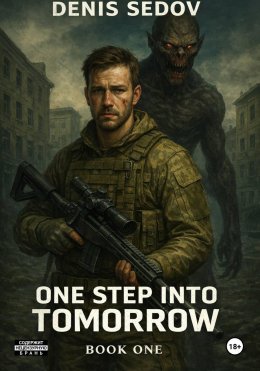
Blurb
What if the thin line between our world and the shattered reality of “Tomorrow” is not fantasy – but a brutal truth?
Konstantin, a man with a complicated past, becomes someone capable of crossing into a place from which no one has ever returned.
In a world where cities have turned into ruins and people into monsters, he is no longer just searching for a way home. He is fighting for the right to remain human. For every step. For everyone by his side. For the last fragment of hope.
This is not a story about superheroes.
It is a story about those who rise when all strength is gone.
One Step Into Tomorrow is more than post-apocalypse.
It is about us.
About choice.
About the price of returning.
Chapter 1
The Stranger Wind
It was autumn. Cold, dismal, and utterly soaked with rain—my most hated season. Not spring, which gently leads into the heat of summer. Not winter, with its crisp snow and thoughts of skiing and hunting. Not even summer, which I dislike slightly because of the heat. No—everything happened now, in this grey, rotting autumn.
The wind lashed droplets against my face, and the damp cold bit into my bones, but I barely felt it. Drenched to the skin, I stood on the roof of a high-rise, staring at the frozen world and waiting.
Emptiness. No cars, no people. Even the wind seemed to move soundlessly, as if afraid to disturb the dead city. Beneath my feet was peeling concrete; around me stood the dark shells of buildings abandoned by their inhabitants.
In that other world, a new district was once supposed to rise here. I had even bought an apartment in this very spot. It was a classic scheme: I invested in a shared construction project, hoping to eventually secure my own home. Everything looked appealing, and the sum wasn’t overwhelming. But the construction had stalled eight years ago. The collective lawsuit filed by defrauded investors had long since disappeared into the depths of the courts, and the building remained a concrete skeleton, frozen in an eternal pause.
Back then, I hadn’t worried much. Money came easily, and the purchase didn’t strain my finances. Besides, I already had a home. It stood apart from the city bustle, almost on the border between the residential area and the river. The district was called Tumanovo—a quiet, undeveloped corner on the outskirts of Kolomna, where private houses alternated with overgrown plots and abandoned gardens. Beyond the fence lay a riverside meadow, and a bit further on, the edge of a forest. It was always quiet there. Even the wind felt different, as if lazy and contemplative. I had chosen the place myself—far from people, closer to something alive.
But six months ago, it all came crashing down.
The job cut four years earlier had come unexpectedly. After the events of 2022, the foreign company where I worked as an advisor wound down its operations in Russia and exited the market. For the first time, this only seriously affected my finances six months ago. After the layoff, I took a full-time position as a senior dispatcher for special cargo security until better times arrived. I had worked in security before – or rather, I had done it on the side, combining my main career with convoy trips across the country.
Six months ago, the bank began tightening the noose of debt. A loan taken out for a business venture turned into a complete disaster. I had planned to open a drone piloting school and a virtual arena. Everything had started smoothly: a large space in an ideal location, perfect for a gaming center; the bank had approved the loan surprisingly quickly… But soon after, the premises for the business—paid for with that very loan—were declared an illegal construction. Neither the realtor nor the bank had informed me of this. The money had already been transferred, and the seller had disappeared.
When it became clear that I was sinking into a debt pit and would almost certainly lose my home, a firm that had bought out my debt appeared almost immediately. Somehow, a standard loan had turned into something astronomical. My lawyer said everything had been buried in the contract and nothing could be done. And all of this in just six months…
Worse still, the combined value of my car, my house, the premises—which could not be sold after the demolition order—and my accumulated savings did not cover even half of the new debt.
And then they came – the debt collectors. People who never raise their voices or threaten you directly. They simply appear everywhere, imprinting themselves onto your life, filling it with neat smiles and impeccably polite words. Slowly and methodically, they drive you into a corner.
This micro-district was just another failure. In my world, it was never finished. But here…
A gust of wind slapped my face with rain. Droplets landed on the grip of my pistol. I stepped into the elevator control room and adjusted the weapon on my tactical rig. The touch of cold metal brought my thoughts back to the events of two weeks ago. The terminal continued blinking green, indicating a stable connection and standby mode.
Chapter 2
A New Acquaintance
Shooting had always been more than just a hobby for me. Perhaps it all started back in childhood – with those first, almost ritual sensations: the smell of burnt gunpowder, the chime of a casing bouncing off the floor, the soft click of the bolt. I could not put it into words back then, but I understood – this was mine.
Later, in the army, that feeling only intensified. I did not stay on contract for the money or because of the instability of the times. I simply felt comfortable where it smelled of metal and cordite, where I had access to weapons. I always enjoyed shooting whatever I could get my hands on – from standard assault rifles to old Mosins or SVDs.
Over time, I began seeking new approaches myself, trying different techniques, studying ballistics. And since childhood, I had also been drawn to archery – and I mastered that as well.
There is always order in my house, but the centerpiece is the gun safe. My favorites lie there: a smoothbore pump-action shotgun and a 7.62-caliber hunting carbine (to be precise, fitted with “Berkut” optics). I am not a hunter in the classical sense, but simply knowing they are there gives me a sense of control, strength, and tranquility.
It is difficult to impress me. Someone does a backflip on a motorcycle—sure, cool. Someone scores a beautiful goal—great. But all of that leaves me indifferent. However, a good series of hits, the sensation of recoil, a precise shot—that triggers a real surge in my soul. Shooting has always been something almost intimate for me. I treat it with jealousy, respect, and a passion that few understand.
And that is probably why I ended up in this club. Even if I didn’t find friends there, I at least found people who understood what I was about. We don’t have heart-to-heart talks or discuss philosophy, but each of us knows the sound of a single shot from a Glock and how the grip of a Viking feels in the hand. That is enough to feel among our own.
After another "conversation" with the debt collectors, I drove to the shooting club and went through two boxes of ammo alone. I didn’t want to leave, and I still had rounds left. But I decided to take a break anyway. I warned the instructor, Sanya—a former marine recently returned from the SMO with a wound—that I’d be back later and headed to the club’s bar.
There were almost no patrons. A man with a newspaper sat in the corner; at the counter were two guys around twenty-five.
"Hey!" I said to Nastya, the shooting instructor and part-time bartender, waitress, and generally the most indispensable person in this club, cutting off her conversation with the guys and clearly ruining one of their attempts to impress her.
"Hi, Kostya! Coffee?"
Nastya immediately switched her attention to me, which caused clear resentment from one of the guys. She brought the coffee and sat down across from me with a mug of tea.
"I’m so glad you showed up!" she smiled. "They’ve been filling my head with all sorts of nonsense for thirty minutes. And as luck would have it, there’s no one else here. Are you here to shoot or just for coffee?"
"To shoot, Nastya. Needed to blow off some steam, so I dropped by."
"You’ve been coming in quite often lately," she noted, narrowing her eyes. "Used to be once a week, now it’s every two or three days. Accumulated a lot of steam, have you?"
She sipped her tea and watched me intently, as if trying to figure out what was on my mind.
Nastya was beautiful. Truly. That was exactly why, when I needed to hone my pistol shooting, I hadn’t chosen her as my instructor. I didn’t think training alongside such a woman would do me any good. Tall, slender, with luxurious chestnut hair she always kept in a loose ponytail. She was probably around thirty-five. As far as I knew, she was single. And most importantly, every time I stopped by the club, she would invariably spend at least a little time with me.
"It’s accumulated," I smirked. "So far, I’m managing to vent it. We’ll see how it goes from here."
The two guys pointedly dropped money on the counter and headed for the exit. Nastya was about to say something, but new visitors appeared in the doorway—a guy and a girl. I knew them. We had met here before, even shot together. They waved to me and said hello. Nastya smiled and went over to them. I watched her walk away, admiring her gait on autopilot.
"May I sit down?"
The suddenness almost made me spill my coffee. The man with the newspaper was standing before me. He held a mug of beer and waited for my answer.
"Your name is Kostya, isn’t it?" The man broke the lingering silence. Without waiting for an answer, he pulled out a chair and sat at my table, positioning himself between me and the bar.
"Can I help you with something?" I asked, not very politely, setting the coffee aside.
"My name is Makar." He extended his hand.
Now I examined him more closely: average height, dark hair with streaks of grey, brown eyes, a broken nose. Late forties. From under his shirt cuff on his right hand, a tattoo peeked out—something resembling half a gear, though the fabric prevented a full view. I ignored his gesture and repeated:
"So, what do you want?"
"Just to talk. I’ve been waiting for you for a while. Nikolai suggested I look for you here. You know, Nikolai, your friend and shooting instructor."
I certainly knew Nikolai. We had developed a great rapport that had somehow grown into a friendship, and it would have become even stronger if not for one “but.”
I leaned forward and scrutinized my companion once more.
"And when was the last time you met Nikolai?"
Some time ago, he had simply vanished. Took a week’s vacation, said nothing to anyone, and disappeared.
"Never. That is, I haven’t met him before; other people worked with him," Makar replied. "But I spoke with him about ten days ago. Over the comms."
He watched my reaction.
"Alright, do you have time to talk?" The man finished his beer, set the empty mug on the table, and stared at me again.
"Yes, I’m listening."
At the next table, two men sat down noisily, arguing about something.
"Maybe in the range? It’s quieter there," Makar suggested, pulling out money.
"The range it is."
A joyful feeling washed over me: if Nikolai was alive, that was already good news.
"Shall we shoot a magazine each?" Makar asked as we entered the gallery and headed toward the firing line.
The range was empty. By the way he greeted the guard at the entrance and the instructor Sanya, it was clear he was a frequent guest. While he was preparing, I curiously eyed his "Viking"—the MP-446.
"Good pistol," Makar noted, catching my gaze. "Same caliber as yours: nine by nineteen. Eighteen-round magazine. Though the spring is stiff; you have to get used to it until it’s broken in." He checked the slide and added, "Better to use our local ammo; it’ll last longer."
I took out my Beretta and loaded the magazine. I had obtained my firearm license right after my service, getting a job at a security agency run by a fellow soldier and friend. The job allowed me to legally own weapons but required me to escort cargo from Izhevsk and Vyatskiye Polyana to Moscow once every two weeks. While I had my main job, this was a hindrance, but after the firm closed, I had more time.
We shot through a couple of magazines. Makar shot confidently and easily, as if using a pistol were as habitual as using a spoon and fork.
Later, while reloading in the safe zone, I asked:
"So, where is Kolya?"
I didn’t intend to delay the questions any longer.
"He’s there…" Makar faltered. "In short, he’s in trouble."
I remained silent, waiting for him to continue.
"A year ago, Nikolai went on an… expedition. He was supposed to return, but something happened that delayed him…"
"Is that all? If that's all, it was nice chatting."
I stood up, packing my gear into my backpack.
"Wait, Konstantin. I just don’t know how to explain this to you… Better if I show you a video." Makar pulled an A4 sheet from his bag. "But first, sign this."
I took the paper.
"A non-disclosure agreement?" I raised an eyebrow. My details were already filled in. "You’ve come prepared, I see."
After signing the document, which didn’t commit me to anything yet, I handed it back.
"Now, look."
Makar opened a file on a tablet and pressed "Play." A dark, cloud-shrouded sky appeared on the screen. Beneath it were ruins. Definitely our city. The camera shifted, catching—
I slammed the pause button.
"What the hell?"
Before me was… me. Or rather, someone who looked exactly like me. A grimy face, tactical backpack, weapons… He moved in a crouch toward cover, holding a flashlight and an assault rifle at the ready. He scanned the street, made sure it was clear, and signaled to someone. Nikolai emerged from behind a wall—in a brand-new uniform, gear without a scratch, weapons looking like they were straight from the store. He had almost reached cover when a vehicle resembling a "Tiger," though modified, appeared around the corner. Drones hovered above it.
It all happened in seconds. Fire was opened from the vehicle onto the building. Almost simultaneously, two… creatures appeared near the car. My brain couldn’t find another word. One of them, skidding in a turn, burst into the house they were shooting at. The second raced further down the street. At that moment, my double raised his weapon and opened fire on it.
The image froze.
"That’s all I can show you," Makar said quietly.
I swallowed the lump in my throat.
"What… the… hell?"
My mouth felt dry. Speaking became difficult.
"That is… 'Tomorrow'," Makar paused. "A world very similar to ours, but with its own… nuances. Our knowledge of Tomorrow is extremely limited," he continued, choosing his words carefully. "Until recently, we didn’t know about it at all…" He faltered, as if mentally editing his own speech.
"For the most part, our information is based on the stories of the few inhabitants our… let’s call them researchers… have managed to speak with."
He nodded, as if confirming his own choice of words.
"Anyway, you saw it yourself. Nikolai is there… He’s wounded. He needs to be pulled out. But now, we’re going to a restaurant; I haven’t eaten since dinner yesterday, and we have a long talk ahead."
Without waiting for my answer, Makar stood and headed for the exit.
The restaurant "Kupets" was a two-minute walk down the street. We settled at a corner table in the deserted hall and ordered potatoes with meat and mushrooms and some fruit mors from the waitress. The pitcher of mors was brought immediately, with the promise that the rest would arrive within twenty minutes. I was about to ask a question, but Makar preempted me, raising a hand.
"We don’t have the right person to get Nikolai out. Let alone an entire group."
He paused, gauging my reaction.
"It all started not so long ago," he continued. "How? Even I don’t know everything. No clearance. Just at some point, the possibility of a transition to… 'Tomorrow' appeared."
Makar ran his fingers along the glass of mors.
"Now we know more. But this is all theory. Two transitions. Or rather, one entrance and one exit. The distance between them is massive. I’ll tell you the details later. It doesn’t matter for now."
I waited in silence for him to continue.
"It all started when one day, in broad daylight, a man flew out of a basement of a house—right here on neighboring Chkalov Street." He looked up. "Literally."
The words came with difficulty; it was obvious that having such conversations was not his usual business.
"The guy was covered in dust, dressed in a mix of military gear and rags, loaded with weapons, battered and drenched in blood. He didn’t resist when he was disarmed by a traffic police patrol that happened to be nearby." Makar leaned in slightly. "Twenty-four hours later, the area was cordoned off and declared an emergency zone. The residents were relocated. You should remember that."
I nodded. Such a story had indeed happened, though the rumors were that terrorists had mined something and the authorities had missed it.
"And that’s it?"
"No," Makar shook his head. "Rumors spread. Our… 'partners' learned about the incident. After long negotiations, a joint group was organized to study the phenomenon. That’s how the first controlled passage appeared." He took a sip of mors. "The passage there is with us. And with the Americans—only the way back."
I narrowed my eyes.
"But the first guy got out somehow? So there’s an exit here too?"
"Correct," Makar nodded. "But we haven’t been able to bring anyone back yet."
"Why?"
He paused.
"Because not everyone can enter. That’s the first issue. There is also a second one, but we won’t talk about that now."
I raised my eyebrows inquisitively.
"Look," Makar said, resting his elbows on the table. "For the first expedition, we equipped two groups. Volunteers. High-level specialists."
I listened in silence.
"The first group entered…" He slowly shook his head. "And a second later, out of ten people, only two remained. The rest vanished."
I didn’t quite understand what he meant and asked:
"How… vanished?"
"Evaporated. Their things remained, but they were gone." Makar looked away. "Within a five-kilometer radius of the entrance, there is communication with us. We can even transmit video. But beyond that—silence. The second group…" He squeezed a napkin between his fingers. "They all vanished."
I said nothing.
"But now we have a theory," he continued. "Researchers at the entrance installed cameras and instruments. They helped us understand one thing." He paused. "If a person from here has a living double there, then that person vanishes during the transition. I hope I’ve explained that clearly?"
I felt my stomach knot up.
"Nikolai was able to enter because his double died in a skirmish with the creatures. Died in front of witnesses from the first group. When this theory emerged and we learned of it, we immediately began testing it and looking for suitable candidates for transitions. And that is exactly why Nikolai became one of the researchers."
I opened my mouth, but Makar stopped me with a gesture.
"I’ll tell you the details later. The main thing is—Nikolai is alive but wounded. Right now, he is being hidden by three of our… local employees, so to speak. Two operatives from the first group are heading toward the exit point in Texas."
"To where?" was all I could manage.
At that moment, the waitress brought the order. I stared at the steam rising from the potatoes and mushrooms. We remained silent until she left.
"To Texas, Kostya. There’s not exactly an exit there, but more on that later…" Makar continued. "Maybe order a hundred grams after all?" he added with a smirk.
"Even a bottle a day for a week wouldn’t help me figure this out. No need, thanks. I don’t really drink," I said.
"Fine. As I was saying," Makar went on, "communication only works near a transition point. At least, that’s what we know at the moment. So—"
"And where are your two specialists now?" I interrupted.
"I can’t even imagine. Besides reaching the exit, they have another task—to try and find other transition points. There’s a theory: if they manage to establish contact somewhere along the way, it means there might be a way out in that area. Or a way in. To be honest, I don’t know yet."
For a while, we ate in silence. Only when I pushed my plate away did Makar continue.
"Your double is dead."
"Good thing you waited until I finished eating," I muttered.
"At the end of that video I showed you, he was gunned down from that vehicle. The drone accompanying Nikolai filmed everything. We cut that part out so as not to shock you immediately."
"And what do you want from me now? For me to climb into this 'Tomorrow' of yours?" I already knew the answer, but I asked anyway.
"Yes, that’s exactly what we want, Kostya."
He raised a hand, stopping my next question before I could ask it.
"This is solely your decision, Konstantin, and no one else’s. There…" He waved a hand vaguely. "There could be anything. Diseases, mutant creatures, radiation… And what did you expect? How many facilities have stood without control? Chernobyl might seem like a sweet bedtime story compared to that."
He leaned forward slightly.
"From what we’ve managed to gather—from limited research and from information provided by our partners—something went wrong there with their laboratory experiments. People, after being vaccinated against some virus—let’s say, something similar to our COVID, to make it easier for you to understand—began to mutate. Not immediately, but after some time."
"The mutations varied in type and stage. Some turned into creatures resembling a hyena crossed with a gorilla. Some remained on two legs but were no longer human—vicious, aggressive beings. Some… became mutants but retained the ability to think. Those are the most dangerous ones."
"Those who didn’t take the vaccine—they die. Mutants kill them, the lack of medicine and the constant struggle for survival finish them off."
He paused.
"And the creatures… that’s a whole other conversation. Mutants—they were the ones in the car. And near it too."
"I’ll tell you straight," Makar went on, "the biggest problem is something else. If a person from here has a double there—and that double is a mutant—then during the transition, that person also vanishes. Finding a candidate for transition without risk is practically impossible."
"Now we have you. And that first guy who managed to come here—or rather, fall out of Tomorrow at the very beginning. But there’s a problem with him—he categorically refuses to return. His double died three years ago during a special operation."
"It’s the same story with the Americans who fell through—or whoever they are, I don’t know exactly. Their doubles are also dead. The reasons vary, but the result is the same."
He paused.
"And one more important point: the Americans have the same situation—none of those who came from there want to go back."
Makar fell silent.
And I, though I had only just learned about this “Tomorrow,” already understood very well those who didn’t wish to return. Everything he was telling me simply didn’t fit in my head. And something in this story clearly didn’t add up.
Questions were piling up. More and more.
But aloud, I asked only one:
"So all of this is just to pull Kolya out? I find it hard to believe a fairy tale about saving not even your own soldier, but some freelance guy who just agreed to go on a quick gig. Let’s either have it as it is—or I’ll pay for this lovely lunch and we’ll go our separate ways."
"There is, of course, something else," Makar said. "But I will only speak of that after your consent."
He had somehow imperceptibly switched to the informal tone.
"You're not much of a recruiter," I said ironically.
"It’s not my primary profession. To be completely honest, I’m doing this for the first time. It’s just the deadlines—and there’s no one else for now," Makar said, spreading his hands.
Silence hung in the air.
For about five minutes, each of us was lost in our own thoughts. Makar responded to messages on his phone, occasionally glancing in my direction. And I stared blankly at the TV, where an ad for the restaurant and the dishes served here was playing.
"Let me tell you how we see it," Makar finally said, unable to hold back any longer, pouring more mors into our glasses.
"We assume the following: after certain training, you go into… 'Tomorrow.' You try to get Nikolai out. His condition is stable but grave. There was a moment when he began to recover, but lately his condition has deteriorated. During the last comms session, he could barely speak, constantly losing his train of thought."
"What exactly led to this…" Makar spread his hands again. "Without an on-site examination, it’s hard to say more. You will be the one to conduct that examination. You will receive everything we have for this."
"Task number two: you install equipment with the help of our specialists. They will stay on comms as much as possible. After that equipment starts working, you return together with Nikolai. If we can’t open a passage, then we’ll wait for news from the first pair of specialists."
He paused and looked at me.
"In turn, if you consent, we will immediately settle all your problems. There will be a handler at the training base; they will brief you. And once we’re sure everything is ready, you can move out."
"Besides everything else, the commission for your transition there will be…" He paused, opened something on his phone, and turned the screen toward me.
I lost count several times, recalculating the number of zeros.
"We will agree on the specific additional sum later. This will be deposited before your departure," he finished.
"Do I have time to think?" I asked, finishing the mors.
"You do—but not much. Until tomorrow. Here’s a number; call when you’ve decided. And don’t forget the non-disclosure," Makar said, emphasizing the last part.
After that, he paid and left the restaurant, leaving me alone in the hall, which was gradually beginning to fill up.
Chapter 3
What Comes Next
Stepping outside, I felt a strange pleasure from the touch of the raindrops for the first time. After standing there for a while, I couldn’t think of anything better than returning to the club.
The bar was nearly empty. Tosha, a young waiter who had recently started working there, was bustling between the tables. Nastya stood behind the bar, pouring something. Noticing me, she waved, beckoning me over. When I approached, she pointed to an empty stool.
"Want something?" she asked, wiping glasses.
"No, thanks. Nastya, do you remember when Kolya disappeared? Did you notice anything unusual?"
She looked at me with surprise, her brow furrowing slightly. One could hardly expect vital information from her, but still…
"Nothing unusual. He left one day—and that was it. I’ve stayed in touch with his ex-wife. She says decent amounts of money hit his account every month. Probably found a good gig somewhere. I wish he’d called, though; we were friends, after all… Can you give me a lift home? I’m finishing in half an hour," she said, abruptly changing the subject.
I could only nod.
Nastya was clearly pleased that I agreed. She hadn’t seemed to expect otherwise. She tossed her hair and began tidying up the counter.
"We could go up to my place; I’ll fix you some dinner," she said as soon as we got into the car.
My plans, of course, were different.
I liked Nastya. She liked me; that had been clear for a long time. I could have offered her something serious. But not now.
Although I didn’t want to admit it to myself, I already knew I would accept Makar’s offer. Maybe because Nikolai needed to be pulled out. Or maybe because something wasn’t quite right in my head. What sane person would agree to such a thing?
The money?
That wasn’t the main point.
But the sum Makar had shown me as a bonus was obscenely large.
Gradually, everything in my mind was falling into place.
I knew exactly what I had to do.
"Nastya, let’s go to my place instead," I said.
She turned, glanced at me, and, as if waiting for an explanation but not hearing one, simply nodded.
"You see, I’ll have to leave. I don’t know for how long. And the house will be empty. You’re renting an apartment, right?"
She nodded again.
"Well, there you go. There’s a house here. If you move in, you’ll be helping me out—and you’ll be more settled. You won’t have to pay; I’ll leave money for expenses and bills."
Silence hung in the car.
Nastya watched me intently, her gaze piercing through me like an X-ray.
"Well, are we going?" I said, breaking it first. "We’ll stop by my place, I’ll show you everything, and then I’ll take you home."
"Fine. But to my place first. Deal?"
The whole way, I felt her casting glances at me. But my mind was occupied with something else entirely. The feeling that I was missing something in this whole story still wouldn’t leave me.
"Kostya, brake. This is my house."
I was so absorbed in my thoughts that I nearly missed the turn.
While Nastya went up to her apartment, I dialed the number Makar had given me.
"Hello. This is Konstantin. I accept."
Nastya was gone for about forty minutes.
I managed to make a couple of calls and ordered a grocery delivery to the house.
She reappeared with two bauls—there’s no other word for those massive striped bags from the nineties.
"You make decisions fast," I told her, grabbing a bag and shoving it into the trunk of the jeep.
"There’s no point in driving back and forth. I’ll gather the small things later. Otherwise… I’d have to take a taxi or beg Tosha."
She shoved the second bag in and, looking at me with her big, beautiful eyes, added softly:
"And besides… what if you change your mind? I’d never forgive myself. Well, shall we go?"
Her question sounded unusually tentative. There was a slight shyness in her voice, which wasn’t like her at all.
"Of course, if there’s nothing else you want to take," I nodded, "let’s go."
We drove in silence the whole way. Only when we reached the house did I take out the key fob and explain how to open the gates with the remote. Then I pulled the car into the yard and led her around the house, showing the locations of all the security cameras.
Only when I was punching the code into the door lock did I notice it was pouring rain and she was in a light jacket.
While Nastya was saving the gate and alarm codes into her phone, a thought suddenly struck me—how strangely and quickly everything had begun to move. But to be honest, that wasn’t entirely true. We had known each other for a long time. Chance meetings, conversations at the club, coffee at the bar, rare trips to competitions…
The chemistry between us had always been there—quiet and unspoken—as if we were both waiting for life to put everything in its place. But every time, something got in the way.
Once, we ended up at a party after a shooting match. Everyone was relaxed, laughing, chatting; she was especially beautiful—hair slightly disheveled, bright eyes, a light flush. We sat together on the veranda for a long time. She was telling me something; I was listening and thinking: this is the moment.
But I froze.
I said something stupid, looked away, didn’t take her hand.
And then it was too late. Everything vanished into the air like smoke.
Since then, we had simply remained close, and the intimacy of that evening had always hovered around us.
And now she was in my house.
A bit lost, tense, as if she didn’t fully understand what she was doing herself—but staying by my side nonetheless.
"Alright, take over the household," I said. "You have a driver’s license, right?"
Nastya nodded. Her eyes grew even wider.
"Then I’ll add you to the insurance and draw up a power of attorney—though it’s not strictly necessary, just in case. And we’re going to the MFC right now; I need to officially register you at this address. Bring your passport."
I said all this as we walked from the garage into the house.
"I’m not going anywhere. Until you explain everything to me, I’m not moving an inch."
There was such tension in her voice that I realized if I didn’t defuse things now, the rest of the day and evening would be lost.
"Nastya, I have to leave. Look, I can’t tell you the details. It’s connected to Kolya. Just a good job I can’t turn down. And the house will go to ruin without someone watching it. So I’m very grateful to you for helping me out. Don’t worry, I’ll make it worth your while."
At these last words, Nastya hissed like a lynx in indignation.
"You think I’m doing this for the money?"
A fire was starting to burn in her eyes.
Well, that’s better. No hysterics, I thought.
"No, of course not—but I’ll cover the expenses anyway."
By the time I said this, we were already inside.
Dropping the bags on the floor, I headed for the exit and looked at her questioningly.
Later, we finalized the documents at the MFC, stopped by the insurance agent, and added Nastya’s details to the policy.
Afterward, we returned to my home—a place I had grown to love deeply because, besides the money (quite a lot of it, actually), I had poured an immense amount of time and nerves into it until everything finally felt right.
"Nastya, here are the keys. Each one is labeled. And here are the phone numbers for the handymen, just in case."
I handed her a small notepad magnetized to the fridge and the ring of keys. Then I showed her where everything was, explaining how to use things.
We kept at it until the groceries were delivered.
"In the bedroom, if you slide the wardrobe door to the left, only my uniforms are hanging there. Just put them on the bed and you can lay out your things. I’ll start on dinner in the meantime."
With those words, I left her alone and set to work on the steaks.
When the meat was almost ready and the salad already tossed, Nastya appeared. She had changed into a tracksuit, which made her look even more attractive. She inspected what I had prepared and began helping me with the meal.
"Kostya," she said once we sat at the table, "why are you alone?"
"Well, I don’t know. I guess I haven’t quite worked up the courage to propose to you yet."
At this answer, Nastya gave me a suspicious, appraising look but said nothing.
"When will you be back? Roughly, at least?"
"I don’t want to lie. Nikolai left for two months, and the third has already passed. So I don’t know. Let’s say a year—and we’ll see from there, okay?"
She had no choice but to nod.
We sat at the table for a long time after that, chatting about nothing. Nastya asked about my service, where I had been before, and how it happened that, besides her, I had no one else to watch the house. She already knew many of the answers but took the opportunity to question me thoroughly.
I answered everything—but evasively.
I didn’t leave her questions unanswered, but I didn’t say anything concrete either.
"Nastya, when I get back, I’ll tell you everything. But today, let’s not waste time. I still have some things to pack."
The interrogation ended there.
She stayed to fuss in the kitchen while I pulled out my hiking backpack and began prepping it for tomorrow.
An hour later, when I had packed everything I planned, it was already pitch dark outside. Nastya was sitting on the huge sofa in the living room, watching some show.
"I’ve changed the sheets in the bedroom. I don’t think you need to drive anywhere now. Stay here. I’ll sleep in the guest room, and you take the bedroom. You’ll find everything you need for the shower and sleep there. Well… it’s a man’s set, really."
She gave a somewhat hesitant nod.
"Nastya, don’t think anything bad; if you want, take the car and go back to your apartment tonight, then move in tomorrow after you’ve slept."
"No, no, I’ll stay," Nastya shook her head quickly.
"Well, it’s a deal then. I’ll head to the shower, and then maybe we can watch a movie together?" I suggested.
She nodded, and I left the room.
Later, we watched some film, eating popcorn and chatting about nothing. The house was bathed in a soft twilight. Rain drizzled lazily outside the windows, and the embers crackled in the fireplace, creating a cozy backdrop.
Her proximity was driving me crazy, and her laughter was filled with warmth and something almost forgotten, filling not just me but the whole house with peace and comfort.
Nastya moved closer—seemingly by chance—but I caught that delicate feminine determination in her movements that is impossible to ignore.
She leaned against me and gently draped my arm over her shoulders, as if saying without words: I am here. Now and here.
I could smell the scent of her hair, mixed with a light aroma of vanilla and herbal shampoo, and hear her steady breathing.
How I didn’t lose my mind that evening, I still don’t understand.
Of course, she didn’t finish the movie.
Nestled comfortably against my shoulder, she began to snore softly, shifting slightly as if searching for a comfortable position.
I didn’t wake her.
I just sat there, savoring the moment I wanted to remember.
When I carefully lifted her in my arms and carried her to the bedroom, she suddenly wrapped her arms around my neck and whispered:
"Are you really going to the other room?"
"Tonight, yes. But let’s repeat this evening when I return. And if you’re not against it…"
She didn’t answer.
She only softly touched her lips to my neck—gently, barely perceptibly.
I covered her with the blanket, kissed her temple, and headed to the living room, taking my backpack with me.
In the morning, I woke to the aroma of something truly homemade.
Soft sounds came from the kitchen: the sizzle of oil in a pan, the quiet clinking of dishes. Through a crack in the half-open door, warm light filtered in—along with the kind of domestic comfort only a woman can bring to a home.
Nastya stood at the stove in my apron, which was a bit too large for her thin frame. Her hair was gathered messily, with a few strands falling onto her cheeks. A pile of golden-brown pancakes lay on a plate, and she held a spatula, flipping another one.
At that moment, she turned and, noticing me, smiled warmly.
"Hey," I said, still sleepy, taking in the simple but incredibly warm scene with quiet pleasure.
"Morning, Kostya," she said and pecked me on the cheek. "Go wash up, shave, and get to the table. Everything will be ready in ten minutes."
I smiled and went to the bathroom.
When I returned, an omelet, steaming pancakes, honey, jam, and a cup of strong tea were already on the table.
"You’ve just fulfilled all my wishes with this breakfast," I said, sitting down.
"I just wanted you to feel good," she answered quietly, pouring tea into my cup.
Her voice was calm—but there was more than just care in it.
"What time do you have to leave?" Nastya asked when we had finished eating and I had changed.
She sat opposite me, holding her cup and tilting her head slightly, as if trying to memorize this moment.
"They should be pulling up any minute now."
As if on cue, a car horn sounded outside.
Nastya stood up abruptly, as if something inside her had jerked, and instinctively reached for my backpack—but a moment later she changed her mind and simply hugged me.
Tightly.
With a kind of quiet desperation.
"Why did you wait so long? Why didn’t you ask me here sooner? I’ll be here. At home. Do you hear? When you come back—I’ll be here."
Her voice trembled, but her gaze was firm.
She said all this while kissing my temple, my cheeks, my lips. And then she just pressed herself against my chest, clutching my jacket as if afraid I would vanish right then.
And so we stood until the car honked again from the street.
At that same moment, a notification chimed.
The phone alerted me to a received message.
"Your account has been credited with…" – followed by the exact sum Makar had shown me on his phone the day before.
In the context of my situation, this message meant there was no turning back.
Chapter 4
The Center
The territory around the abandoned mine complex had long since stopped resembling a ruin.
The main building had been restored hastily and crudely, but functionally: windows were replaced with armored panels, the walls reinforced with concrete slabs, and a modern electronic door with a biometric lock was installed. Along the perimeter stood CCTV cameras, infrared motion sensors, and floodlights mounted on pivoting masts.
The enclosure consisted of a double row of concertina wire stretched between concrete posts. Behind them lay a full-scale checkpoint: a duty module, a barrier gate, and an armored booth with firing slits. A faded flag fluttered on a flagpole next to communications antennas.
The security was serious; nearly a battalion was stationed here. In special revetments at the corners stood "Terminator" armored support vehicles—modern infantry fighting vehicles equipped with active protection systems and twin autocannons. Their hulls gleamed dully in the morning light, ready for combat at a moment’s notice.
A bit further past the concrete barrier, a shooting range had been set up. Rows of targets, sand berms, and sandbag covers—in short, everything indicated that this wasn’t just a place being guarded; it was a place for training and preparation. Short bursts from submachine guns and the muffled thuds of sniper rifles echoed off the complex walls from time to time.
It was no longer a mine complex.
It was a fortress.
A control hub for the passage.
A bridgehead at the Threshold.
"Here is the exit point. The coordinates for everything we know are loaded into your tablet. The map is very similar to the city in our reality, but there are differences. I especially ask you to memorize the location where Nikolai is being held. All of this is also marked on a regular map. We’ve made it plasticized—in case the tablet is damaged."
For a couple of hours now, I had been undergoing briefing.
Seven days ago, I had left Nastya in my house, and since then I had done nothing but prepare. I studied weapons, maps, and gear. I shot. I watched clips about mutants. Over and over, I rewatched videos of that incomprehensible world I was about to enter.
Yesterday, the "First One"—the man who had fallen through to us—arrived. He inspected me skeptically from head to toe but said nothing. Then, for nearly two hours, he explained the best ways to move through the streets, what to fear, where to find water, and where to source food. What was permitted and what was strictly forbidden.
He answered my questions.
At the very end, exhaling heavily, he apologized for not being able to go with me.
We sat on a bench outside the barracks exit. I lit a cigarette. The First One just stared into the void, as if watching something invisible to me.
"You never did say where exactly you appeared from," I began, watching him from the corner of my eye.
He ran a hand over his face in silence, then spoke with a slight crack in his voice:
"I didn’t even understand what happened at first. It was just a battle… We were retreating from Klin. Three of us left. I was covering the rear. Everything around us was burning. One of the bastards…" he paused for a second, "one of those… intelligent mutants, tracked us down. He and I came face to face. I was firing back."
"The last thing I remember is a flash, a noise like a washing machine centrifuge picking up speed. And then… I woke up here. On the street. In a reality that wasn’t mine. Pedestrians, cars, shops open. I was in a stupor for a couple of days."
"Wait…" I frowned. "You said you were retreating from Klin?"
"Yeah. That’s where the breach happened. I was about three hundred kilometers from where your entrance is set up now. I don’t understand how that’s even possible…"
He fell silent.
And I felt everything click into place.
There it was—the detail that had been bothering me all this time.
"The entrance and exit are in different locations," I said aloud, almost to myself. "That means for Nikolai and me to return, we’ll need to get to Klin—where you were."
"Maybe. I got lucky then. Or unlucky," he smirked wearily. "But since then, I wake up every night hearing that sound. It’s like I stayed there. Half of me, anyway."
I nodded silently.
Now I clearly understood that the “exit” would still have to be found—but this new information gave me hope that it might actually work.
Afterward, the First One—everyone had grown used to this callsign—and I spent a long time marking the approximate coordinates of the place where he had fallen through on the map.
Finally, he left, with a vast, undisguised sense of relief.
But just before leaving, he stopped me as we walked down a corridor where there were no cameras. He bent down, as if simply tying a shoelace, and without looking up, said quietly what I would think about for all the remaining days until departure:
"Be prepared for the fact that your friend is not at all what he used to be. I just want you to know."
He straightened up without looking at me and walked on, making it clear there would be no further explanation.
The briefing continued as usual.
Semyon—the handler and instructor—showed new gear, explained the fine details, and drilled the tactics specifically developed for "Tomorrow." Everything was going according to plan.
Every day I found myself thinking back to the final hours before leaving home. I would just sit in the barracks, turning the tablet over in my hands, thinking about the house. About her.
I had only one photo of Nastya: a long time ago, the whole club went out for a barbecue. She had asked me to take a picture of her then. I sent her the photo later—but kept the original on my phone.
Near noon, the handler came in and said, almost casually:
"You have ten minutes. The external channel is open. Talk if you want. But keep it short. We’re cutting everything off after."
I knew immediately what—or rather, who—he meant.
The call signal flashed on the screen.
And almost instantly—her face.
Tired, a bit anxious—but painfully dear.
"Kostya…" she said softly.
"Hey."
"I’ve been so worried… How are you?"
"Everything’s fine, Nastya. Mostly. Just… busy."
"Will you be back soon?"
"I don’t know. I don’t want to lie. But you hang in there, okay?"
She nodded. A tremor of emotion crossed her face. She bit her lip; her eyes grew moist—but she held it together. Just as she was: strong, real.
"I’m here, at home. I’m waiting for you to come back, and I’m doing everything just as you asked. Paid the bills, mowed the lawn—even though it’s autumn, apparently it’s necessary, I saw it on TikTok. I even organized the pantry, can you imagine?"
I smiled.
My first smile in days.
"Promise me you’ll come back."
"I promise," I said quietly. "Only… if something happens…"
"No 'ifs'," she cut me off sharply. "Just come back. That’s all."
We were silent for a second, just looking at each other through the screen—as if afraid the connection would vanish. That this would be our last conversation.
"Listen…" I added suddenly, not quite understanding why I was saying it now, "when this is all over…"
"Yes?"
"Maybe we can start over? For real?"
She smiled again—warmly, softly—with a barely perceptible nod.
"I’ve already started. The rest is up to you."
The connection cut.
And my chest felt a little lighter.
As if there really was something ahead more significant than just a sortie into "Tomorrow."
"AK-202 chambered in 5.56—with a telescopic folding stock. Picatinny rails installed for attachments."
"We’ve fitted a Holosun open reflex sight for you—reliable, proven red dot. You’ll get used to it quickly."
"NVG-10 night vision monocular from SPINA OPTICS—lightweight, compact."
"There’s also the BDN-9—our Russian day/night binoculars."
"A bunch of spare batteries, a charger for both rechargeable and standard ones."
"R-45 radio—good battery life, range from 400 to 480 MHz."
All this and more was shown and explained to me in detail by Semyon and his assistant, Sasha.
At my insistence, I kept my own pistol. 9×19 was a common caliber in that world, and no one objected. The only thing they replaced was the barrel. They also issued a suppressor and four magazines with seventeen rounds each.
I packed my backpack. In my jacket pocket was a list of what I’d put inside:
• "Gorka-Sturm" suit
• Universal plate carrier with mag pouches
• Spare underwear
• My own boots—Croatian-made, and in my opinion, they have no equal
• Survival kit
Ammunition:
• For the rifle—one thousand rounds. One sealed "spam can" of 760 and additional 20-round boxes to make up the total. Plus four loaded magazines
• For the pistol—four boxes of 50 rounds each and loaded magazines
Semyon issued a 6×9 knife with tactical sheaths.
I also added:
• Tactical flashlight (rifle mount)
• Headlamp
• Compass
• Action camera
• Drone
The gear was substantial. Weight—about twenty-five kilograms. And when I added the grenades, it reached thirty.
My back responded with a crunch.
"It's fine," I told myself. "I’ll lug it to the Nest where Kolya is lying low. I’ll unload there."
"Semyon," I said, stopping at the exit of the training building, "why is this place called 'Tomorrow' anyway? Who came up with that?"
The instructor smirked and adjusted the strap on his shoulder.
"Good question. You’re not the first to ask. But the answer, actually, is quite simple."
He sat on a wooden bench, pulled out a pack of cigarettes, flicked a lighter, and exhaled smoke.
"When they first opened the passage, the early researchers couldn’t figure out one strange detail for a long time. Time. It moved differently there. At first, they thought it was an instrument malfunction. Then they blamed it on stress, on fatigue. But when they started comparing camera recordings and clocks from both sides… it was confirmed."
"Is it really that different?" I asked, surprised.
"Exactly one year and one day," he nodded. "At first, everyone thought it was just a day—that world seemed to be living one day ahead. That’s how the name 'Tomorrow' was born."
"But in reality—it’s a year."
"They even checked by the position of the planets: exactly a year and a day, everything matches. A professor explained it to me once—it’s due to the physics of the transition. Time begins to slow down at that moment, and the Earth completes its annual orbit."
"So it turns out—you feel like a second has passed, but in reality…"
"So if I go in today, say, on the twentieth…" I began.
"Then you’ll find yourself there on October 21, 2027," he finished for me. "And it’s not just the date. The clocks are synchronized too. Second for second."
"Strange stuff," I muttered.
"What did you expect? It’s not a tourist route. We still don’t know why it works that way. We just accepted it as fact. And the name stuck by itself. First as a joke, then—officially."
"Tomorrow…" I repeated aloud. "Sounds poetic, I suppose."
"Poetic, you say…" Semyon smirked and flicked his ash.
The last day before the transition, I spent at the range. First zeroing the new barrels, then cleaning them.
The conference hall was modest, without unnecessary flair, but the air in it was thick with tension. At the long table sat those who usually stayed behind the scenes.
To the left was Semyon, the project handler—the man I had trained with. Calm, methodical, he inspired confidence.
To the right were two Americans. Officially partners. Unofficially—those who always kept a finger on the pulse, even if that pulse beat in another world.
Everyone present acted relaxed, chatting about something.
But everything changed when Makar entered.
He didn’t rush. A steady gait. A firm gaze. He took his place at the head of the table, and it became clear—he was the one in charge.
"Well, Konstantin," Makar began, "not much time left. We are here to tell you everything straight. Without diplomacy. This mission is most likely a one-way trip. Everyone understands this."
He scanned those present.
The Americans glanced at each other but remained silent.
"You are the only one who can pass through right now. Only because your double is dead there. This is confirmed information."
I nodded. Not the first time I had heard it.
"There is something else," Makar continued and handed me a folder. "This is a list. People potentially suitable for work in that world. Specialists, fighters, scientists—those we’d like to send there. But only if their doubles in 'Tomorrow' are dead. You understand?"
"You want me to find information on them?"
"Exactly. Location, circumstances of death, any data. If it turns out they are no longer there, we can send them through to you as reinforcements. This is possibly the only chance to build a proper team."
Semyon chimed in:
"One more point, Konstantin. There is a technical task. Besides saving Nikolai, you must install a passage security system. We’ve been preparing it for a long time; now it’s on you."
He pulled out a metal container and placed it on the table.
"This is a passage locking device. If a leak starts. If the creatures try to break through. Or if everything goes wrong—you must activate it."
"As you already know, the entrance and potentially the exit are about two hundred kilometers from Kolomna. And four hundred from each other. If you install this device where you come out, you will most likely lock everything."
"The access code will be yours alone. It’s insurance. The final kind."
"According to our theory, if you lock the entrance, the exit will lock as well. But this is not guaranteed. If there’s an opportunity, request confirmation; if not—lock it."
One of the Americans coughed.
"We know it sounds like a death sentence. But you are our only chance. We aren’t forcing you, but… there is simply no other choice."
"I’ve already made my decision," I replied.
Makar gave a slight nod.
"Then memorize the coordinates for the blocker. You have the list. Everything else is in your hands."
As I was about to leave the building, Makar caught up with me in the corridor.
"Shall we take a walk?"
I nodded.
We stepped outside; the cool wind eased the tension a little.
"How does it feel, Konstantin?" he asked, lighting a cigarette. "All this… sounds like a bad sci-fi novel, doesn’t it?"
"More like an epitaph written in advance," I answered, looking straight ahead. "Too many 'ifs,' too little 'how.'"
"That’s why you’re the one going," Makar said, exhaling smoke. "Because you’re not a hero. Not a soldier from a book. But a man who understands the price of a step into the unknown."
I said nothing.
"You don’t truly believe in success, do you?" he continued. "And you’re right. No one does."
"But sometimes it’s enough to have one person who simply moves forward. Not because of faith—but because no one else can."
"You talk too beautifully, Makar."
"Because I know how it will look on paper if you don’t return."
"Already preparing the obituary?"
"No. I just want you to know—you’re not a pawn. And not an experiment. We truly hope you return. And not alone."
He paused, then looked at me more softly.
"And, Kostya, don’t worry about what you’re leaving here. Everything you’re thinking about—Nastya, the house, the documents, the bills—it will all be under control. Personally under mine."
I looked at him.
"Do you promise?"
"I promise. If, God forbid, something happens, I will personally see that everything is taken care of. Personally. You can be sure of that."
He extended his hand.
I shook it.
"Only… do one thing, Kostya."
"What?"
"Come back. However it works out. Whenever it works out. Just… come back."
The entrance itself was located in one of the complex’s buildings—an unremarkable structure of grey concrete at first glance. But it was here that the border between worlds began.
Above the entrance zone, they had erected a dome—a massive hemisphere of reinforced aluminum and hardened carbon composite. The structure wasn’t just protective; it served as an antenna, collecting and dampening anomalous fluctuations, recording even the slightest changes in the transition field parameters.
Before the entrance stood massive gates of multilayered metal with a hermetic locking system.
Every passage was controlled not only by IDs but by biometrics: retina scanners, fingerprints, facial recognition—as well as heart rate sensors and micro-particle skin analysis. All of this formed the protective barrier.
Along the perimeter were wide-angle cameras operating in the infrared and ultraviolet spectrums. Motion sensors and chemical air analysis tracked even the slightest deviations.
The protective circuit was reinforced by stationary automated fire points.
Remote-controlled machine gun systems were built into the dome and walls: 12.7mm turrets capable of tracking targets by heat signature and firing in autonomous mode. Operators only observed from the command post; human intervention was required only as a last resort.
All power and control systems were redundant.
Inside was an airlock zone where everyone passing through was scanned a second time before being admitted to the inner section, where the transition point itself was located.
A simple-looking, scuffed concrete wall.
The square dark opening of an old elevator shaft.
Before it—a low threshold running the entire length.
The elevator itself was long gone, but the shaft remained.
That was where the line began.
Beyond it lay "Tomorrow."
The day of the transition arrived.
After all the briefings, drills, nights with maps, and gear checks, I almost dreamed of just opening those black gates and leaving. Getting it over with.
Anywhere—just to be gone already.
"Well, ready?" Makar asked, standing nearby. With him was another man, wearing glasses and a grey beard, looking like a professor from an old textbook.
"Ready…" I replied, not quite knowing if it was an assertion or an attempt to convince myself. "I’ll head in slowly…"
I’d been told many times how it should happen: the door opens, you pass through the security locks, approach the elevator, take a step over the threshold—and you’re there.
No flashes.
No sounds.
Just a different world.
I rose from the bench located about five meters from the transition zone entrance.
I took one last look around—as if saying goodbye to this entire world forever.
"Wait! Hold on!" came a shout from behind.
Semyon and an accompanying soldier were running across the lawn, breathing heavily. Each held two avoskas—yes, the most ordinary string bags from the Soviet era. And inside them—sealed "spam cans" of ammunition.
"Forgot these!" the winded handler shouted. "Two cans each! As we agreed!"
"Are you serious? How am I supposed to carry that? That’s forty-five kilograms right there," I grunted, looking at the string bags. "I’m already loaded like a packhorse, and now I have to lug four more cans!"
"This is payment for the locals," Semyon replied in a calm, didactic tone, not stopping his work. He was already wrapping the string bag handles with duct tape to make them easier to hold. "You just carry them over the threshold. After that, it’s not your concern."
"Remembered at the last second," he added apologetically, looking more at Makar than at me. "You have to pay for Nikolai. For the treatment. And for escorting you to the Nest, too. They’re serious people over there, you know, and they don’t like exerting themselves for free."
At the same time, he stuffed a pack of pryaniki into one of the bags.
"We’ll talk later," Makar interrupted him grimly.
I nodded, though my back already ached at the mere sight of the load.
"Just grab them like this and carry them over the threshold," Semyon repeated. "They’ll meet you there."
Meanwhile, Semyon continued to demonstrate exactly how I was supposed to carry these four cans of ammunition in string bags.
I felt as if I had walked into a theater of the absurd; the scene was so ridiculous and surreal that I couldn’t help it—I laughed out loud.
"Where on earth did you find string bags?" I managed through the laughter. "Was there really nothing better? Like… bags, or something?"
"Good thing the Americans have flown off and don’t see this," Makar smirked, clearing his throat. "Oh, Semyon, I’ll remember this…"
He threatened him with a clenched fist, though his face still showed traces of laughter.
"Only a human can pass through the threshold," Makar continued more calmly. "We tried sending a drone, a rover—nothing worked. Useless. Like hitting a wall. We even tried a dog once—it just resisted as if there was simply nothing there. The Threshold only lets a human through—and whatever is on them."
"Well, Godspeed, Kostya," Semyon said quietly, hugging me goodbye. "Don’t be sore; I’m buying the drinks when you get back!"
"Fine, I won’t forget," I smiled and clapped him on the shoulder.
I said goodbye to Makar.
He squeezed my hand firmly, man to man, without a word. Just a nod.
In that gesture was everything I needed.
I approached the entrance.
Took a deep breath.
And stepped through the opening doors.
Chapter 5
Beyond the Threshold: Serious People
It all happened in a fraction of a second.
I took a step, and… the sound vanished. The smell of damp earth, the sky, the wind—everything dissolved as if I had been torn out of the familiar world. There was no light, no darkness, just nothing. And in that void, I suddenly felt something collapse behind my back. Like a door I had passed through had slammed shut silently, but forever.
And then—a sharp blow to the senses. Heat, the smell of burning earth, a metallic taste in the air. I was standing in the middle of a street buried in debris. The sky was grey, murky, as if blanketed by ash. The city around me resembled a war zone: shattered facades, twisted storefronts, riddled walls, and a strange, viscous silence.
One step—and you're in hell. But hell wasn't fiery. It was dusty, dead, and oppressive.
I moved. The body armor squeezed my shoulders, the backpack pressed against my lower back, the string bags pulled at my hands, the rifle was held to my chest—everything was in place. Only my heart was beating as if it were trying to break free. And not from fear, no. From a wild, animal sensation: you are on the other side now. That’s it. There is no way back.
A metallic screech came from a nearby alley. I froze, instinctively crouched, and shifted my gaze to the nearest cover—an overturned concrete slab. I carefully set the string bags with the ammo cans on the ground. My fingers settled on the safety. My body was already living its own life, falling back on instinct, while my mind was still trying to accept what was happening.
Then, a wave of realization hit me: I am in "Tomorrow"!
This was no longer our world. Everything I had seen in clips, everything I had been told, seemed like distant theory. And now… now every breath, every step was part of a new reality.
And yet, I was alive. That was the main thing for now.
Now I had to move. Find cover. Orient myself by the map. Get to the point. To the Nest, where Nikolai was waiting.