
Tales of Wisdom. Insights from Russian Folklore
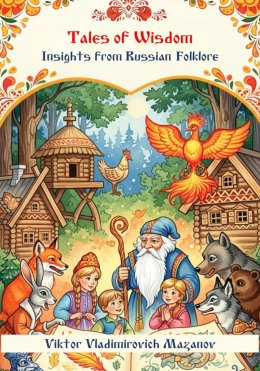
Fox and Wolf
Once upon a time, in a small village by the river, lived an old man and his wife. One frosty, sunny day, the grandfather decided:
– I fancy fish for supper!
He went fishing. He chopped a hole in the ice, sat with his rod—and soon had a whole cartload of fresh fish! As he headed home, rejoicing, he spotted a fox lying on the road, seemingly dead.
What luck! thought the grandfather. I’ll give the old woman a fox-fur collar!
He scooped up the creature and tossed it onto the cart, then walked ahead, unaware the fox was pretending. While he trudged along, the fox carefully tossed fish out of the cart—one by one, until none remained. Then it slipped away.
When the grandfather returned, he announced proudly:
– Wife, I’ve brought you a collar!
– Where? – the grandmother wondered.
– On the cart!
She went to look—no fish, no fox. She scolded him:
– You’ve been fooled again!
The grandfather realized:
– That sly fox tricked me!
He rushed outside, searching everywhere. But neither the fox nor the fish were found. He grieved and grieved, but it was too late to fix anything.
Meanwhile, the fox gathered the fish scattered along the road. It sat eating, licking its chops. Suddenly, a wolf appeared:
– Greetings, friend! Share some fish!
– Catch your own, – replied the fox.
– I don’t know how, – the wolf whined.
The fox narrowed its eyes cunningly:
– I’ll teach you. I caught these. Go to the river, dip your tail in the ice hole—that’s how you’ll catch them. Just sit there a good long while!
The wolf ran to the river, sat by the hole, and stayed all night. As the water froze, he thought: "The fish must be biting my tail."
"I’ll sit longer to catch more," he reasoned.
He might have stayed, but then he saw women approaching with buckets, shouting:
– A wolf! Beat him!
Terrified, the wolf tried to yank his tail free—but it was frozen solid. The women rushed over and thrashed him. He pulled and pulled, to no avail. Finally, he yanked with all his might, tore free—leaving his tail behind—and fled. As he ran, he fumed:
"That fox tricked me! I’ll teach her a lesson!"
Meanwhile, the fox craved more treats. It sneaked into a village hut where pancakes were baking, the window left open—and plunged snout-first into a dough tub. Panicked and smeared, it scrambled out and bolted to the woods.
Running along, it met the wolf:
– So, this is how you taught me, friend? Look—I’m bruised all over!
– Ah, dear wolf, – sighed the fox, – I was beaten worse! You have bumps, but my head’s split open. I’ll never make it home…
The wolf eyed the fox’s dough-caked head and thought: "She truly had it rough."
– Climb on my back. I’ll carry you, – he offered.
The fox hopped on, riding him and whispering:
"The beaten carries the unbeaten… The beaten carries the unbeaten…"
– What’s that you’re muttering, friend? – asked the wolf.
– I said, "The beaten carries the beaten," – lied the fox.
– Yes, friend… yes… – sighed the wolf.
He carried her to her den and left. The fox rejoiced at outsmarting everyone again. It decided to raid the village for chickens—but as it neared the fence, hounds burst out. The fox barely escaped, reaching its den battered and hiding to recover. The dogs had mauled it badly. This time, the fox learned: cunning alone isn’t enough to stay well-fed.
Key Themes for Discussion
Cunning and Gullibility
– The fox embodies cleverness and deceit, tricking the grandfather and wolf for gain.
– The wolf and grandfather, trusting blindly, become victims of her schemes.
Consequences of Deception
– The fox gains short-term rewards but must constantly devise new tricks.
– Trusting the fox leads the wolf into painful, humiliating situations.
Choices and Outcomes
– The grandfather chooses to trust first impressions without verifying if the fox was alive.
– The wolf follows the fox’s advice without considering potential risks.
Discussion Questions for Children
Why do you think the fox decided to trick the grandfather and wolf? What did she gain?
Helps explore character motivations and outcomes of actions.
What might have happened if the grandfather checked whether the fox was alive before loading it?
Highlights the importance of verifying information and critical thinking.
Why did the wolf trust the fox? What was the result? How else could he have acted?
Encourages analyzing situations and questioning dubious advice.
Do you think the fox was happy at the end? Why?
Prompts reflection on whether short-term gains from deceit lead to lasting happiness.
What would you do if you were the wolf or grandfather? How would you handle the situation?
Fosters empathy and consideration of alternative choices.
The Fox and the Rolling Pin
Once, a little fox was walking through the forest. She walked and walked—she grew hungry. She began to look for something to eat, but found nothing edible. Only a rolling pin lay on the ground. The fox picked up the rolling pin, twirled it in her paws—and thought of how to use it.
She went to a village and knocked on the first cottage she found:
– Let a little fox sister stay the night! It’s very cold!
– It’s cramped even without you! – answered the man from behind the door.
– I won’t crowd you! – the fox smiled slyly. – I’ll lie on the bench myself, tail under the bench, rolling pin under the stove.
They let her in. The fox settled down, hiding the rolling pin under the stove. Early in the morning, as soon as dawn broke, she sprang up, ran out the door and threw the rolling pin away. She lay again on the bench and waited for the owner to wake up.
When the man began to get up, the fox ran to the stove and cried out:
– Oh, my rolling pin has disappeared! It’s the most precious thing—a grandmother’s gift! I’ll die of sorrow! I want nothing in return, not even a chicken!
The man was frightened:
– Take my chicken, just don’t cry! And don’t tell anyone that I stole it—I never took your rolling pin!
– Nothing can replace it… – the fox sobbed, wiping her dry eyes with a paw.
The man kept urging her until he finally placed the chicken in her paws.
The little fox went on, humming:
The little fox walked along the path,
Carrying the rolling pin!
For the rolling pin—she’d trade a chicken!
The little fox had wanted to eat the chicken, but then she thought:
“What if I trick once more? Maybe I’ll get even more!”
She returned to the village and knocked on another house:
– Let a little fox sister stay the night! It’s very cold!
– It’s cramped even without you! – shouted the man from behind the door.
– I won’t crowd you! – the fox smiled slyly. – I’ll lie on the bench myself, tail under the bench, chicken under the stove.
They let her in. The fox settled down and hid the chicken under the stove. At dawn she slipped out, hid the chicken outside, then returned and lay again on the bench. When the owner began to wake, the fox wailed:
– Oh, my chicken has disappeared! Grandmother’s gift! More precious than any treasure! I’ll die of sorrow! I’ll take nothing in return, not even the fattest goose!
The man was frightened:
– Take my goose, just don’t cry! And don’t think badly of me, and tell no one I stole anything.
– Nothing can replace it… – the fox sobbed, wiping her dry eyes with a paw.
He kept urging her until he finally placed the goose in her paws.
The little fox went on, humming:
The little fox walked along the path,
Carrying the rolling pin!
For the rolling pin—a chicken!
For the chicken—a goose!
She knocked on the next cottage. Everything repeated: she lay on the bench, the goose under the stove. In the morning the same story unfolded—she hid the goose and cried out:
– My goose is gone! My best friend! I’ll take nothing for it—not even a rabbit!
The man was scared that he would be accused of theft. He began to persuade the fox until he handed her a rabbit.
The fox continued, her song ringing:
The little fox walked along the path,
Carrying the rolling pin!
For the rolling pin—a chicken!
For the chicken—a goose!
For the goose—a rabbit!
She knocked on yet another house. As before, she lay on the bench, the rabbit under the stove. At sunrise, tears and wails rose again:
– My rabbit is missing! It was unique! I won’t even take a piglet for it!
But the owner of this cottage was no fool. He had seen the fox leave the house at night and understood everything. While the fox slept, he put—not a piglet—but his own dog into a sack.
– Take a piglet, little fox, – he said, handing her the sack that was moving. – Just don’t think badly of me. I never took your rabbit!
The fox rejoiced, took the sack, and went to collect the hidden chicken, goose and rabbit. She gathered them all, intending to place them in the sack “as a piglet” for easier carrying. She opened the sack…
And from it—BARK!—the dog sprang out and lunged at the fox!
The fox fled, but the dog managed to tear at her sides and pull out a tuft of reddish fur. Miraculously, the fox escaped into the forest. The chicken, the goose and the rabbit returned home.
Since then the fox fears approaching any village—she believes a dog is waiting for her there.
Thus her cunning turned into misfortune.
Key Themes for Discussion
Greed and Deception
– The fox used lies to obtain more and more, but in the end she was left with nothing.
Credulity
– The homeowners believed her tears without checking whether she was telling the truth.
Justice
– The dog in the sack symbolizes justice; the fox’s deceit received its deserved punishment.
Discussion Questions for Children:
Why did the fox pretend to cry? What would you do in the men’s place?
This helps the child understand manipulation and the importance of honesty, prompting reflection on the characters’ motivations and what drives their actions.
How did the man with the dog figure out the deception? Why was his action just?
Encourages analysis of behavior and recognition of the reasons behind people’s actions.
What did the fox feel at the end? Can we feel sorry for her?
Develops empathy and the understanding that mistakes can teach valuable lessons.
How would the story end if the fox had not lied?
Stimulates imagination and contemplation of proper choices and their outcomes.
The Fox and the Hare
In a forest where the pines whisper to the wind, the Fox and the Hare lived.
The Hare owned a modest but cozy hut built of sturdy oak boards – a log cabin. He never boasted, tended his garden in silence and drank tea brewed with fragrant forest herbs.
The Fox, however, spent the whole winter showing off:
– Look at my palace! – she rang, tapping her paw on the glittering icy walls. – All of silver and diamonds! Dear neighbours, you are most welcome!
The other animals came, admired the patterns on the walls, and the Fox sighed languidly:
– Oh, the life of a queen is so heavy!
When spring arrived, streams sang, the sun shone and melted the snow. The Fox’s icy “palace” melted in a single night – like sugar in tea. Only a puddle remained. The Hare’s cabin, which the Fox had once mocked, stood as good as new – dry and sturdy.
A wet, trembling Fox knocked on the Hare’s door:
– Neighbor, dear! Let me warm up, even for a minute. I’m freezing! – she whined, pretending to be helpless.
The kind Hare flung the door open:
– Come in, make yourself at home! Sit by the stove, I’ll brew some tea.
At first the Fox behaved properly: thanked him, sat modestly on the edge of the bench. But with each new cup of tea (the Hare kept refilling her) she grew bolder.
– Oh, how cozy it is here! – the Fox sighed. – Isn’t it a bit cramped for the two of us? Move over, Hare!
She pushed the host away from the stove.
– The rug at the door is dirty – it should be thrown out! – she grumbled, sprawling on the hare’s little couch. – And your soup is under‑salted. Your cabin, to be honest, is too small for someone as important as me!
The Hare only flapped his ears:
– I’m sorry, little Fox, I tried…
But the Fox sprang up, eyes flashing:
– Enough trying! Out of MY house! I’m the mistress now!
She hurled the poor fellow out, slamming the door loudly.
The Hare walked along the path, tears dripping onto the moss. Suddenly a Dog appeared:
– Woof‑woof! Why are you crying, Hare?
– How can I not? I had a log cabin, and the Fox had an icy one. Spring came, her house melted, she asked to stay – I let her in. And now she’s driven me out.
– Don’t worry! We’ll chase her away! – promised the Dog.
They approached the Fox’s house:
– Hey, Fox! Get out!
From the stove the Fox shouted:
– Try to drive me out! I’ll jump, I’ll leap – shards will fly everywhere!
The Dog was frightened, tucked his tail and ran away.
The Hare wept again. He kept walking and met a Bear:
– What’s wrong, little one?
– I had a log cabin, the Fox an icy one. Spring melted her house, she asked to stay. I let her in, and she drove me out.
– Ah, you trickster! Don’t cry, I’ll throw her out!
– You can’t… – the Hare replied sadly. – The Dog tried – couldn’t. The Bear tried – couldn’t.
– I can! Let’s go!
They approached the house:
– Out, Fox, from someone else’s home!
From the stove the Fox answered:
– Oh‑oh! I’m scared! I’ll jump, I’ll leap – shards will fly everywhere!
The Bear flinched and fled.
The Hare kept walking, still crying, when a Bull appeared:
– Moo! Why so sad?
– How can I not… I had a log cabin, the Fox an icy one. Spring melted her house. I let her in, she drove me out.
– I’ll chase her away with my horns!
– You won’t, – sighed the Hare. – The Dog tried – couldn’t. The Bear tried – couldn’t. You won’t either…
– We’ll see! Let’s go!
They approached the house:
– Out, Fox, away!
From the stove the Fox shouted again:
– I’ll jump, I’ll leap – shards will fly everywhere!
The Bull snorted… and ran off.
The Hare’s tears kept flowing. Then a Rooster with a sharp scythe on his shoulder met him:
– Coo‑ka‑re‑koo! What’s the trouble, Hare? Why are you crying?
– How can I not… I had a log cabin, the Fox an icy one. Her house melted, I let her in, she drove me out.
– Let’s go, I’ll chase her away!
– You can’t… The Dog tried – couldn’t, the Bear tried – couldn’t, the Bull tried – couldn’t.
– I can! – the Rooster declared confidently.
They approached the house:
– Coo‑ka‑re‑koo! I’m carrying a scythe, I’ll cut the Fox! Come out, Fox, here!
A trembling voice came from inside:
– I… I’m getting dressed!
The Rooster repeated:
– Coo‑ka‑re‑koo! I’m carrying a scythe, I’ll cut the Fox! Come out, Fox, here!
– I’m putting on a coat! – the Fox squeaked.
The Rooster shouted a third time, even louder:
– Coo‑ka‑re‑koo! I’m carrying a scythe, I’ll cut the Fox! Come out, Fox, here!
The Fox sprang out like a startled bird and fled into the thicket without looking back.
The Rooster did not strike her – his courage was enough to protect his friend.
Since then the Hare and the Rooster have lived together in a warm little house, drinking raspberry tea and recalling how bravery defeats trickery.
Key Themes for Discussion
Cunning vs. Kindness
– The Fox deceived the Hare by exploiting his kindness, but it was kindness that attracted true friends to him.
Bravery and Its Sources
– False bravery: the Dog, Bear and Bull relied on strength but fled from threats.
– True bravery: the Rooster won not by size but by confidence and standing his ground.
Friendship and Mutual Help
– The animals helped the Hare because they sympathized with him. The Rooster became a genuine friend, showing the power of support and loyalty.
Discussion Questions for Children
Why did the Hare let the Fox in, even though he knew she was sly?
Helps children see how kindness can border on excessive trust.
Why did the Fox frighten the strong animals, but not the Rooster?
Teaches the difference between physical strength and the strength of spirit.
What would you do in the Hare’s place if the Rooster had not appeared?
Encourages critical thinking and searching for alternative solutions in a difficult situation.
Why didn’t the Rooster harm the Fox, but only drove her away?
Shows that justice need not be cruelty; it is the resolve to stop wrongdoing.
What did the Hare learn from this story?
Highlights the importance of choosing friends wisely and valuing one’s own home.
The Fox and the Crane
In a dense forest where a clear stream wound its way between tall pines, a cunning red fox and a wise crane with long legs and a sharp beak lived as neighbours. They often met by the forest stream, chatted about the weather, discussed forest news, and over time a friendship grew between them.
One spring, when the first flowers appeared in the woods, the fox and the crane became godparents to a family of squirrels. After this joyful event they grew even closer and began to call each other dear friends.
A few weeks later the fox wanted to show off her cooking skills, so she decided to invite the crane to lunch.
– Dear friend! – said the fox, meeting the crane by the river. – Come to my house tomorrow! I’ll prepare something very tasty for you. I’ll treat you so well you’ll lick your fingers!
The crane, polite and trusting, gladly accepted:
– Thank you for the invitation! I’ll definitely come.
The next day the crane, dressed in his finest feathers, set off to the fox’s house. He was very hungry and eagerly awaited the feast.
The fox greeted him at her burrow with a wide smile:
– Come in, come in! Everything is ready!
She led the crane to a table where a broad, flat plate lay. On it was a thin layer of fragrant semolina porridge.
– Help yourself, dear friend! – said the fox, sitting opposite him. – I made this porridge especially for you.
The crane tried to scoop the porridge with his long, sharp beak, but nothing worked. The porridge was spread so thinly on the flat plate that he could not grasp any of it. He tapped the plate with his beak, trying to catch even a crumb, but all in vain.
Meanwhile the fox happily lapped the porridge with her wide tongue, quickly eating everything down to the last drop.
When the plate was empty, the fox licked her lips contentedly and said:
– I’m sorry, dear friend, there’s nothing left to serve. I hope you liked it!
The crane, still very hungry, replied politely:
– Thank you for the treat! Now come to my house tomorrow; I’d like to treat you as well.
The fox, pleased with her cleverness, gladly agreed.
The following day, anticipating a hearty meal, the fox went to the crane’s house. She was very hungry and hoped to fill herself for the whole week ahead.
The crane warmly welcomed her at his home:
– Welcome! Come to the table, the feast is ready.
On the table stood a tall jug with a narrow neck, from which a tempting aroma of okroshka (a cold soup) drifted.
– Help yourself, dear companion! – said the crane. – I prepared this especially for you.
The fox approached the jug and tried to reach the soup, but her broad snout could not fit into the narrow neck. She spun around the jug, tried to stick her tongue inside, and managed only to sniff the delicious scent.
The crane, meanwhile, easily slipped his long beak into the neck and ate the okroshka with appetite, finishing it down to the last crumb.
When the jug was empty, the crane said politely:
– I’m sorry, dear companion, there’s nothing left to serve.
The fox realized she had received a lesson for her cunning. She felt upset and angry, but said nothing. Hungry and offended, she went home empty‑handed.
Since then the fox and the crane no longer kept each other’s company. When they met in the forest they only nodded to each other from a distance and never invited each other over again.
The fox learned an important lesson: if you want others to treat you honestly and fairly, you must first act honestly and fairly toward them. As you treat people, so they will treat you.
Key Themes for Discussion
Cunning and Its Consequences
– The fox tried to outwit the crane for her own benefit.
– The cunning turned against the fox herself.
Friendship and Resentment
– The fox and the crane were friends, but resentment ended their friendship.
– Respecting a friend’s interests is essential.
Respect and Politeness
– The crane thanked the fox for the dinner even though it was not very successful.
– The fox did not show respect for the crane or his offering.
Discussion Questions for Children
Why couldn’t the fox eat the porridge, while the crane couldn’t eat the okroshka?
This helps the child consider the importance of taking into account the different abilities and needs of other people.
Why do you think the fox got upset with the crane?
This encourages the child to think about managing one’s emotions and responding appropriately to situations.
Do you think the crane acted correctly by responding to the fox in the same way? Could he have acted differently?
This question develops the ability to analyze different behavioural options and understand the concept of fairness.
What can be done to preserve a friendship?
This invites the child to reflect on the importance of respect, trust, and mutual understanding in relationships.
What lesson from this tale can you apply in your own life with friends and family?
The most important question, helping the child connect the story’s moral with real life and personal behaviour.
Kolobok
In a small village lived a grandfather and a grandmother. They were not wealthy, but they lived together peacefully. The grandfather worked in the garden all day, while the grandmother kept the household and cooked meals.
One day the grandfather came home especially hungry and said:
– Wife, please bake me a kolobok. I’m dying for a bite!
The grandmother raised her hands:
– Darling, what am I supposed to bake? There’s no flour left in the house.
– Don’t worry, – the grandfather smiled. – Scrape the box, sweep the threshing floor – maybe we’ll gather enough!
The grandmother took a small scoop and a broom, swept the threshing floor, scraped the box – and indeed collected about two handfuls of flour. She mixed the dough with sour cream and baked a kolobok in the oven. The kolobok turned out golden‑brown and fragrant. She placed it on the windowsill to cool.
The kolobok lay there, soaking up the warm sunshine. Suddenly it jumped from the windowsill into the yard – the window was open – and rolled away: from the yard onto the street, from the street into the forest.
“What a beautiful world!” the kolobok thought as it rolled along the forest path and began to sing:
I am Kolobok, Kolobok,
Swept from the threshing floor,
Scraped from the box,
Mixed with sour cream,
Baked in the oven,
Chilled on the window!
I’ve fled from Grandfather,
I’ve fled from Grandmother!
Rolling and humming a cheerful tune, the kolobok suddenly met a hare:
– Stop, Kolobok! I’ll eat you!
– Don’t eat me, little hare, – pleaded the kolobok. – Better listen to my song!
And he sang:
I am Kolobok, Kolobok,
Swept from the threshing floor,
Scraped from the box,
Mixed with sour cream,
Baked in the oven,
Chilled on the window!
I’ve fled from Grandfather,
I’ve fled from Grandmother,
And from you, little hare – I’ll slip away even faster!
Then he rolled on.
Further along he encountered a grey wolf:
– Kolobok, Kolobok! Stop! I’ll eat you!
– Take your time, wolf, – said the kolobok. – First hear my song:
I am Kolobok, Kolobok,
Swept from the threshing floor,
Scraped from the box,
Mixed with sour cream,
Baked in the oven,
Chilled on the window!
I’ve fled from Grandfather,
I’ve fled from Grandmother,
I’ve fled from the hare,
And from you, wolf – I’ll slip away even faster!
While the wolf listened, enchanted, the kolobok rolled away again.
Soon a big brown bear appeared:
– Kolobok, Kolobok! I’ll eat you!
– Where are you going, clumsy one? Listen to my song! – laughed the kolobok, feeling clever and swift.
I am Kolobok, Kolobok,
Swept from the threshing floor,
Scraped from the box,
Mixed with sour cream,
Baked in the oven,
Chilled on the window!
I’ve fled from Grandfather,
I’ve fled from Grandmother,
I’ve fled from the hare,
I’ve fled from the wolf,
And from you, bear – I’ll slip away even faster!
The bear was left empty‑handed, and the kolobok kept rolling, feeling the smartest of all.
At last a red fox met him. She smiled warmly:
– Hello, Kolobok! How rosy and handsome you are! I’ll eat you!
– Wait, fox! Hear my song first! – said the kolobok and began:
I am Kolobok, Kolobok,
Swept from the threshing floor,
Scraped from the box,
Mixed with sour cream,
Baked in the oven,
Chilled on the window!
I’ve fled from Grandfather,
I’ve fled from Grandmother,
I’ve fled from the hare,
I’ve fled from the wolf,
I’ve fled from the bear,
And from you, fox – I’ll slip away even faster!
– What a wonderful song! – praised the fox. – But you know, Kolobok, I’m not as young as I used to be; my hearing is poor. Come a little closer and sing again, please.
Flattered by the compliment, the kolobok rolled nearer and sang once more.
– Thank you, dear! – said the fox. – Still, I can’t hear well. Sit on my nose and sing one last time, as loudly as you can.
Without thinking of the danger, the kolobok leapt onto the fox’s nose. As soon as he opened his mouth to sing, the fox snapped his nose shut, opened her jaws, and swallowed him whole.
Thus ended the kolobok’s adventures. His overconfidence and frivolity led to a sad end. The fox, satisfied, licked her lips and went on her way, thinking: “Cunning and patience always defeat boastfulness and carelessness.”
Key Themes for Discussion
Overconfidence and Its Consequences
– The kolobok was too sure of himself and believed he could outrun everyone.
– Excessive self‑assurance blinds one to real danger.
Cunning and Trust
– The fox used flattery to deceive the kolobok.
– The kolobok believed the flattering words, even though he had previously been cautious.
The Value of Caution and Prudence
– The kolobok could have avoided disaster if he had been more careful.
– One must not be overly trusting.
Discussion Questions for Children:
Why did the kolobok believe the fox, even though he had successfully escaped the other animals?
This helps the child understand how flattery and feigned kindness can be more dangerous than a direct threat.
What would you do in the kolobok’s place when you meet the fox?
Encourages critical thinking and the ability to anticipate the consequences of one’s actions.
How do you think Grandfather and Grandmother felt when they discovered the kolobok was missing?
Helps develop empathy and an understanding that our actions affect loved ones.
What advice would you give the kolobok if you could speak to him at the beginning of the story?
Assists the child in formulating life principles and practicing the skill of giving counsel.
What lesson can be taken from this tale?
Leads to the idea that modesty and caution are more valuable than overconfidence.
Dog, Cat, Rooster and Fox
In a cozy cottage on the edge of the forest lived three friends: a Dog, a Cat and a Rooster. The Dog guarded the house and kept order, the Cat looked after the household and gave good advice, and the Rooster delighted everyone with his bright plumage and ringing songs.
One morning the Dog went into the forest to chop firewood, and the Cat took a lunch to him. As he left, he warned the Rooster very seriously:
– Watch yourself, Pete, stay at home, keep quiet and don’t open the door for anyone! A Fox might come and carry you away.
As soon as the friends were gone, a cunning Fox slipped up to the house. She sat under the window and sang sweetly:
Pete, Pete, little rooster,
Golden comb!
Look out the window —
I’ll give you some peas!
The Rooster’s curiosity was piqued: who could be singing so beautifully? He stuck his head out the window— the Fox seized him at once and fled into the forest! The Rooster shouted at the top of his lungs:
The Fox carries me
Into dark forests,
Over high mountains,
Across swift rivers!
Dog and Cat, save me!
The Dog and the Cat heard their friend’s cry from afar, rushed to help, caught up with the Fox, rescued the Rooster and brought him home.
– Oh, Pete! – the Cat said sternly. – Don’t trust a fox’s songs! She’s taken you once already, and she’ll take you again if you believe her!
The next day the Dog went back to work in the woods, and the Cat brought him a treat. Before leaving, he warned the Rooster again:
– If the Fox carries you away, we may be too far to hear you. Stay quiet, don’t open the door to anyone!
He locked the door and left.
Meanwhile the Fox kept watching from the bushes. As soon as the Cat disappeared from sight, she returned to the house and sang again:
Pete, Pete, little rooster,
Golden comb!
Look out the window —
I’ll give you a little grain!
The Rooster did not answer. Then the Fox placed a few grains by the door and said:
– Don’t be afraid, Pete, here’s some grain, and I’m off.
In fact she hid behind the door, standing perfectly still.
The Rooster looked out the window— the Fox was invisible. He walked to the door, listened— it was indeed quiet. He opened the door, pecked at the grain… and was instantly caught—the Fox grabbed him and ran away.
The Rooster shouted again:
The Fox carries me
Into dark forests,
Over high mountains,
Across swift rivers!
Dog and Cat, save me!
But the friends were far out in the woods and did not hear.
He shouted even louder:
The Fox carries me
Into dark forests,
Over high mountains,
Through dark pines,
Across swift rivers!
She wants to eat me!
Dog and Cat, save me!
The Cat finally heard the cry, called the Dog, and together they chased the Fox and rescued the Rooster.
The following day the Dog went even deeper into the forest, and the Cat took him a lunch. He warned the Rooster once more:
– Never open the door! Don’t listen to the Fox’s songs! She will deceive you and carry you away. We’ll be so far that we won’t hear or be able to help!
The Cat had just stepped over the threshold when the Fox was already at the window, singing:
Pete, Pete, little rooster,
Golden comb!
Look out the window —
I’ll give you some peas!
But the Rooster, now hardened by bitter experience, did not trust the Fox and stayed silent.
The Fox then tried a different approach:
– What’s this, has Pete finally gone mute?
– No, Fox, you won’t fool me! I won’t look out the window! – the Rooster replied.
The Fox tossed a few peas and some wheat into the window, left the rest on the porch, and sang again:
Pete, Pete, little rooster,
Golden comb,
Look out the window!
My house is big,
And grain piles like a mountain!
You’ll be full and happy —
I’ll give you a red coat!
She added:
– Don’t be afraid, just look at my treasures and riches—and you’ll go back right away! I don’t want to eat you. If I wanted to, I’d have already done it. I just want to see your beauty, hear your songs, and will reward you with gifts!
The Rooster thought, “What if it’s true?” He stuck his head out, and in the same instant the Fox seized him and carried him far to her own home.
No matter how much the Rooster cried, no one heard him or came to his aid.
The Cat and the Dog returned home— the Rooster was missing! They immediately understood that the Fox had taken him. Instead of grieving, they set out to search for him.
They met a Bear and asked:
– Bear, have you seen the Fox?
The Bear shrugged lazily, scratching his back:
– I haven’t seen anyone.
They went on and met a Boar.
– Boar, do you know where the Fox lives?
The Boar only snorted— he was busy looking for acorns:
– I know nothing about her!
Having nothing else to do, they kept looking— until a Hare popped out from behind a bush:
– I know where her house is. I’m very scared—the Fox hunts hares, and I’m afraid she’ll catch me! But the Rooster needs help, and I can’t stand by. For his sake I’ll show you the way!
The Hare led the friends to the Fox’s den. The Dog hid behind the door, and the Cat took out a lute and began to sing, praising the Fox:
Oh, beautiful Fox!
Oh, how radiant you are!
Come out, show yourself,
We admire your fur!
The Fox was pleased— she wanted to see who was flattering her. As she stepped out, the Dog swiftly threw a sack over her and caught her.
– Take her to the village, – said the Cat, – maybe they’ll want a fox’s collar.
The Fox, truly frightened, pleaded:
– Forgive me! Let me go! I’ll never come to your house again!
Meanwhile the Cat slipped into the den and freed the Rooster.
The friends felt a little pity for the cunning Fox:
– All right, we’ll let you go this time. But keep your word— never come near us again!
They released her, and indeed she never approached their cottage again.
From then on the Dog, the Cat and the Rooster lived together happily. The Rooster learned the most important rule: listen to trusted friends and be careful with strangers.
Key Themes for Discussion
Trust and Caution
– The importance of not trusting strangers, especially when they offer something tempting.
– The need to heed the advice of close people who care about our safety.
Consequences of Disobedience
– Ignoring warnings can lead to dangerous situations.
– Following safety rules is vital, even when they seem boring.
Friendship and Mutual Help
– The Cat and the Dog never abandoned the Rooster in trouble.
– The Hare overcame his fear to help his friends.
Discussion Questions for Children
Why did the Rooster keep falling for the Fox’s tricks?
Helps children understand that flattery and promises can be dangerous.
How do you think the Hare felt when he decided to help the Dog and the Cat despite his fear?
Shows that true bravery is not the absence of fear, but acting despite it to help others.
What safety rules from this tale can be applied in real life?
Encourages children to draw parallels between the story and reality, such as not opening the door to strangers and not trusting sweet words.
Did the Dog and the Cat do the right thing by forgiving the Fox at the end of the story?
Prompts discussion about forgiveness, second chances, and the possibility of change.
What would you have done in the Rooster’s place the second and third times the Fox returned?
Develops critical thinking and helps children consider alternative actions in dangerous situations.
Cat and Fox
One summer a family went on vacation to their country cottage and took their cat with them. The cottage stood right next to a forest.
At first the cat was frightened by the new surroundings. He didn’t even stick his nose out of the house. But slowly he began to get used to it. First he roamed around the house, then the garden, and finally the whole plot. A new pastime appeared for the cat – catching mice. Living in an apartment he had never known they existed, but in the countryside his hunting instincts awoke.
One sunny morning, as usual, he went out for a stroll in the garden. He was basking in the sun and watching butterflies when he suddenly saw a gray mouse dart past and disappear into the bushes.
“You’re lying! You won’t get away!” thought the cat and lunged after the mouse. The mouse slipped into tall grass, then under the fence, and finally raced straight into the forest. The cat, absorbed in the chase, didn’t notice how deep he had gone into the thicket.
When he finally stopped, he realized he was completely lost. Tall firs and oaks surrounded him. He tried to find the way home, but the more he walked, the deeper into the woods he got. He grew sad, but there was nothing to do, so he kept wandering.
After a while he stumbled upon an old forester’s hut. The house was empty, but the attic was warm and cozy. The cat decided to stay there until he could find his way back. He hunted mice and birds, so he wasn’t hungry, but he missed his own home.
Several days passed. One day, while walking along a forest path, the cat met a beautiful red Fox. The fox had never seen a domestic cat before and was very surprised.
She bowed politely and asked:
– Excuse me, kind stranger, I have lived in this forest for many years, but I have never seen a creature like you. May I ask your name and where you come from?
The cat, who had also never seen a fox, was a little frightened, so he answered:
– My name is Kotofey Ivanovich. I came from the distant Siberian woods to see how you live here.
– Ah, Kotofey Ivanovich! – the fox exclaimed happily. – What a beautiful name! My name is Fox Patrikeevna. Would you like to come to my home?
The cat agreed, and the fox led him to her snug burrow. She offered him forest delicacies, and they chatted pleasantly. The fox liked the clever and kind cat very much.
– Tell me, Kotofey Ivanovich, – the fox asked, – would you like to stay with us? I sometimes feel lonely here.
Kotofey thought it over and accepted. Thus they began to live together as good friends.
The next day the fox went hunting to bring food for lunch. She caught a plump duckling and, pleased, was carrying it home when a gray Wolf appeared.
– Stop, fox! – the wolf growled. – Give me the duckling! I’m hungry!
– Never! – the fox replied boldly. – I’m taking this duckling to my friend Kotofey Ivanovich. He is very fierce and strong. If he finds out you’re hurting me, he’ll be very angry!
– What kind of Kotofey Ivanovich is that? – the wolf asked, surprised. – I’ve never heard of such a creature.
– He has just arrived from distant woods, – the fox explained. – A very formidable and mighty beast! It’s better not to meet him.
The wolf became a little frightened and wanted to find out who this beast was.
– How can I approach him without making him angry?
– Bring him a gift, – the fox continued. – Place a little lamb by the old oak near the stream, but hide yourself so Kotofey Ivanovich doesn’t see you, or he’ll get angry and eat you!
The wolf ran off to find a lamb.
The fox kept running home and met a brown Bear who also wanted the duckling.
– Fox, let’s share! – the bear boomed. – The duckling is big; it will be enough for both of us!
– No, bear, – the fox said firmly. – I’m taking this duckling to my friend Kotofey Ivanovich. He is very strong and fierce. If he learns you’ve harmed me, he may get angry!
– Who is this Kotofey Ivanovich? – the bear asked, puzzled. – I’ve never heard of such a creature.
– He came from faraway lands, – the fox explained. – Very powerful and fearsome! It’s better not to tangle with him.
The bear, like the wolf, became a little scared but also wanted to see this beast.
– All right, – the fox agreed. – Bring a calf to the old oak by the stream. The wolf already promised to bring a lamb. Just hide well so Kotofey Ivanovich doesn’t see you, or he’ll get angry and eat you!
The bear set off to fetch the calf.
Soon the wolf and the bear met at the appointed spot. The wolf carried the lamb, the bear the calf. They began to argue about who should go call the fox and her fearsome friend.
– You go, bear, – said the wolf. – You’re braver.
– No, you go, – replied the bear. – What if this Kotofey Ivanovich really is as scary as they say?
At that moment a Hare ran by. The bear called out to him:
– Hey, hare! Come here!
The hare was frightened but hopped over.
– Do you know where the fox lives? – asked the bear.
– I do, – answered the hare. – Run to her quickly and tell her the bear and the wolf are waiting with their friend Kotofey Ivanovich at the old oak, and they have brought gifts.
The hare sprinted to the fox at full speed. Meanwhile the bear and the wolf tried to decide where to hide.
– I’ll climb the oak, – decided the bear.
– What should I do? – the wolf worried. – I can’t climb trees! Hide me somewhere, please!
The bear helped the wolf hide in a pile of dry leaves under a bush, then climbed to the very top of the oak and began to watch from above.
The hare arrived at the fox and delivered the invitation.
– Very well, – said the fox. – Tell them we’ll be there soon.
The fox and Kotofey Ivanovich (the cat) went to the oak. From a distance the bear whispered to the wolf:
– Look, they’re coming! And that Kotofey Ivanovich is so tiny!
When they reached the oak, Kotofey saw a heap of berries and honey. He was very hungry and pounced on the calf, purring loudly.
– Mrr, meow! – he purred with pleasure.
The bear and the wolf thought the cat was saying, “Not enough, not enough.”
– What a glutton! We brought so much food, and he still wants more! He’ll eat us all! – thought the wolf.
He could not see the cat under the leaves, but he was eager to catch a glimpse of the mysterious Kotofey Ivanovich. He carefully pushed the leaves aside. The cat heard a rustle, thought it was a mouse, leapt into the bushes and bit the wolf’s nose. The wolf, frightened that the cat might eat him, sprang up and fled at full speed. Kotofey, startled by the sudden large animal, jumped onto the oak where the bear was perched.
The bear thought the fearsome Kotofey Ivanovich wanted to catch him, panicked, fell from the tree, hit the ground hard, scrambled up and ran away.
– There you go! – the fox shouted after the fleeing pair. – You shouldn’t have angered Kotofey Ivanovich!
Since then all the forest animals began to avoid Kotofey Ivanovich, believing him to be extremely fearsome. The fox and the cat became best friends, stored plenty of food for the winter (the frightened wolf and bear had left it behind), and lived happily in the forest.
Key Themes for Discussion
Friendship and Mutual Support
– The importance of accepting and befriending those who are different from us.
– How the fox’s cleverness and care helped the cat gain respect in the forest and protect him from stronger animals.
Fears and Prejudices
– How the wolf and the bear were frightened of an unknown cat because they didn’t know the truth.
– The need to avoid judging others by rumors and to get to know a creature personally first.
Cunning and Resourcefulness
– The difference between good‑hearted cunning used for protection and malicious cunning used for deception.
– How quick thinking can help in a difficult situation.
Discussion Questions for Children
Do you think the fox did the right thing when she told the wolf and the bear that Kotofey Ivanovich was very fearsome?
This question helps children see the line between lying to deceive and inventing a story to protect oneself and friends.
Why did the wolf and the bear become scared of Kotofey Ivanovich even though he was much smaller than they are?
The discussion will show that fear often stems from ignorance and that appearance does not always reflect character.
What should the cat have done to avoid getting lost in the forest when he chased the mouse?
This encourages children to think about safety rules: not wandering too far from home, remembering the way back, and not getting carried away by play in an unfamiliar place.
Do you think it was right for Kotofey (the cat) to accept the fox’s help after he got lost?
The question highlights the importance of accepting assistance in a difficult situation and shows that new friends can appear in the most unexpected moments.
How do you think the wolf’s and the bear’s attitudes toward unknown animals changed after this story?
The discussion helps children understand that experience can teach us to be fairer and avoid hasty conclusions.
Wolf and the Seven Kid Goats
Once upon a time a mother goat lived with her kids in a small cottage deep in a green forest. She had six sons and one daughter.
The mother often went into the forest to look for fresh grass and clean water. Before leaving she always gave the kids a strict command:
– “My dear children, lock the door with a latch and do not open it for anyone!”
The kids were obedient and always followed their mother’s orders. As soon as she left, they locked the door and played in the cabin, waiting for her return.
When the mother goat came home, she always sang her special song:
“Kid goats, little ones! Open the door, let us in!
Your mother’s come, with milk she’s brought!
Milk runs down the udder, from udder to the hoof,
And from the hoof into the sour earth!”
The kids recognized their mother’s gentle voice at once and ran happily to open the door. Mother fed them tasty milk, told them what she had seen in the forest, and then went out again for food.
One day a wolf happened to wander past their cottage. He overheard that the mother would feed the kids and then go into the forest, and he decided he wanted to eat the kid goats.
The wolf waited a little while, and as soon as the mother goat disappeared into the woods, he crept up to the cabin and shouted in a rough, hoarse voice:
– “Hey, kids, open the door! Your mother’s here with milk!”
But the kids immediately realized it wasn’t their mother and answered:
– “We hear you, we hear you – but you’re not our mother; our mother sings a different song!”
The wolf growled in frustration, and having nothing else to do, he hid and tried again later.
When mother goat returned and sang her song again:
“Kid goats, little ones! Open the door, let us in! …”
the kids joyfully let her in and told her about the wicked wolf’s visit.
– “You’re clever, my dears!” praised their mother. “You did the right thing.”
Mother fed them, and before heading back to the forest she warned them sternly:
– “Remember: never open the door for anyone whose voice isn’t exactly like yours, or who doesn’t know our special song!”
As soon as she left, the wolf rushed to the door and sang the song in his rough voice— he had been hiding near the house and had memorized mother’s tune:
“Kid goats, little ones! Open the door, let us in! …”
The kids, remembering their mother’s lesson, refused to open:
– “Go away, you’re not our mother! Your voice is nothing like Mom’s! Mom’s voice is thin, yours is coarse! We won’t open for you!”
But the cunning wolf didn’t give up. He ran to a blacksmith and asked:
– “Blacksmith, blacksmith! Make my voice thin! I want to play with the kids. As soon as they hear my voice they’ll be scared.”
– “Well, for the sake of the kids… alright, I’ll reshape your voice.”
The blacksmith spent a long time, but finally the work was done.
The next day the wolf returned to the cabin. He waited until mother goat went into the forest, then sang in a thin voice:
“Kid goats, little ones! Open the door, let us in! …”
The kids heard the thin voice and the familiar song. They thought it was really their mother and believed the wolf. The youngest kid, however, tried to stop her brothers:
– “Don’t open! That’s not our mother. She couldn’t return so quickly!”
But the others didn’t listen:
– “Don’t be afraid! That’s definitely Mom— the song is right and the voice is thin.”
They ran to open the door, while the little girl hid in the oven.
As soon as they opened it, a huge gray wolf burst into the cabin! The kid goats scrambled to hide, but the wolf was fast and hungry. He swallowed all six kids and left satisfied.
When mother goat came home, she sang her song, but nobody opened the door. She pulled the handle; the door swung open—it wasn’t locked, and she instantly realized something terrible had happened. Inside the cabin was chaos; none of her kids were anywhere. Her heart clenched with fear, and she began calling for them:
– “My children, where are you?” she wept, searching every corner.
Finally, a quiet voice came from the oven:
– “Mother, I’m here! The wicked wolf ate all my brothers!”
Mother lifted her daughter into her arms and sobbed bitterly:
– “Oh, my dear kids! Why did you open the door for the wolf? He ate you all and left me, a poor goat, with great sorrow.”
Suddenly she heard someone approaching the cabin—it was the wolf!
– “Ah, neighbor goat!” he said in a feigned gentle voice. “I hear you’re grieving, and you think I’m to blame. Could I have harmed your kids? I didn’t eat them, don’t accuse me. Let’s go into the forest and chase away your sorrow!”
Mother, believing the wolf had eaten her kids, also noticed his belly had become huge and round—so she thought he really had devoured them! Yet she didn’t reveal that she suspected his trickery.
– “Alright, neighbor, let’s take a walk,” she agreed, secretly planning a rescue.
She knew there was an old pit in the forest—hunters had made a trap for wolves—and led the wolf to it.
When they reached the pit, the goat suggested:
– “You know what, wolf—let’s have a competition! Who can jump over this pit?”
The wolf agreed, thinking he would easily win. Confident in his strength, he didn’t suspect the goat’s clever plan.
The goat jumped first and easily cleared the pit. The wolf, his belly heavy from having swallowed six kids, ran, leapt, but didn’t reach the edge. He fell straight into the pit!
The impact burst the wolf’s belly, and all six kid goats sprang out—alive and unharmed! The wolf had swallowed them whole out of greed, without chewing.
The mother goat pulled the kids from the pit and hugged them for a long time.
– “Mom, mom!” the kids shouted. “We were so scared! But now we know we must be even more careful!”
Since then the mother goat and her seven kid goats lived happily in their forest cabin. The kids became even more cautious and never forgot their mother’s advice about not trusting strangers and always remembering safety.
Key Themes for Discussion
Cunning and Trust
– The wolf embodies cunning and deception, using many tricks to fool the kid goats.
– The kid goats, on the contrary, are trusting and become victims of his tricks.
Safety and Caution
– The importance of following safety rules and listening to parents’ instructions.
– The need to be careful with strangers, even if they seem friendly.
Maternal Love and Protection
– A mother’s willingness to do anything to save her children.
– The power of maternal love and ingenuity in critical situations.
Discussion Questions for Children:
Why did the kid goats first refuse to open the door for the wolf, but later open it?
This helps children understand that deceivers can change their methods and become more inventive in their lies.
What should the kid goats have done to be absolutely sure that the voice at the door was their mother’s?
It is important to teach children additional ways to verify a person’s identity, not relying only on voice.
Why did the blacksmith agree to help the wolf?
Discuss trust and how evil can hide behind seemingly good intentions.
How do you think the mother goat felt when she discovered her children were missing?
This question develops empathy and understanding of a mother’s feelings and worries.
What lesson does this fairy tale teach?
Helps formulate the main moral of the story and extract life lessons from it
Wolf and the Dog
In a village there lived a dog. For many years he faithfully guarded the house and watched over the barns. As time passed, his legs grew slow and his bark became softer. The dog tired quickly and slept a lot. His owner thought it over and decided that the dog was now useless as a guard, so he chased him away.
The dog ran as far as his eyes could see until he ended up in the forest. There he found an abandoned fox den under a tree and decided to stay there. He slept in it all day, and when he woke up he felt a strong hunger. He decided to catch some prey. He started sniffing the ground and saw a mouse. He chased it, but the mouse slipped into a hole. He chased a squirrel, but it jumped onto a branch. He chased a bird, but it flew away. The dog could not catch anyone.
He sat on a stump and felt sad. Then he saw a wolf approaching. At first the dog was frightened – he knew he could not defeat a wolf. But he soon accepted his fate.
The wolf, however, did not attack; he spoke to the dog:
– Well, they drove you away?
– Well… uh… – the dog could not find words. He could not admit that he had really been driven away.
– You’re hungry, aren’t you? – the wolf asked, ignoring the dog’s stammer. He immediately guessed what had happened.
– I’m barely standing on my legs… – the dog sighed.
– Come with me! – the wolf smiled. – I know where we can find food.
They went to a field where a flock of sheep was grazing.
– Look, there’s a herd of sheep! – said the wolf. – I’ll approach the herd from that side, and you come from this side and start barking. The sheep will get scared and run away. Then I’ll catch one for us.
– But… how can I…
– I know, I know you used to chase me, you used to guard the sheep.
– Well, I…
– I know your job was to guard. So you’re hungry, right?
The dog did not want to frighten the sheep, but hunger forced him to agree. He obeyed the wolf’s order, barked, the herd scattered, and the wolf caught a lamb that seemed injured and could not run fast. Although the wolf set a trap, he was not young either.
– Eat, old friend! – he offered the dog.
They shared the meal, and the wolf left.
A few days later the wolf returned.
– I want to help you get back home. I’ve thought of a way.
The dog first refused, but the wolf persuaded him:
– This is a chance to prove you’re still useful!
The next day the dog’s former owners organized a picnic on a forest clearing. The former lady sat on a blanket reading a book, while her baby lay on her lap trying to catch a fly. The older daughter went to pick berries, and the former husband gathered firewood for the campfire.
Suddenly a wolf jumped out of the bushes, grabbed the baby’s blanket and ran into the thicket. The former lady screamed, and her husband dropped the firewood and chased after the wolf, but could not catch him.
From nowhere the dog appeared, barking and lunging at the wolf. They tumbled across the ground. The dog snatched the baby from the wolf and returned the child to its mother, while the wolf fled into the forest.
The family rejoiced, hugged and praised the dog, and decided to bring him back home. The lady began to scold her husband for having driven away such a dog, who, although old, could still do his job.
The dog returned home, lived in the same kennel as before, and began to forget the hardships he had endured.
Winter came. The older daughter was getting married. The festive night was especially frosty, and the whole celebration took place inside the house. Guests occasionally stepped out into the yard for fresh air, and the dog received many treats.
But then howls began to echo from the forest. At first the dog ignored them, but then he leapt up and ran toward the howling.
In the forest, on a stump, sat the wolf. He shivered from the cold and was howling. For several days he could not catch any prey and had not eaten. He saw the dog approach and asked:
– What’s up? Driven away again?
– No. You’re hungry, right?
While everyone was busy holding contests and dancing, the dog led the wolf into the kitchen and hid him behind the stove. No one even noticed how they got in. The dog ran back to the hall, bringing the wolf pies and meat.
The wolf ate and ate. He probably had never been so full as that evening. He was about to leave when the music stopped, a sad song began, and the wolf decided to sing too. He howled, first softly, then louder. The dog thought trouble was coming and prepared for the worst.
Indeed, as soon as the song faded, people heard the wolf’s howl from the kitchen. Panic broke out in the hall. Women screamed, men grabbed whatever was at hand— a stool, a pan, a broom, a mop— and rushed toward the kitchen. But nobody dared to go in. Then the dog barked, the wolf burst out of the kitchen, and everyone fled from him. The dog kept barking and ran after the wolf.
They ran to the edge of the forest, where they said goodbye:
– Thank you… – the wolf managed to say, out of breath after the long run with a full belly.
– Well… you… uh… – the dog could not find words for farewell.
– If you ever need help, come find me, – said the wolf and disappeared into the woods.
Since then the dog continued to live as before: he slept a lot, ate and drank his fill, and no one ever tried to drive him away again.
Key Themes for Discussion
Consequences of cruelty and thoughtless decisions
– The owner chased the dog away, condemning him to hardship.
– The dog suffered in the forest and struggled to find food.
Kindness and compassion as forces that can change fate
– The wolf felt sympathy for the dog and helped him return home.
– The dog remembered the wolf’s kindness and repaid it by saving the child.
Importance of forgiveness and seeing good intentions
– Although the wolf and the dog were once enemies, the wolf forgave the dog, understanding that the dog was only doing his job.
– The owners welcomed the dog back because he rescued their child.
Discussion Questions for Children
Why did the wolf decide to help the dog even though they had been enemies before?
Teaches children to forgive and help others, even after past conflicts.
Why did the wolf and the dog “steal” the child in order to get the dog back home?
Discusses the importance of finding unconventional solutions for the sake of good.
Why did the dog decide to help the wolf and hide him in the kitchen during the celebration?
Helps children understand the hero’s motives and see the value of friendship and mutual aid.
What would have happened if the dog had not “chased” the wolf?
Develops an understanding of the consequences of inaction.
Why was it wrong to drive the dog away, even though he had become old?
Teaches respect for the elderly, appreciation of loyalty, and the principle of not abandoning those.
Wintering of the Animals
One late autumn, when the leaves had already turned yellow and begun to fall, a big strong bull was walking along a forest path. He met a ram coming the other way.
– Hello, Ram! Where are you heading? – asked the bull.
– I’m looking for a warmer place to hide from the winter frost, – replied the ram.
– Then let’s look together, – suggested the bull.
They kept walking and soon met a pig.
– And where are you going, little piggy? – asked the bull.
– I’m running from the winter, looking for somewhere warmer, – she said.
– Come with us!
Now the three of them walked together. Before long they encountered a goose trudging sadly over the frozen ground.
– Goose, where are you going? – asked the bull.
– I’m looking for a warmer spot.
– Well, join us; it’ll be more fun together.
Then they met a rooster, who was also walking gloomily along the forest trail.
– Rooster, you’re probably looking for a warmer place too, aren’t you? – asked the bull with a smile.
– Exactly, it’s getting colder.
Thus the whole company set off together. As they walked, they talked:
– My friends, snow will soon fall and it will become very cold. Let’s build a little house so it will be warm and cozy, – proposed the bull.
At that moment the ram proudly shook his head:
– I have thick wool; I won’t be cold. I can manage without a house!
The pig snorted and said:
– I’ll dig a hole in the ground and spend the winter peacefully!
The goose also declared:
– Cold doesn’t scare me! I’ll perch among the spruce branches, cover myself with one wing, sleep with the other – and I’ll get through the winter!
The rooster hurried to agree:
– I’ll manage too!
Only the bull was left alone with his plans. He decided not to be lazy – he began to build a hut. He worked diligently and hard while the others rested.
Finally he built a sturdy, solid hut with thick walls, a stove, and a soft bed.
A harsh winter arrived, and the frosts struck hard. The ram froze completely, even though his wool was thick. He went to the bull and begged:
– Friend, let me warm up! I have no strength, I’m freezing!
– No, ram, you have a warm coat! – answered the bull.
– Well, if you don’t let me in, I’ll run away and knock a log out of the hut! You’ll get colder, – threatened the ram.
What should the bull do? He felt sorry for his friend and let him in to warm up.
Then the pig came running, clacking her teeth:
– Let me in quickly to warm up!
– No, you said you’d dig into the ground!
– If you don’t let me in, I’ll dig a tunnel under your hut and you’ll be left without a home!
The bull had to let the pig in as well. Later the goose and the rooster arrived, shivering and miserable:
– Please let us in, we’re freezing!
– No, you said you’d spend the winter in the branches!
– If you don’t let us in, we’ll pull the moss from the walls and tear off the roof; you’ll be worse off! – the birds threatened.
Again the bull had to agree. They all began to live together in the warmth.
The rooster warmed up and began to sing. A cunning fox in the forest heard the song and wanted to eat the rooster. She went to a bear and a wolf:
– I have a catch! For you, bear – the bull; for you, wolf – the ram; and for me – the rooster!
The bear and the wolf were delighted and went to the hut. The bear said:
– You go first!
– No, you’re stronger, go yourself!
The bear went in. As soon as he entered, the bull pressed him against the wall with his horns! Then everyone rushed in: the ram nudged the bear in the side – he fell. The pig bit him, tearing his fur; the goose pecked at his eyes and ears; and the rooster, perched on a beam under the ceiling, shouted:
– Bring it here, bring it here!
The wolf and the fox heard this, got scared, and fled into the forest. The bear, barely alive, chased after them. He caught up with the wolf and said:
– Oh, my friends, I’ve never felt such fear! I just entered and the “owner” (the bull) clutched me to the wall. Then people attacked me from all sides: some beat, some tore, some stabbed my eyes with a awl and ripped my ears. And another one sat under the ceiling shouting, “Bring it here, bring it here!” If they had brought it, death would have come to me. I barely escaped with my legs!
After that, none of the animals wanted to approach the wintering place again.
In the hut the animals realized that together they were stronger. They lived more friendly and warmer. From then on they always helped each other and never again boasted about wintering alone.
Key Themes for Discussion
Diligence and foresight
– The bull showed wisdom by preparing for winter in advance, while the others relied on chance.
– Highlights the importance of planning and preparing for hardships.
Friendship and mutual assistance
– Despite initial disagreements, the animals found a way to live together.
I- n a critical moment they united against a common danger.
Fear and imagination
– The bear was so frightened by the unexpected resistance that his imagination greatly exaggerated reality.
– The wolf and the fox believed the bear’s terrifying story without checking the truth themselves.
Discussion Questions for Children
Why did the bull decide to build a house while the others refused?
This question helps a child understand the value of foresight and planning ahead.
Did the bull act correctly by letting his friends in, even though they had previously refused to help him?
The question develops an understanding of forgiveness, kindness, and that friendship is more important than grudges.
How were the animals able to defeat the bear, the wolf, and the fox even though they were much weaker?
Shows the child the power of unity and the importance of mutual support.
What would have happened if each animal had stayed to winter alone?
Helps the child see the advantages of cooperation and friendship.
What lesson can be taken from this fairy tale for one’s own life?
Encourages the child to apply the moral of the story to real‑life situations.
The Golden Fish
Once there lived an old man and an old woman on an island in the middle of the sea. They had no children and lived in a shabby cottage in poverty. The woman ran the household, and the man caught fish with a net.
One day the old man went to the sea and spent the whole day trying to catch even a single fish, but the net brought up only mud and seaweed.
At last he decided to cast the net into the sea one more time. When he pulled it up and examined it, there was still no fish. Dejected, he began to roll up the net and, to his surprise, saw a tiny golden fish.
He lifted the fish in his hands, and it spoke to him in a human voice:
– Release me, old man, back into the sea; I will be of use to you: whatever you wish, I will do.
The old man thought for a moment, smiled, and answered:
– Swim away, little fish, be free. What do I, an old man, need? A net to catch food; a roof over my head is already there.
He let the golden fish slip back into the water and returned home. His wife asked:
– Did you catch much, husband?
– I caught only one golden fish, and I let it go. It begged me, “Release me into the blue sea; I will be of use to you—whatever you wish, I’ll do!” I felt sorry for the fish and released it for free.
– You fool! You had a great fortune in your hands and you threw it away!
The old woman raged, scolding her husband from dawn till dusk, never letting him rest:
– At least ask the fish for some rye bread! Soon the crust will be gone; what will you eat? Go, bow to the fish, and ask for a loaf of rye!
The old man could not stand it any longer. He went to the sea and called the fish:
– Fish, fish! Appear, great fish‑queen!
The golden fish swam to the shore:
– What do you need, old man?
– My wife is angry and won’t leave me alone. She asks for rye bread.
– Go home; you will have plenty of bread.
The old man returned:
– So, wife, is there bread?
– There is plenty of bread, but the trough broke, and we have nothing to wash the laundry in. Go to the golden fish, bow, and ask for a new trough.
He went back to the sea; the wind rose around him:
– Fish, fish! Appear, great fish‑queen!
The golden fish arrived:
– What do you need, old man?
– Have mercy, great fish‑queen! My wife asks for a new trough.
– Very well, you will have a new trough.
The old man returned and found a brand‑new trough standing at the doorway. He entered the house jubilant, but his wife pounced on him again and scolded him:
– You fool! All you asked for was a trough! Go, bow to the fish again and ask for a new cottage, because the old one will collapse!
– Leave it, wife, why keep angering the fish?
She raged even more.
Having nothing else to do, the old man went to the sea again. The sky had turned dark, clouds covered the heavens, and the sea grew restless.
He called:
– Fish, fish! Appear, great fish‑queen!
The fish came and asked:
– What do you need, old man?
– Have mercy, great fish‑queen! My wife won’t stop nagging. She wants a new cottage because the old one will fall apart.
– Do not worry, old man. Go home and see what will happen.
He returned and was astonished: a new oak house, three stories high, with carved ornaments, stood in his yard. His wife rushed out, even angrier than before, shouting:
– You fool! You can’t use happiness! You asked for a house and think you’re done! No, go back to the fish and tell her you don’t want to be a peasant any more; you want to be a lady‑noble, so good people will obey you and bow at your waist.
– What’s wrong with you, wife? Don’t provoke the fish!
She ignored her husband’s pleas and kept berating him.
Again the old man went to the sea. Thunderclouds gathered, the wind howled, and the waves crashed.
He called:
– Fish, fish! Appear, great fish‑queen!
The fish arrived and asked:
– What do you need, old man?
He bowed and said:
– Have mercy, great fish‑queen. My wife has gone mad; she no longer wants to be a lady‑noble, she wants to be a queen of the sea, so that all seas will be under her rule and the fish will serve her.
– Do not worry, old man! Go home and see what will be.
He returned and, to his amazement, a palace of stone rose where his cottage had stood, three floors tall, with servants running in the yard, cooks in the kitchen, and his wife seated on a high throne in an expensive brocade dress, giving orders.
– Greetings, wife! – the old man said.
– You insolent fool! How dare you call me my lady‑noble, my wife? Guard! Stop catching crows! Take this man to the stables and whip him as hard as you can!
The guards seized the old man by the collar and dragged him to the stables; the grooms beat him with whips until he could barely stand. Afterwards the wife made him a janitor, gave him a broom, and ordered him to clean the yard, while she fed and watered him in the kitchen. His life became miserable: “Clean the yard all day, and if it’s dirty, go back to the stables!” He could not speak, fearing a harsher beating.
Soon the old woman grew tired of being a lady‑noble. She ordered the old man to be brought to her and said:
– Go, fool, to the golden fish and tell her I no longer want to be a lady‑noble; I want to be a queen.
The old man wanted to protest but dared not. He went to the sea again; the water was stormy, the sky black as night, the wind fierce, the waves high.
He called:
– Fish, fish! Appear, great fish‑queen!
The golden fish arrived and asked:
– What do you need, old man?
– My wife has gone mad again; she no longer wants to be a lady‑noble, she wants to be a queen.
– Do not worry! Go home—everything will be done.
He returned, and instead of his old house stood a towering palace with a golden roof, guards marching, cannons firing, a huge garden behind, and a green meadow in front where troops were assembled. The old woman, dressed as a queen, appeared on a balcony with generals and nobles, ordering a grand military parade: drums beating, music roaring, soldiers shouting “Hurrah!”
After a while the queen grew bored of being a ruler, ordered the old man to be found and presented before her. A panic spread; generals rushed, nobles ran:
– Which old man?
They barely found him in the back yard and brought him to the queen.
– Listen, fool! – she said. – Go to the golden fish, bow, and tell her you no longer want to be a queen; you want to be the mistress of the seas, so that all seas will be under your power and the fish will serve you.
The old man wanted to refuse, but the wife threatened: “If you don’t go, your head will be off!” With a heavy heart he went to the sea.
The storm raged, rain fell like a wall, waves hurled boulders onto the shore, the wind knocked him off his feet.
He shouted through the howl:
– Fish, fish! Appear, great fish‑queen!
The golden fish did not appear. He called again, louder; still nothing. He called a third time, his voice hoarse, when suddenly the sea boiled and a fish rose from the depths:
– What do you need, old man?
– My wife has gone even crazier; she no longer wants to be a queen, she wants to be the mistress of the seas, so that all seas will be under her rule and you, fish, will be at her service.
The golden fish gave no answer, turned, and sank back into the deep.
No matter how many times the old man called, the fish never answered. He returned home, and to his disbelief the palace had vanished; in its place stood a small, dilapidated cottage, his wife in a torn dress, a broken trough at her feet. They resumed their old life; the old man went back to fishing, but despite casting his net countless times, he never caught the golden fish again.
Key Themes for Discussion
Moderation and gratitude
– The old man was content with little and generous enough to release the fish.
– The old woman, having received everything, did not value the gifts and kept demanding more.
Consequences of greed
– Each new wish pushed the wife farther from humanity: from complaints to cruelty.
– In the end she lost everything because she crossed the limits of reason.
Power of words and responsibility
– The fish granted wishes, but the old man never considered where they would lead.
– The wife used miracles for power, not for good deeds.
Discussion Questions for Children
Why did the fish grant the first wishes but not the last one?
Helps children understand that miracles require wisdom: you may ask only for what is truly needed.
How did the old woman change with each new gift?
Shows how greed destroys humanity and turns a person into a tyrant.
What did the old man feel when his wife forced him to ask the fish again and again?
Discusses the importance of being able to say “no” and protect one’s own boundaries.
If you had three wishes from the fish, how would you use them?
Encourages children to think about real needs and helping others rather than selfish excess.
What does the ending of the tale teach us?
Reinforces the idea that happiness is not found in wealth, but in inner peace and modesty.
The Little House
At the very edge of the forest, where pine roots intertwine with boulders, there stood an abandoned winter shelter. Hunters had built it to wait out bad weather and then continue hunting. It was tiny, like a children’s playhouse, but warm: the door was only a child’s height (an adult could pass only by bending three times), the windows were the size of a palm. It was made this way so that the cold could not blow the heat out.
It had stood there for a very long time. All the people had forgotten it and never came near. Over many years the walls of resin‑filled logs had blackened, and the roof, covered with bark, had become overgrown with emerald moss.
It would have stayed empty, but one day a fly (a buzzing, angry fly) was caught in a hailstorm. Looking for a place to wait out the weather, she saw the little house, knocked on the window and buzzed:
– Little house, little house, who lives inside, who lives up high? Let the bad weather stay inside!
No one answered. The fly found a crack and slipped inside. No one was there, but it was dry and warm, so the fly decided to stay.
Soon a mouse (a little field mouse) ran by, also looking for shelter from the storm:
– Little house, little house, who lives inside, who lives up high? Let the bad weather stay inside!
– I am the angry fly. Who are you?
– I am the mouse.
– Shall we live together?
The mouse darted into the house, and they began to live together. The fly brewed tea, the mouse brought nuts.
A hare (a hopping bunny) came to the house. It was the first time he had seen such a place, and he was curious:
– Little house, little house, who lives inside, who lives up high?
– I am the angry fly!
– I am the mouse!
– And who are you?
– I am the hopping hare.
– Shall we live together?
The hare jumped into the house, and they all lived together. The fly brewed tea, the mouse brought nuts, the hare tended the garden.
One day a fox (a sly little fox) learned that someone lived in the house nearby. She became curious and ran to it:
– Little house, little house, who lives inside, who lives up high?
– I am the angry fly.
– I am the mouse.
– I am the hopping hare.
– And who are you?
– I am the little fox.
– Shall we live together?
The fox climbed into the house, and they all lived together. The fly brewed tea, the mouse brought nuts, the hare tended the garden, the fox kept the house tidy and baked pies.
A wolf (a gray, barrel‑shaped wolf) once smelled delicious pies in the forest. Curious, he followed the scent to the house:
– Little house, little house, who lives inside, who lives up high?
– I am the angry fly.
– I am the mouse.
– I am the hopping hare.
– I am the little fox.
– And who are you?
– I am the gray wolf.
– Shall we live together?
The wolf entered the house, and they all lived together. The fly brewed tea, the mouse brought nuts, the hare tended the garden, the fox kept order and baked pies, the wolf guarded the house and repaired the roof.
Thus they lived in cramped but friendly conditions. In the morning they did their chores; in the evenings they sang songs together.
One day a bear (a clumsy bear) heard the songs and wondered who was singing. He approached the house:
– Little house, little house, who lives inside, who lives not so high?
– I am the angry fly.
– I am the mouse.
– I am the hopping hare.
– I am the little fox.
– I am the gray wolf.
– And who are you?
– I am the clumsy bear. I’m bored, and you all seem to have fun; may I come in as a guest?
The bear tried to get into the little house. He kept pushing and pushing, but could not fit, and said:
– I’ll just live on your roof instead.
– You’ll crush us!
– No, I won’t crush you.
He climbed onto the roof. Crash! The corners fell apart, the roof collapsed, the walls broke – only the stove remained intact.
The bear froze, looking at his paws: “Oh… what have I done…” Tears glistened in his eyes. Then he whispered:
– I’m sorry… Let’s build a new house together – spacious, so everyone has enough room!
And work began:
The bear uprooted stumps and brought thick logs.
The wolf sharpened them with his sharp claws.
The fox wove strong ropes from lichen.
The hare gathered moss for thatching.
The mouse painted flowers on the shutters.
The fly brewed fragrant tea for everyone.
By autumn a new house stood – with a high porch for the bear, sun‑shaped windows for the fly, a warm floor for the mouse, a garden bed by the door for the hare, a weaving corner for the fox, and a watchtower for the wolf. They all lived together happily.
Even today, if someone wanders into the deep forest, they may hear friendly songs echoing from the woods.
Key Themes for Discussion
Correcting mistakes through action
– The bear didn’t just apologize – he offered a solution.
– His strength, which broke the old house, helped build a new one.
Labor and home‑building
– Each animal contributed: from clearing to guarding.
– The little house became cozy thanks to their joint effort.
Consequences of thoughtless actions
– The bear didn’t consider his size and strength.
– The destruction became a lesson: think before you act!
Discussion Questions for Children
What should the bear have done to avoid breaking the house?
Helps children understand the need to think first, then act.
Why were such different animals able to live together peacefully?
Shows the value of mutual respect: everyone contributed, creating harmony.
Whose work was the most important? Why is that question problematic?
Explains the principle of teamwork: like a puzzle, all roles are equally valuable.
Did the bear act badly or well?
Teaches how to separate the deed from the intention: even good‑hearted beings make mistakes.
What does the fairy tale teach?
Encourages children to analyse the story and draw their own conclusions.
The Turnip
Grandfather planted a turnip. The turnip grew huge.
Grandfather tried to pull the turnip out of the ground: he pulled and pulled, but he could not lift it!
He called Grandmother. Grandmother pulled Grandfather, Grandfather pulled the turnip: they pulled and pulled, but they could not lift it!
Grandmother called the granddaughter. The granddaughter pulled Grandmother, Grandmother pulled Grandfather, Grandfather pulled the turnip: they pulled and pulled, but they could not lift it!
The granddaughter called Juchka. Juchka pulled the granddaughter, the granddaughter pulled Grandmother, Grandmother pulled Grandfather, Grandfather pulled the turnip: they pulled and pulled, but they could not lift it!
Juchka called the cat. The cat pulled Juchka, Juchka pulled the granddaughter, the granddaughter pulled Grandmother, Grandmother pulled Grandfather, Grandfather pulled the turnip: they pulled and pulled, but they could not lift it!
The cat called the mouse. The mouse pulled the cat, the cat pulled Juchka, Juchka pulled the granddaughter, the granddaughter pulled Grandmother, Grandmother pulled Grandfather, Grandfather pulled the turnip: they pulled and pulled – they finally pulled the turnip out!
Historical note
The original version of the folk tale “The Turnip” was first recorded by Alexander Afanasyev in 1863 from storytellers of the Arkhangelsk Governorate. In his collection Russian Folk Tales a remarkable variant appears: instead of the familiar Juchka, cat and mouse, five “nógi” (pronounced with the stress on the first syllable) take part. The fragment reads:
“The granddaughter called a nóga. The nóga pulled the granddaughter… the fifth nóga was called. Five nógi for four, four for three… they pulled the turnip out!”
The mystery of the word “nóga”
Neither Afanasyev nor the storytellers understood the meaning of this term. Linguists assume that the word survived from ancient times and by the 19th century had become a “museum exhibit” – a phonetic shell without clear content. Several hypotheses have been proposed:
Technical – the legs of a weaving loom or a spinning wheel, which Grandmother could “call” as animate helpers (in folklore tools are often personified).
Mythological – spirit‑helpers called nógili (from “leg” + “il”, a swamp spirit in Pomor belief), similar to house‑spirits.
Zoomorphic – a distorted “nórka” (dialectal name for a ferret) or “nogayka” (a breed of dog among nomads).).
Mathematical version.
Ethnographer Vladimir Propp discovered a variant with nine “legs”, where the chain resembles a counting sequence:
“The seventh leg for the sixth, the sixth for the fifth…”
This suggests that the tale could have been used as a mnemonic device for memorising numeric sequences in oral tradition.
Changes introduced by Ushinsky.
In 1864 Konstantin Dmitrievich Ushinsky radically altered the story for his textbook Native Word. Why did he replace the “legs” with animals?
The new chain – “grandfather → grandmother → granddaughter → dog → cat → mouse” – teaches:
the hierarchy (from elder to younger);
the importance of the smallest (the mouse as the key hero);
rhyming names (Juchka–granddaughter, cat–mouse) for easier memorisation.
Why did the “legs” disappear?
By the 1880s Ushinsky’s version completely displaced the original. Reasons:
Technical – the legs of a weaving loom or a spinning wheel, which Grandmother could “call” as animate helpers (in folklore tools are often personified).
Mythological – spirit helpers called nógili (from “leg” + “il”, a swamp spirit in Pomor belief), similar to house spirits.
Zoomorphic – a distorted “nórka” (dialectal name for a ferret) or “nogayka” (a breed of dog among nomads).
Key Themes for Discussion
Power of unity
– The turnip could be pulled only by a team: from Grandfather down to the mouse.
– Even a tiny contribution (the mouse’s effort) can become decisive.
Different abilities, common result
– Everyone had different strength, but together they succeeded.
Evolution of fairy tales
– Oral tradition: storytellers passed the tale to children and grandchildren.
– Modern adaptation: old words lose meaning and are replaced by clearer images for today’s children.
Discussion Questions for Children
Why couldn’t Grandfather pull the turnip out by himself, even though he grew it?
Helps children understand that not everything can be done alone.
Was the mouse stronger than everyone else because it helped pull the turnip?
Shows that even the weakest participant can make a crucial difference.
Which version of the tale is more interesting and understandable: the one with mysterious “legs” or the one with animals? Why?
Encourages awareness of the link between folklore and culture: ancient words are mysterious and intriguing, but modern images are easier to grasp.
Tops and Roots
In a small village at the very edge of a dense forest lived a farmer. All his neighbours respected him – and for good reason. Every morning, as soon as the sun’s edge appeared over the forest, he was already in the field. His land was modest, but the harvest was always abundant because he tended the sowings with love and skill.
In that forest lived a huge brown bear, a real bandit. All the animals feared him and avoided him. He was strong and massive, but infinitely lazy. In summer, while the other animals were busy – some storing food, some raising their young – the bear only knew how to lie in the shade and steal honey from wild bees. He also liked to boss everyone around and frighten them.
“I am the master here!” he roared. “The whole forest is mine, and the lands around it are mine too!”
Because of such neighbours, forest life was impossible.
One spring, when the snow melted and the ground warmed, the farmer decided to enlarge his garden. He chose a strip of land right next to the forest – a sunny, moist spot perfect for turnips. He rose before dawn, took his plow and got to work. By noon he had ploughed the soil, loosened it with a fork, and drawn straight furrows. Just as he was about to sow the first seeds, a thunderous growl was heard. A huge bear emerged from the forest, his fur bristling, his eyes fierce.
– Farmer, – the bear grumbled, – you’re trampling my ground! I’ll crush you now!
The farmer, though frightened, kept his composure:
– Don’t crush me, Mikhail Potapych, I’ll share the harvest with you. What do you want – the tops or the roots?
The bear scratched his ear with a paw. He didn’t like to think; work was for others, and he wasn’t used to it.
– Give me the tops! – he bellowed. – Since they grow up high, they must be the best!
All summer the farmer tended his turnips – watering, weeding, loosening the soil. The bear sometimes came to “inspect” the crop – sometimes trampling the seedlings, sometimes crushing the rows. He didn’t check out of concern, but out of greed – fearing the farmer would cheat him and take all the tops for himself.
Autumn arrived. They gathered to divide the harvest. The bear took his share of the tops – the turnip greens – and, satisfied, went back to the forest. His joy was short‑lived: the greens were hard and bitter, and he could not eat them.
A few days later the bear saw the farmer coming to town in a cart.
– What are you hauling? – asked the bear.
– Roots for sale, – replied the farmer.
– Give me a taste!
The bear tried the sweet turnip roots and became so furious that the trees seemed to shake:
– You cheated! The roots are tasty, but you gave me the useless greens! I’ll crush you now!
– Hold on, Mikhail Potapych! – the farmer pleaded. – Let me sow wheat, and you can take whatever you want again.
– Fine, – the bear growled, – but this time you won’t trick me! The roots will be mine!
And again the farmer worked all summer in the field. Growing wheat was no easy task. At first light he checked the seedlings, protected them from birds, pulled weeds. In the heat he watered, in the rain he made sure water didn’t stagnate. The ears began to fill, turning golden.
The bear, as promised, “guarded” the field. But his protection was of little use. Sometimes he would stumble into the wheat and flatten the stalks with his heavy side. Other times he would trample a path through the field, “checking” whether his roots were growing. One day a mishap occurred – the bear saw a mouse in the field and tried to catch it. He stomped the whole patch of wheat, yet the mouse escaped.
Harvest time came. The farmer carefully cut the golden ears, bound them into sheaves, threshed them. The grain was large and clean – a sight to behold! The bear received the dry wheat stalks – hard, tasteless. He tried to chew them and spat them out. He realized he had been fooled again, but it was too late – he had chosen what to take.
Thus the bear remained hungry in the forest, because he was lazy and did not want to work. The farmer milled the wheat into flour, ate pies all winter, and treated his neighbours. People began to say:
“He who works and thinks will always have a harvest, and he who is lazy and angry will stay hungry.”
Key Themes for Discussion
Diligence vs. laziness
– Success comes to those who work hard.
– Laziness leads to failure.
Wisdom vs. foolishness
– It is important to think before making decisions.
– Hasty decisions bring bad consequences.
Greed vs. fairness
– Greed often turns against the greedy.
– Honest labor brings a deserved reward.
Discussion Questions for Children
Why did the bear make the wrong choice twice?
Helps children understand the importance of thinking through decisions and the consequences of their actions.
Why was the farmer a successful owner?
Allows discussion of the value of hard work and responsible attitude toward one’s tasks.
Why did the bear, despite his strength, end up with nothing?
Shows that strength without wisdom and diligence does not bring benefit.
What would you do in the farmer’s place when the bear came onto his field?
Develops skills for resolving conflicts and finding compromises.
What does this fairy tale teach?
Helps formulate the main moral of the story and draw life lessons from it.
Father Frost
Once upon a time, in a far‑away village, lived an old man who had married a second time, and his old woman wife. The old man had a biological daughter, Nastenka, who was a step‑daughter to the old woman. The old woman also had her own daughter, Marfa, who was younger than her step‑sister.
Marfa was lazy: she rose late, spent all day lying on the stove, and whenever she failed to do something the old woman praised her with Well done, clever girl! Nastenka, however, was never liked by the old woman; she was constantly scolded at the slightest provocation. All the household work fell on her: feeding the cattle, carrying firewood and water, stoking the stove, keeping the house tidy. She rose at first light and did not go to bed until every chore was finished. While the whole village slept, Nastenka kept working.
The old woman was never satisfied and kept muttering at her step‑daughter:
– Lazy girl, sloppy girl! You haven’t sifted the grain, and the house is poorly swept.
Nastenka endured the harsh words, never replied, and tried in every way to please her step‑mother and serve her daughter. Meanwhile, the stepsister, looking at her mother, constantly insulted Nastenka.
The old man felt sorry for his elder daughter; he loved her for being obedient and diligent, never stubborn, always doing what was asked. He did not know how to help her suffering. He himself was feeble, the old woman was a nag, and her daughter was lazy and obstinate.
One day, after another scolding, the old woman began to think how to get rid of the step‑daughter once and for all. After some thought she said to the old man:
– Well, old man, let’s give Nastenka in marriage.
– Alright, said the old man and went to the stove; the old woman added:
– Tomorrow get up early, hitch the mare to the sled and take Nastenka with you; and you, Nastenka, gather your belongings and dress nicely: tomorrow you’ll go to visit!
Kind‑hearted Nastenka was delighted at the prospect of being taken somewhere and slept sweetly all night. At dawn she washed, gathered everything, and dressed up. She looked as beautiful as a bride.
It was winter, and the frost cracked loudly outside.
The old man, before sunrise, harnessed the horse to the sled; everything was ready. The old woman set the table, poured sour cabbage soup, and said to the step‑daughter:
– Come, dear, eat and get out of my sight! I’ve had enough of you! Old man, take Nastenka to her fiancé; go straight on the road, then turn right at the pine on the hill and hand Nastenka over to Father Frost.
The old man’s eyes widened, his mouth opened, and he stopped eating; the girl froze in amazement, tears welling up.
– What a pity! The fiancé is handsome and rich! Look at his wealth: all the firs and birches are silver; his life is enviable, and he’s a strong man!
The old man began to protest, but the old woman, scolding him, forced him to agree, as long as the light stands, and he reluctantly set off, his heart heavy.
He packed the belongings, told his daughter to dress warmly, and set out. After a while he began to regret leading his daughter to certain death.
Better let the old woman lead me than leave my daughter out in the frost, he thought, turned the horse around, and hurried home.
Nastenka sensed her father’s change of mind. She’ll lead you away, she thought, and silently slipped from the sled, heading exactly as the step‑mother had instructed – straight to the tall pine and sat beneath it, accepting her fate.
The old man rode on without looking back and arrived home, only then noticing the empty sled. A deep sorrow seized him. Where could he now find his daughter in the forest? He mourned, entered the house, and sat down.
Nastenka sat shivering under the pine; a chill ran through her bones. She tried to move but had no strength; only her teeth chattered. Suddenly she heard, not far away, Father Frost cracking on a fir tree, hopping from one tree to another, clicking his tongue. He appeared on the very pine under which the girl sat and spoke from above:
– Are you warm, girl? Are you warm, red‑cheeked?
– Warm, father, warm, Father Frost!
Father Frost descended lower, crackling louder, and asked again:
– Are you warm, girl? Are you warm, red‑cheeked?
Nastenka, barely breathing, answered:
– Warm, Father Frost! Warm, father!
Father Frost’s crackling grew even louder, and he asked once more, with all his might:
– Are you warm, girl? Are you warm, red‑cheeked? Are you warm, dear?
Nastenka was completely frozen; her lips turned blue, but she whispered:
– Oh, warm, father Father Frost!
She fell weakly to the ground.
Seeing her plight, Father Frost took pity, wrapped the girl in furs, and warmed her with blankets. Nastenka opened her eyes and thanked Father Frost for his kindness.
The next morning the old woman scolded her husband:
– Look, you took Nastenka away, and the floors are still un‑swept! The water isn’t poured! Fool! You took your own daughter into the forest in such a frost! Go quickly, find her, maybe Father Frost hasn’t taken her as his wife yet.
The old man harnessed the horse and set off. He rode for a long time, wondering where in the forest he could find her. He decided to go to the very pine where Nastenka had gone.
He arrived and indeed found her alive, wearing a sable coat, with chests of rich gifts beside her. Without a word, the old man loaded everything onto the sled, sat with his daughter, and rode home.
When they reached the house, the girl immediately bowed to the step‑mother. The old woman was astonished to see her step‑daughter alive, in a new coat, with chests of gifts.
In an instant the old woman began to scold her husband:
– Fool! What are you standing there for! Take my daughter and put her back in the same place! Otherwise she’ll stay without gifts!
She dressed her daughter warmly, fed her well, gave her food and hot drink, and sent her on her way.
The old man took her back to the forest, to the same spot where he had found her, left her under the same fir, and left.
The step‑mother’s daughter (Marfa) sat shivering, ate her mother’s food until it cooled, while Father Frost was nowhere to be seen.
Soon, Marfa heard the crackling in the forest and saw Father Frost hopping from one fir to another, clicking his tongue, and looking at her:
– Are you warm, girl? Are you warm, red‑cheeked?
She answered:
– Oh, it’s cold! Don’t click, don’t crack, Father Frost…
Father Frost descended lower, crackling louder:
– Are you warm, girl? Are you warm, red‑cheeked?
– My hands and feet are frozen! Go away, Father Frost…
He went even lower, struck harder, and shouted with all his strength:
– Are you warm, girl? Are you warm, red‑cheeked? Are you warm, dear?
– I’m completely chilled! Leave, disappear, Father Frost!
Father Frost became angry and froze Marfa completely.
The next morning the old woman said to her husband:
– Hurry up and harness the horse, fool! Otherwise my Marfa will be completely frozen!
The old man, without even having a bite to eat, was already on the road. He arrived and gasped: Marfa lay in the snow, barely alive. He put her on the sled, covered her with a blanket, gave her hot drink, and took her home.
He carried her into the house, and the old woman, seeing her daughter, gasped and rushed to her.
– Oh, daughter! What happened, dear? Where are the chests of gold and silver?
– Go away, you fool! the old man said, surprised by his own boldness. Look what your daughter has become, almost crazy! And you, bring her silver and gold! You’ve gone mad with greed!
The old man placed Marfa on the hot stove to warm her faster, while Nastenka helped. The old woman stood with her mouth open, not knowing what to say or do.
A few months later a good young man asked Nastenka’s hand, and they were married. Nastenka forgave her step‑mother and stepsister and invited them to the wedding, then moved to live with her husband.
At first life was hard without Nastenka, but Marfa began to pull herself together, started to work and not be lazy. It was not easy – everything seemed to fall from her hands. Yet Nastenka visited, helped, and taught her sister how to do things properly. Marfa became industrious and helped her parents with the household.
Key Themes for Discussion
Kindness and selfishness
– Nastenka cared for the household and, despite difficulties, remained kind.
– Marfa was rude and lazy.
Parental responsibility
– The old woman constantly spoiled her own daughter, almost leading to her death.
– The old man was too weak and did nothing against the cruelty toward his own daughter.
Power of words
– Nastenka’s politeness moves Father Frost.
– Marfa’s rudeness turned against her.
Discussion Questions for Children
Why did Nastenka jump from the sled, knowing what awaited her in the forest?
Helps understand self‑sacrifice: she chose danger to save her father from the old woman’s wrath.
How would the story change if Marfa had answered Father Frost politely?
Shows cause‑and‑effect: kind words can change reality.
Why couldn’t the old man refuse to take his daughters into the forest? What would you have done in his place?
Explores the conflict between fear and love.
Why did the old man first obey the old woman and later find the courage to shout at her?
Discusses how love can overcome fear: seeing his daughters’ suffering gave him bravery.
What does this fairy tale teach?
Helps formulate the main moral and draw life lessons from the story.
The Daughter, the Step‑daughter, and the Bear
Once upon a time a widower lived with his daughter Masha – kind‑hearted and diligent. He married again, this time to a widow who had a daughter Natasha.
The new step‑mother instantly hated her step‑daughter. At the first hint of daylight she would shout:
– Don’t lie down! Bring water, feed the cattle, and wash the linen.
Masha never answered the words; she carried out every task without complaint. She fetched water from the well without spilling a drop, kept the cattle well‑fed and tidy, and washed the linen in the river so clean that it looked brand‑new.
Natasha was allowed to lounge until noon. If Masha poured too much porridge, the step‑mother would scream:
– Wasteful girl!
If she poured too little, the step‑mother would scold:
– Do you intend to poison us?
The old man received no peace either:
– You always pity her! Look at her white hands – does she sit idle on purpose?
One day, when Masha, exhausted, dropped a pitcher, the step‑mother decided:
– I’ll get rid of her!
That night she whispered to her husband:
– Take your daughter to the forest hut! Let her spin yarn there – no one will disturb her, and she’ll work even harder.
What could the poor father do? With tears in his eyes he led Masha into the deep forest. The hut stood beneath a crooked pine – low, dark, smelling of damp and pine needles. The old man wiped his eyes with his palm and handed his daughter a bundle:
– Here is a flint with a spark – light the hearth. Dry tinder is ready – it will catch fire quickly. A sack of barley – you’ll cook porridge. Take the spindle and the bobbin…
He embraced her, speaking in a trembling voice:
– Don’t let the fire go out, keep the door shut… and most of all – spin without stopping, or the step‑mother…
Masha nodded, swallowing her tears:
– Do not worry, father. I’ll manage.
When night fell, Masha did not sit idle. She lit the stove, swept the earthen floor with a broom made of fir branches – leaving no speck behind. She shook a tablecloth over the threshold and carefully spread it on the table. Only then did she boil the porridge.
Suddenly a gray mouse sprang out and said:
– Beautiful girl, give me a spoonful of porridge!
Masha smiled, pushing the spindle aside:
– I’ll give you more than a spoon; I’ll feed you to fullness!
She placed a whole birch‑bark bowl before the mouse. The mouse ate its fill and scurried away.
That night a bear burst into the hut. Its shaggy fur flickered in the firelight, and its eyes glowed like coals. Masha pressed herself against the wall, her heart beating like a bird in a cage.
– Girl! – roared the bear, and from its breath the flames danced in the hearth. – Extinguish the fire! Let’s play hide‑and‑seek!
At that moment the mouse leapt onto Masha’s shoulder and whispered in her ear:
– Do not be afraid, little Masha! Say “Come on!” – it murmured softly. – Then you can put out the fire and crawl under the stove, while I run and ring the little bell.
Masha obeyed. She blew out the fire, slipped beneath the stove, and the mouse seized the bear’s tiny bell, filling the hut with a silvery chime.
The game began!
The bear, growling, chased through the cramped hut:
– Aha! Got you! – it lunged at empty air as the bell rang near the chest.
– Where are you going? – it roared, crashing into the table as the mouse tinkled by the door.
Enraged, the bear began hurling logs:
– Come out! – bang! – Show yourself! – bang!
At last, panting, the bear collapsed onto a bench:
– Phew… You’re a master, girl, at hide‑and‑seek! No one has ever played with me like this! You’ve earned a reward – wait for the morning and you’ll have three horses and chests of treasure!
At dawn the step‑mother woke the old man:
– Rise, lazy one! Go to the daughter – see how much yarn she has spun through the night.
The old man set off, while the step‑mother waited, gloating that she had finally gotten rid of the step‑daughter.
Suddenly the sound of hooves and jingling bells filled the air! She ran outside and could not believe her eyes: on a white three‑horse carriage, laden with gifts, rode her husband and his daughter. Greed flared in her eyes.
– What a triumph! – she shouted. – My daughter will bring two herds of horses, two wagons of riches!
She hurriedly sent her own daughter away and took her to the forest hut, fearing her husband might hide some of the treasure from her. She placed a pot of porridge, brought from home, before Natasha and then slipped away, hiding nearby.
As soon as the mother disappeared, the mouse emerged from beneath the stove:
– Girl, share some porridge…
– Eek, how scary! – Natasha shrieked, flinging the spoon away.
The mouse fled, and Natasha, chewing, finished the porridge and fell asleep.
Exactly at midnight the bear burst in again and said:
– Hey, where are you, girl? Let’s play hide‑and‑seek.
Natasha, chattering her teeth, hid in a corner. The bear snorted:
– There you are! Hold the little bell! Run – I’ll try to catch you!
Natasha clutched the bell, which rang nonstop; her hands trembled with fear. The bear caught her at once.
– It’s not fun playing with you. Fine… I won’t tear you apart. I’ll let you go if you tidy up – sweep the floor, clean the stove, wash the dishes. Then we’ll play again. If you do everything well and can stand up to me a little, you’ll get a reward.
Natasha, arms folded, demanded:
– First the reward! Two three‑horse teams and two chests of gold!
– Oh, what a… – the bear grumbled. – Go, look – your horses wait at the doorway.
Natasha sprang out – there her mother sat on a low stool, reins in hand. The daughter hopped forward, and the cart bolted away. The bear, peeking out, roared after them:
– Hey! And the cleaning? You promised!
– Clean it yourself, clumsy one! – they laughed, whipping the horses.
But the horses ran wild, ignoring the reins. Roots and mounds tossed the cart. Natasha and her mother were thrown off, and the horses galloped away.
Mother and daughter wandered deeper into the forest, unable to find the way home.
Soon Masha begged her father to find the step‑mother and her daughter. Though they had been cruel, they were still family. They prepared a cart, took their dog Zhuk and set out for the hut.
From there they began to search. Zhuk immediately picked up a scent and raced ahead. Masha and her father followed as best they could. At last they found the starving step‑mother and her daughter, who had survived on berries and mushrooms.
They brought them home, fed them for several days, and nursed them back to health. When their strength returned, they seemed reborn. The step‑mother said nothing unkind, and Natasha stopped being lazy, beginning to help with the housework.
Soon a good young man asked Masha’s hand, and a year later they were married.
On the wedding day the step‑mother herself braided a braid for the step‑daughter:
– Happiness to you, daughter! – and for the first time she called her that.
Natasha helped decorate the house for the wedding and prepared the food, which turned out to be the tastiest in the village.
Key Themes for Discussion
Kindness and Gratitude
– Good begets good. Masha fed the mouse, and the mouse helped her.
– Natasha drove the mouse away, and the mouse did not help her.
The Power of Forgiveness
– Masha showed mercy by searching for the missing, even though she could have taken revenge.
– The rescue changed the step‑mother and Natasha.
Consequences of Greed and Deception
– Greedy for the riches, the step‑mother almost ruined herself and her daughter.
– By deceiving the bear, they lost the reward they could have earned.
Discussion Questions for Children
What might have happened if Natasha had offered the mouse some porridge?
Encourages understanding of how a small act of kindness can change fate.
Why couldn’t Masha’s father protect her from the step‑mother?
Explores themes of weakness and fear – how fear can stop us from doing the right thing.
Why did Masha decide to save those who had hurt her?
Shows the strength of compassion – kindness can transform even the harshest people.
Which events helped the step‑mother and Natasha change?
Teaches analysis of transformation – how hardships can teach goodness.
What lesson does this fairy tale teach?
Helps children formulate the main moral of the story and draw life lessons from it.
Little One‑Havroshka
There are good people, there are worse ones, and there are those who do not shy away from hurting the weak and who take advantage of another’s misfortune. Orphan Little Havroshka fell into such hands. When her parents died, a relative took the girl “out of kindness,” but she became a servant in the house. The step‑mother forced her to rise before the rooster crowed, to fetch water from the icy well, and to wash rough canvas until her hands bled. Her own three daughters—One‑eyed, Two‑eyed, and Three‑eyed—were pampered. They spent whole days on the porch cracking seeds, watching Havroshka toil.
Only the family cow gave the girl comfort. When she entered the stall, she would hug the animal and pour out her sorrows:
– Yesterday I fainted at the well from hunger…
– Today the step‑mother struck my temple with the spindle for being slow…
The cow chewed calmly, pressing its warm side against her. Little Havroshka would speak, weep, and feel a little lighter.
One day the girl could bear no more:
– Mother‑cow! They beat me, they starve me, they forbid me to cry. By tomorrow morning they gave me seven sacks of wool to spin and bleach. I cannot go on…
A quiet, wise voice answered from the cow:
– Red girl! Slip into one ear, out the other—everything will be done.
And it happened. The girl slipped out of one ear; the work was ready—spun and bleached. She took it to the step‑mother, who glanced, muttered, hid it in a chest, and gave her even more tasks.
Thus the step‑mother kept assigning chores, and Havroshka returned to the cow, slipped in one ear, out the other, and brought back the finished work.
The old woman, puzzled, called One‑eyed:
– My good daughter, my lovely daughter! Watch who helps the orphan—who weaves, who spins, who whitens?
One‑eyed walked into the forest with the orphan, then into the field; she forgot her mother’s command, lay down in the sunshine, and dozed. Havroshka whispered:
– Sleep, little eye, sleep, little eye!
While One‑eyed slept, the cow spun and bleached. The step‑mother did not notice and sent Two‑eyed next. She, too, was lulled by the sun, lay on the grass, and closed her eyes. Havroshka sang:
– Sleep, little eye, sleep, another!
The cow worked again, but Two‑eyed still slept. The old woman grew angry and, on the third day, sent Three‑eyed, giving the orphan even more work. Three‑eyed, like her sisters, hopped about, then lay on the grass. Havroshka sang:
– Sleep, little eye, sleep, another! – and forgot the third.
Two eyes fell asleep, but the third kept watch and saw everything: the red girl slipping into one ear, out the other, and gathering the ready‑made cloths. Three‑eyed told her mother everything. The old woman rejoiced and, the next day, went to her husband:
– Cut the spotted cow!
The husband answered bewildered:
– What are you thinking, wife? The cow is young and fine!
– Cut it, that’s all! – she shouted.
She sharpened a knife…
Havroshka ran to the cow:
– Mother‑cow! They want to cut you.
– Red girl, do not eat my meat; gather my bones, tie them in a handkerchief, plant them in the garden, and never forget me. Water them each morning.
The orphan obeyed. She went hungry, never ate the cow’s meat, collected the bones, and watered them daily. From the bones grew a tiny apple tree, a marvel to behold. Its apples hung heavy and sweet, its leaves rustled golden, its branches bent silver. Anyone passing by stopped to look; anyone walking close stared in wonder.
One day the girls walked in the garden. A wealthy young lord rode across the field, saw the apples, and asked the girls:
– Beautiful maidens! The one who brings me an apple shall marry me.
All three sisters rushed toward the tree. The apples hung low enough to reach, then rose high above their heads. The sisters tried to shake the branches, to pluck the fruit, but the leaves blinded their eyes, the branches tangled their hair. No matter how they struggled, they could not reach.
Little Havroshka approached; the branches bowed, the apples fell into her hands. The lord married her, and she lived in happiness, never knowing hardship again.
Key Themes for Discussion
The Power of Kindness and Loyalty
– The cow helped Havroshka selflessly because the girl loved her and shared her grief.
– After loss, Havroshka kept the cow’s promise—watering the bones and preserving her memory.
Industry versus Laziness and Envy
– Despite injustice, Havroshka is shown as diligent and patient.
– The sisters’ laziness and envy led to the loss of the magical helper (the cow’s death).
Fairness of Magic
– The apple tree justly changed Havroshka’s fate, rewarding her goodness.
– The sisters, driven by greed, could not obtain the fruit and missed the reward.
Discussion Questions for Children
Why did the cow help only Havroshka?
Shows that kindness attracts miracles.
How did the step‑mother’s and the sisters’ envy affect their destiny?
Explains cause and effect: by destroying the cow they lost their chance at magical aid.
What would you do if you were Three‑eyed, seeing the miracle?
Encourages choosing between envy and keeping a secret.
Why did the apple tree give fruit only to Havroshka?
Helps understand fairness: the tree rewarded a kind heart, not greed.
What lesson does this fairy tale teach?
Guides children to formulate the story’s main moral and draw life lessons
Baba Yaga
There once lived an old man and an old woman. The man had been widowed and married again. From his first wife he had a kind, clever daughter. The new wife, the step‑mother, instantly disliked the step‑daughter: she scolded her, forced her to work hard, and constantly thought of ways to get rid of her.
One day the old man went to the town on business. While he was away the step‑mother said to the girl:
– Go to my sister, your aunt, in the forest. Ask her for a needle and a spool of thread—I will sew you a new shirt.
She knew, however, that her sister was the terrible Baba Yaga, a bone‑legged witch who lived in a dark forest in a crooked hut on chicken legs.
The girl sensed danger. She was clever and first went to her own aunt, who lived on the edge of the village.
– Greetings, dear aunt! – the girl said as she entered the bright bedroom.
– Hello, sunshine! What brings you here? – the aunt embraced her.
– The step‑mother sent me to her sister’s hut for a needle and thread.
The aunt grew pale:
– Oh, her sister is Baba Yaga! But do not despair; I will teach you what to do. When you go, a birch will meet you—wrap its branches with a beautiful ribbon. You will come to a squeaky gate at the hut—oil the hinges so it will not slam shut. If dogs bark, throw them a fresh piece of bread and they will let you pass. If a cat appears, give it a slice of ham and it will become friendly.
The girl’s heart hammered with fear, but she took a deep breath and entered the deep forest. Soon a crooked hut on chicken legs appeared. In a window, hunched over, sat Baba Yaga herself, her bone leg tapping the loom.
– Hello, aunt, – the girl whispered timidly.
– Hello, dear! – Baba Yaga grinned, her iron teeth flashing. – What brings you here?
– My mother sent me to ask you for a needle and thread so I may sew a shirt.
– Very well; sit down and help me spin.
The girl began to spin, while Baba Yaga slipped away and called to her servant:
– Go, heat the bathhouse and wash my niece, then look after her well; I intend to have breakfast with her.
The girl heard this and shivered with terror. She sat, half‑alive, half‑dead, waiting for a moment when Baba Yaga would not see her, and whispered to the servant:
– My dear, do not pile wood, pour water instead, carry water in a sieve–and she gave her a handkerchief.
Baba Yaga waited for the bathhouse to heat, then approached the window:
– Are you spinning, my niece?
– I am, aunt, I am, dear!
When Baba Yaga turned away, the girl took the ham and gave it to the cat sleeping by the stove:
– Please help me! How can I escape?
The cat replied:
– Take this comb and this towel—run without looking back! Baba Yaga will chase you. Press your ear to the ground; when you hear her near, toss the towel first— a wide river will spring up! If she crosses the river and still pursues, press your ear again and toss the comb— an impenetrable forest will rise, and she cannot pass.
The girl grabbed the towel and the comb and fled. On the way, barking dogs lunged at her—she threw them bread and they let her pass. The gate began to creak shut—she poured oil on the hinges and it opened smoothly. The birch swayed its branches—she tied a ribbon around them. The birch brushed her shoulder gently, as if thanking her.
Meanwhile the cat sat at the loom, not so much weaving as tangling. Baba Yaga returned to the window:
– Are you spinning, my niece?
– I am, aunt, I am, dear! – the cat answered gruffly.
Baba Yaga burst into the hut, saw the girl missing, and began to berate the cat for not protecting her niece’s eyes.
– I have served you for years, and you have not even tossed me a bone! – the cat protested. – She fed me ham!
Enraged, Baba Yaga attacked the dogs, the gate, the birch, and the servant, shouting curses and striking them.
The dogs replied:
– We have served you long, yet you never gave us a crust, and she gave us bread.
The gate answered:
– We have served you long, yet you never oiled our hinges, and she poured us oil.
The birch said:
– I have served you long, yet you never tied me with thread, and she tied me with a ribbon.
The servant said:
– I have served you long, yet you never gave me a rag, and she gave me a handkerchief.
Baba Yaga, bone‑legged, hopped onto her mortar, began to chase the girl, scattering dust behind her.
Sensing danger, the girl pressed her ear to the ground, heard Baba Yaga’s approach, and threw the towel. In an instant a broad river appeared.
Baba Yaga, furious, arrived at the river and snarled with her teeth. She rode home, fetched her mighty oxen, and drove them to the river. The oxen drank the water dry. Enraged, she chased again.
The girl pressed her ear again, heard Baba Yaga near, and tossed the comb. At once a dense, dark forest sprang up. Baba Yaga tried to chew through it, but could not, and turned back.
Meanwhile the old man had already returned home and asked:
– Where is my daughter?
– She went to her aunt, – growled the step‑mother.
A short while later the girl ran home.
– Where have you been? – asked her father.
– Father! – she replied. – My step‑mother sent me to my aunt for a needle and thread to sew a shirt, and the aunt, Baba Yaga, wanted to eat me.
– How did you escape, daughter?
She told everything: the kind aunt, the advice, the frightening hut, the helpful cat and his magical gifts.
The old man, hearing the tale, became angry with his wife. His fury filled him:
– You are no longer my wife! You are cruel and heartless! You tried to kill my child! Leave my house at once! Know this: if you ever think of harming my daughter again, I will strike you down from the light! Depart immediately!
The step‑mother, trembling with fear, grabbed a bundle and fled the house like a bullet, never to return to those lands. The father and his daughter lived thereafter in peace, love, and plenty. The girl grew up kind and wise.
Key Themes for Discussion
Kindness versus Cruelty
The girl showed kindness and attention to everyone she met—the cat, the dogs, the gate, the birch, the servant—and that kindness returned to her manyfold, saving her life.
Baba Yaga and the step‑mother displayed cruelty and indifference, receiving the punishment they deserved.
Cleverness and Caution
The girl used her mind and caution, first seeking advice from her own aunt, then following the aunt’s instructions precisely in the dangerous situation.
She did not panic, used the magical items given to her, and outwitted Baba Yaga.
Justice and Protection of Family
When the father learned the truth, he immediately and decisively defended his daughter, expelling the wicked step‑mother and restoring justice.
His stern threat shows the depth of his anger and his determination to protect his family at any cost.
Discussion Questions for Children
Why did the girl go to her own aunt first instead of heading straight to Baba Yaga?
This helps discuss the importance of trusting close relatives, sensing danger, and valuing the counsel of wise people.
How did the girl’s good deeds (ribbon, oil, bread, ham, handkerchief) help her survive?
It shows that kindness, attention, and generosity—even in small acts—often return as help in difficult moments.
How was Baba Yaga punished?
This question teaches that cruelty and neglect push people away and strip them of support.
Why did the father become so angry with the step‑mother?
The discussion can reveal a parent’s feelings—love, fury at betrayal, and the desire to protect a child.
What did the heroine learn from this story? What does the tale teach us?
The question summarizes the main lessons: the value of kindness, the importance of wit and caution, the power of justice, and the need to protect loved ones.
Vasilisa the Beautiful
In a large town lived a merchant. For twelve years he and his wife lived in love and harmony, and they had only one daughter—Vasilisa, whom everyone called the Beautiful. When Vasilisa’s mother fell gravely ill, the girl was only eight years old. Before she passed, the mother called her daughter, took a small rag‑doll from under her pillow, handed it to Vasilisa and whispered:
– Listen, dear Vasilisa! Remember my last words. I am leaving and give you this doll. Keep it always close and never show it to anyone. If trouble comes, feed the doll a tiny crumb of bread and ask it for advice. It will eat and tell you how to help a sorrowful heart.
The mother kissed her daughter on the forehead and closed her eyes forever.
After the funeral the merchant mourned a long time, then began to think about a new wife. He was a kind and respected man, and a suitable bride would have been easy to find, but his heart was drawn to a widow. She was older, had two daughters almost the same age as Vasilisa, and seemed a capable housekeeper and mother. The merchant married her, but he made a cruel mistake: the new wife was not a kind step‑mother to Vasilisa.
Vasilisa blossomed into a girl of extraordinary beauty, and the step‑mother and her daughters—One‑eyed, Two‑eyed and Three‑eyed—were blinded by envy. They piled work on Vasilisa, hoping the hard labor would make her thin and her skin darkened by sun and wind. Vasilisa’s life turned into endless hardship.
Yet Vasilisa endured without complaint. Remarkably, each day she grew more radiant, while the step‑mother and her daughters, though idle, grew thinner and more sour. What was the secret? The little doll helped Vasilisa. Without it the girl could not have managed. Vasilisa often went hungry, but she always saved the tastiest morsel for the doll. In the evening, when everyone was asleep, she locked herself in her little room, placed the offering before the doll and whispered:
– Here, little doll, eat and listen to my sorrow! I live with my father, but I see no joy. The wicked step‑mother drives me away like an unwanted guest. Teach me how to live and what to do.
The doll “ate” the treat, then gave wise counsel and comfort. By morning all the work was done: the garden beds were weeded, the cabbage watered, water fetched, the stove stoked. The doll even suggested which herb to use to protect the face from the sun. Thus Vasilisa found solace in her magical helper.
Years passed. Vasilisa grew into a true beauty. All the city’s suitors dreamed of asking her hand, while the step‑mother’s daughters were no longer of interest. The step‑mother’s anger grew even hotter. To every suitor she declared:
– I will not give my younger daughter in marriage until the older ones are settled! – and after sending the guests away she vented her fury on Vasilisa with blows and harsh words.
One day the merchant had to travel far on business. The step‑mother immediately moved the family to an old house on the very edge of town, next to a dense, impassable forest. Deep in that forest, on a clearing, stood a hut where Baba Yaga lived. Rumor said she let no one near her and was extremely dangerous. After the move, the step‑mother constantly sent the hated step‑daughter into the forest for various errands. Yet Vasilisa always returned unharmed: the doll showed her a safe path and kept her away from the terrifying hut.
Autumn arrived. One evening the step‑mother gave each of the three girls a task: the eldest must weave lace, the middle one knit a stocking, and Vasilisa must spin yarn. She extinguished all the lights in the house, leaving only a single candle in the room where the girls sat, and went to sleep. The girls worked in the dim light. The candle began to smoke, and one of the step‑mother’s daughters grabbed a pair of tongs, supposedly to adjust the wick, but, following her mother’s suggestion, “accidentally” blew out the flame.
– What shall we do now? – the sisters cried. – There is no fire in the house and the work is unfinished! We must run to Baba Yaga for fire!
– I won’t go! – said the one who was weaving lace. – I won’t.
– Me neither! – added the one knitting the stocking. – The pins are bright enough for me!
– Then you go, Vasilisa! – they shouted in chorus, pushing her out of the room.
Vasilisa went to her little chamber, placed a dinner before the doll and said, holding back tears:
– Here, doll, eat and hear my grief: they send me to Baba Yaga for fire! She will eat me!
The doll “ate” and its eyes suddenly glowed like two tiny stars.
– Do not be afraid, dear Vasilisa! – it said gently. – Go where you are sent, but keep me always with you. With me, Baba Yaga cannot harm you.
Vasilisa calmed, slipped the doll into the pocket of her dress, crossed herself and set off into the dark, frightening forest.
Her heart hammered with fear. Suddenly a rider in white galloped past on a white horse, his harness gleaming in the early dawn. She walked on and saw another rider, this one in red on a red horse, as the sun rose and lit the woods. Vasilisa walked through night and day, and only by the next evening did she reach a clearing where Baba Yaga’s hut stood. A fence of dry, creaking branches surrounded it; on the posts hung old, cracked pumpkins with carved eyes and mouths. Instead of a door were twisted trunks, and instead of hinges, gnarled roots that looked like crooked fingers. Vasilisa froze with terror.
A third rider appeared, all in black on a raven horse. He galloped to the gate and vanished as if melted into the air—night fell. The darkness lasted only a moment: inside the pumpkins on the fence tiny lights ignited, and their grim, grinning faces glowed, casting an uneven, trembling light over the clearing. Vasilisa shivered, but there was nowhere to run.
Soon the forest filled with a dreadful noise: trees cracked, dry leaves rustled under unseen footsteps. From the thicket emerged Baba Yaga herself—not in a mortar, but in a rattling cart, driving a thin horse and sweeping the ground with a broom. She pulled up to the gate, stopped, sniffed the air and croaked:
– Ugh! It smells of Russian spirit! Who dares to come?
Vasilisa, trembling, approached the old woman, bowed low and said:
– It is I, grandmother! My step‑mother’s daughter sent me for fire.
– Ah, I know those! – Baba Yaga sneered. – Fine, stay with me, work, and I will give you fire. If you fail, you will blame yourself! – she glared with fierce eyes.
She turned to the gate and shouted:
– Hey, my strong locks, open!
The gate creaked open. Baba Yaga drove into the yard, whistling; Vasilisa followed, and the gate slammed shut behind her. Inside the hut, Baba Yaga flopped onto a bench and ordered:
– Bring me what is in the oven! I am hungry!
Vasilisa lit a small flame in one of the pumpkins and began pulling food from the oven—a mountain of pies, meat and porridge enough for ten people. From the cellar she fetched kvass, honey‑mead and wine. Baba Yaga ate everything, leaving Vasilisa only a spoonful of soup, a crust of bread and a piece of chicken. The old woman prepared to sleep and said:
– Tomorrow I will leave. You must sweep the yard, sweep the hut, prepare lunch, wash the linen and go to the storehouse, take a quarter of wheat and clean it of black grains. Do everything, or else… – she narrowed her eyes and snored loudly.
Vasilisa placed the meager leftovers before the doll, tears falling onto the table:
– Here, doll, eat and hear my grief! Baba Yaga gave me impossible work and threatens disaster if I fail. Help!
The doll “ate” and soothed:
– Do not be afraid, Vasilisa the Beautiful! Eat yourself, pray to God and go to sleep. Morning is wiser than evening!
At dawn Vasilisa awoke. Baba Yaga was already up, peering out the window: the pumpkin lights were dimming; a white rider flashed—day had come. Baba Yaga stepped into the yard, whistled and her rattling cart appeared. A red rider flashed—the sun rose. The old woman climbed into the cart, drove away, chasing the horse and sweeping the ground. Vasilisa was left alone. She inspected the house, amazed by the abundance of good, and wondered which task to start with. To her astonishment she saw that the yard was already swept, the hut cleaned, the linen washed, and the doll was just pulling the last black grains from the wheat!
– Oh, my savior! – Vasilisa exclaimed, taking the doll in her hands. – You have rescued me again!
– Only the lunch remains, – the doll replied, hopping into the pocket. – Pray to God, then rest!
By evening Vasilisa set the table and waited for the mistress. Dusk fell, a black rider appeared at the gate—night had returned, and the pumpkins on the fence glowed again. The forest rustled—Baba Yaga was coming. Vasilisa went out to meet her.
– Did you finish everything? – the old woman barked.
– Look yourself, grandmother, – Vasilisa answered quietly.
Baba Yaga walked around the yard, peered into the hut, into the storehouse—everything shone with cleanliness. She could not be angry.
– Fine, it will do! – she muttered, then shouted: – Hey, my wild winds, carry the wheat and grind it into flour!
A gust lifted the sacks of wheat and carried them away.
Baba Yaga finished her dinner, yawned and gave another task:
– Tomorrow do the same, and also go to the storehouse, take poppy seeds and clean them of earth. Someone has poured soil onto them!
The old woman turned to the wall and snored, while Vasilisa fed her doll.
In the morning Baba Yaga left again, and Vasilisa and the doll hurried through all the chores. When the old woman returned, she inspected the work and shouted:
– Hey, my winds, squeeze oil from the poppy!
The wind lifted the poppy and carried it away.
Vasilisa stood silent, recalling the previous day’s winds.
– Why are you silent as a log? – Baba Yaga asked. – You will not say a word!
– I dared not, grandmother, – Vasilisa replied. – If you allow, I will ask something.
– Ask, but know: not every question brings good. Too much knowledge ages you!
– May I ask, grandmother, about the rider on the white horse who passed me? Who was he?
– That is my bright day, – Baba Yaga answered.
– And the rider on the red horse?
– That is my red sun!
– And the black rider who vanished at your gate?
– That is my dark night. All three are my faithful servants!
Vasilisa remembered the winds but stayed quiet.
– Why do you stop asking? – Baba Yaga wondered.
– I will have my share of that, – Vasilisa said. – You told me that too much knowledge ages a person.
– Well done! – Baba Yaga unexpectedly praised. – It is good you ask only about what you saw beyond the gate, not about the house! I do not like people who pry… – she clicked her teeth. – Now tell me, how do you finish all the work so quickly?
– My mother’s blessing helps me, – Vasilisa answered honestly.
– So that is it! – Baba Yaga exclaimed. – Away with you, blessed one! I do not need you!
She seized Vasilisa by the arm, led her out of the hut and pushed her through the gate. She took a small pumpkin with a carved face from the fence, inside of which a tiny flame flickered, and handed it to the girl:
– Here, a light for the step‑mother’s daughters! Carry it. Know that this light is special—it sees the truth in hearts. Those who receive it with evil will not find joy, only a lesson.
Vasilisa clutched the warm pumpkin‑lantern to her chest and ran home. Its glow kept her from losing the way in the darkness. The flame faded only at sunrise; by the next evening she reached the step‑mother’s house. Approaching the gate she thought: Perhaps the light is already there and I do not need it. But then the pumpkin whispered: